
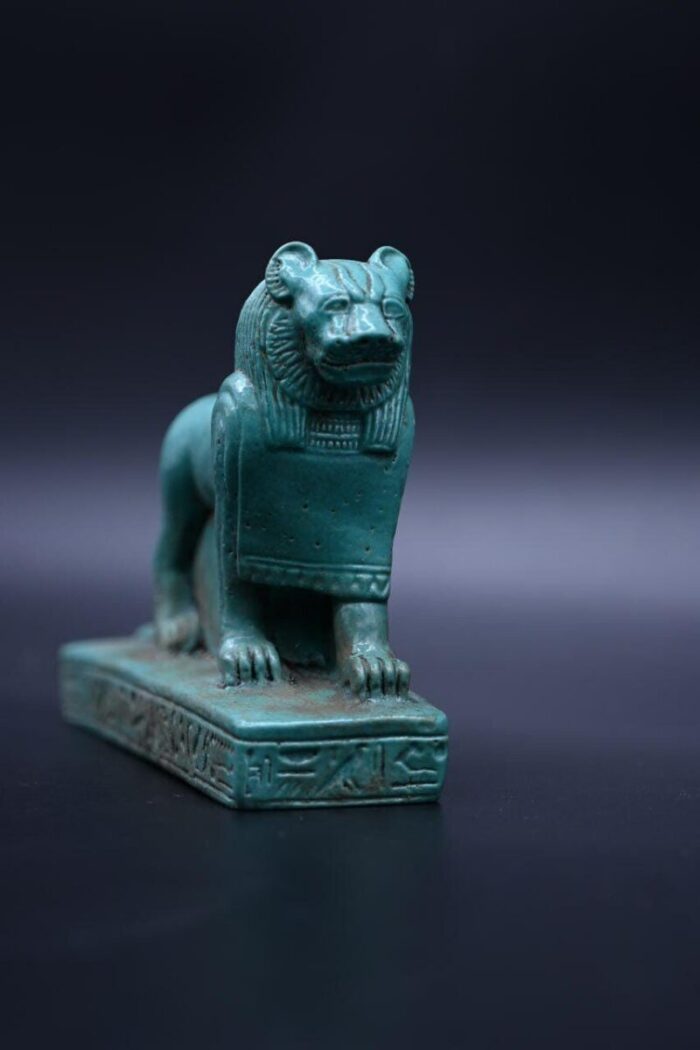
Black Basalt Osiris Sculpture, Ancient Egyptian God Statue
$422.50
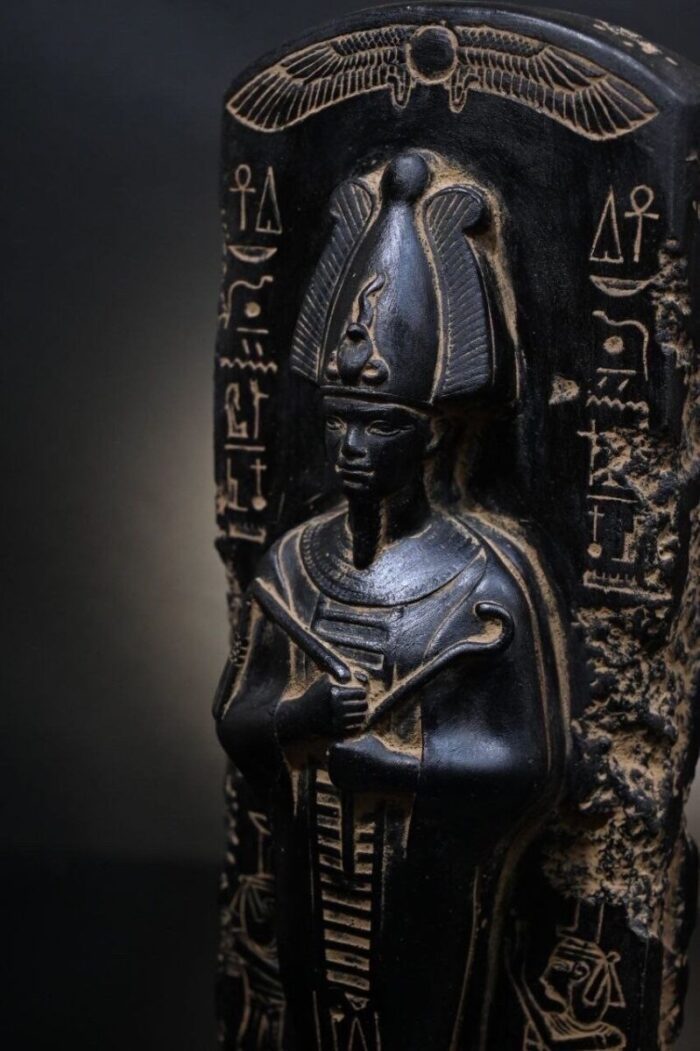
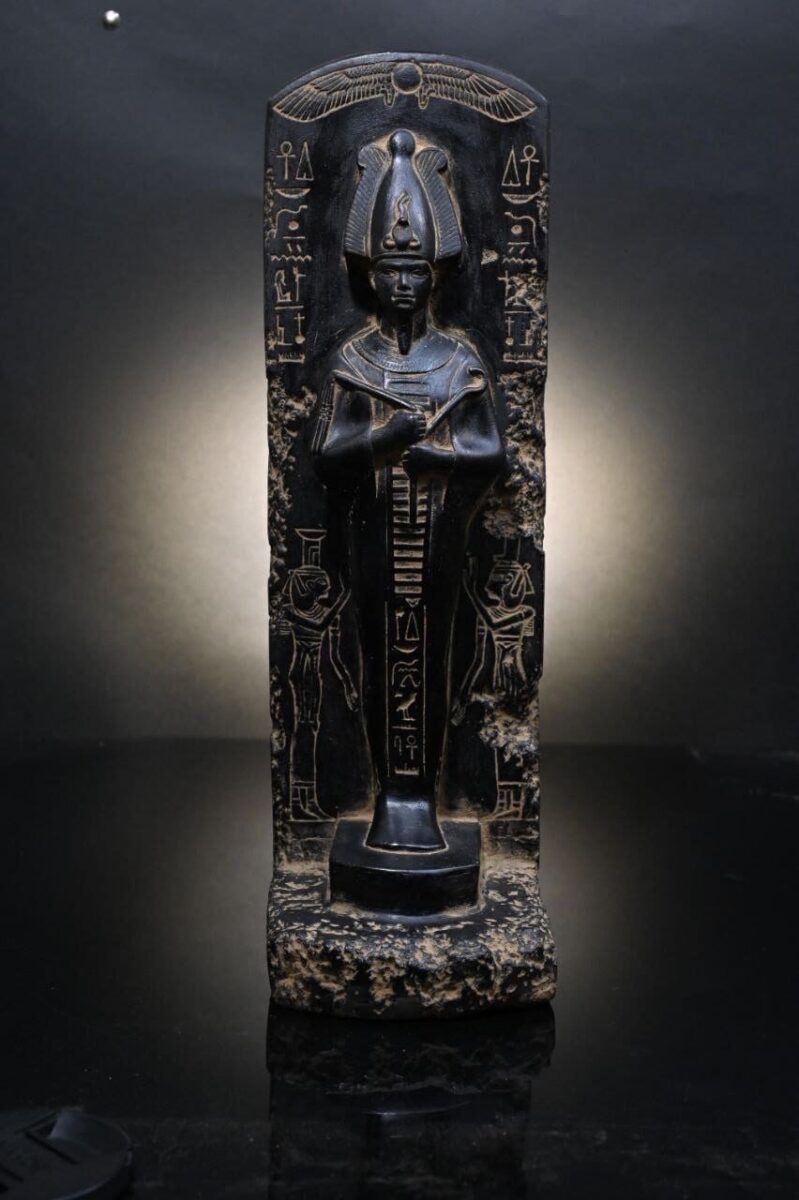
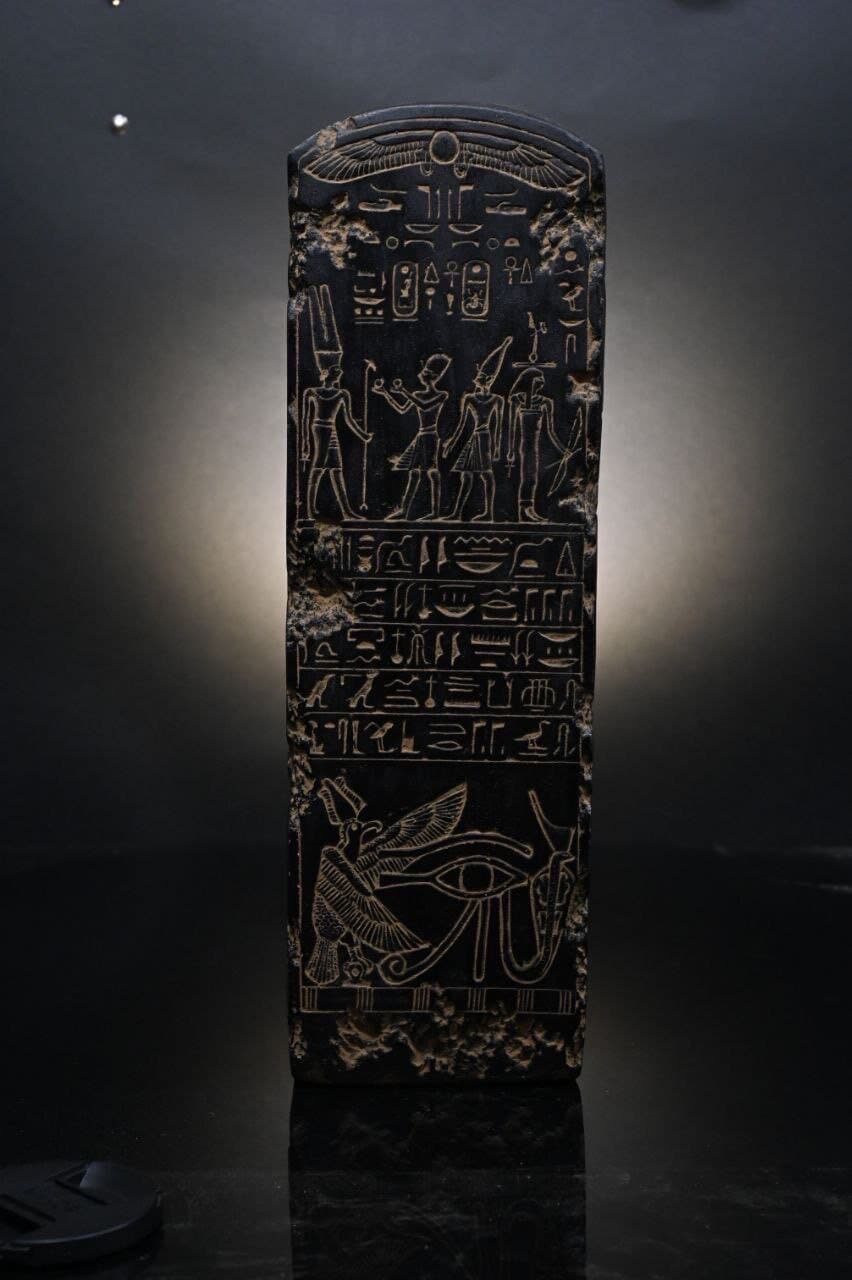
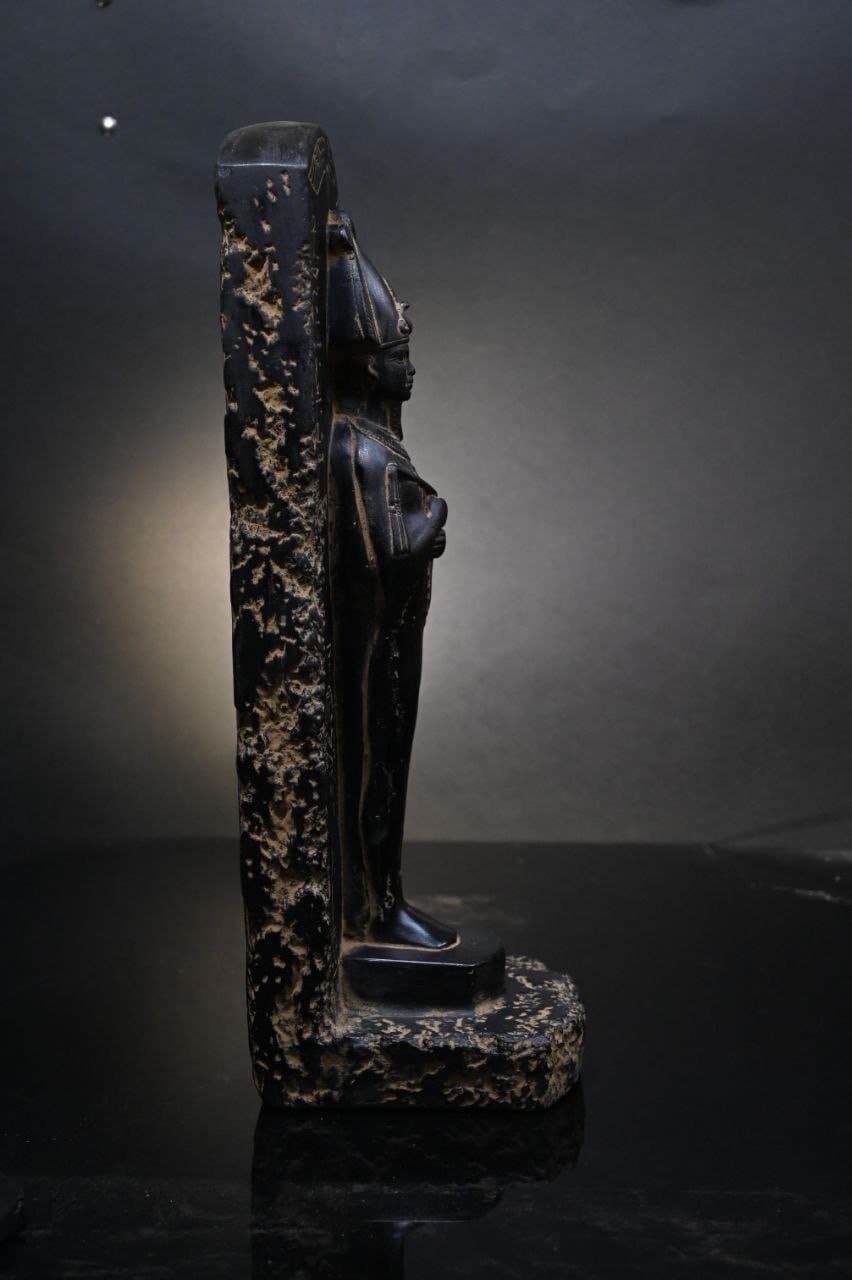
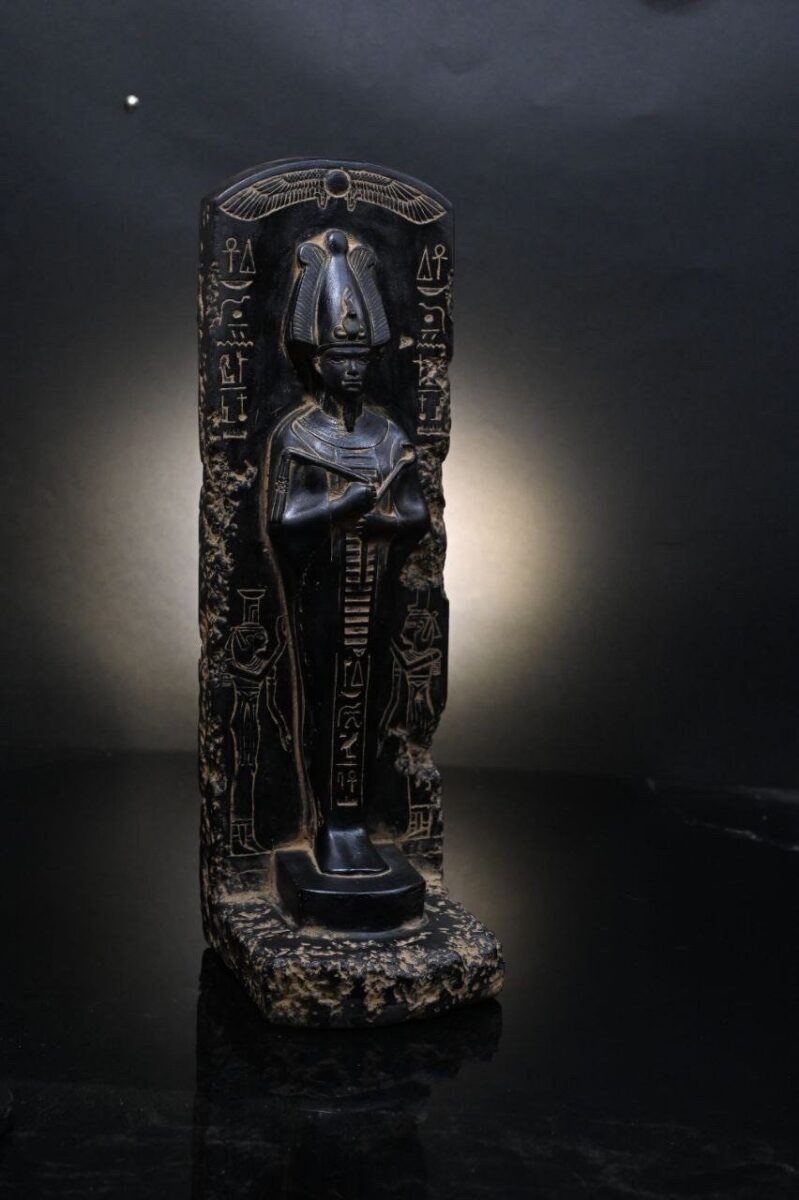
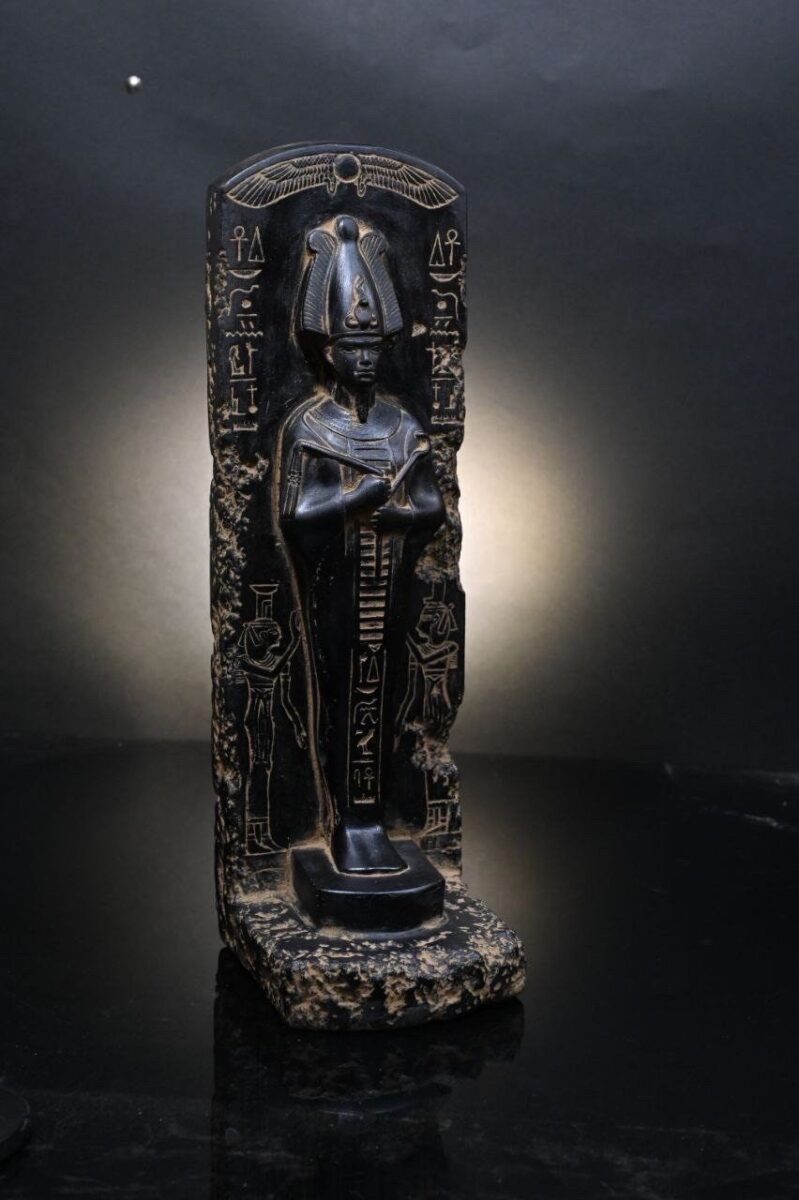
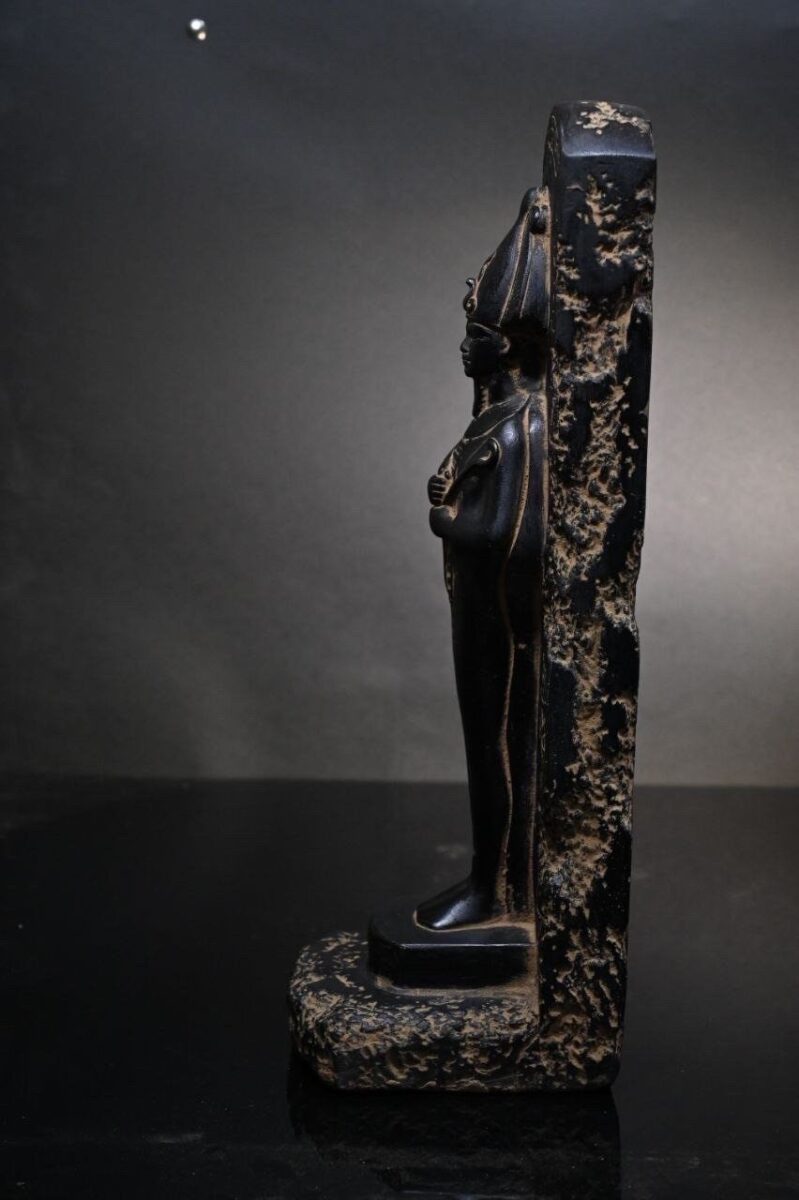
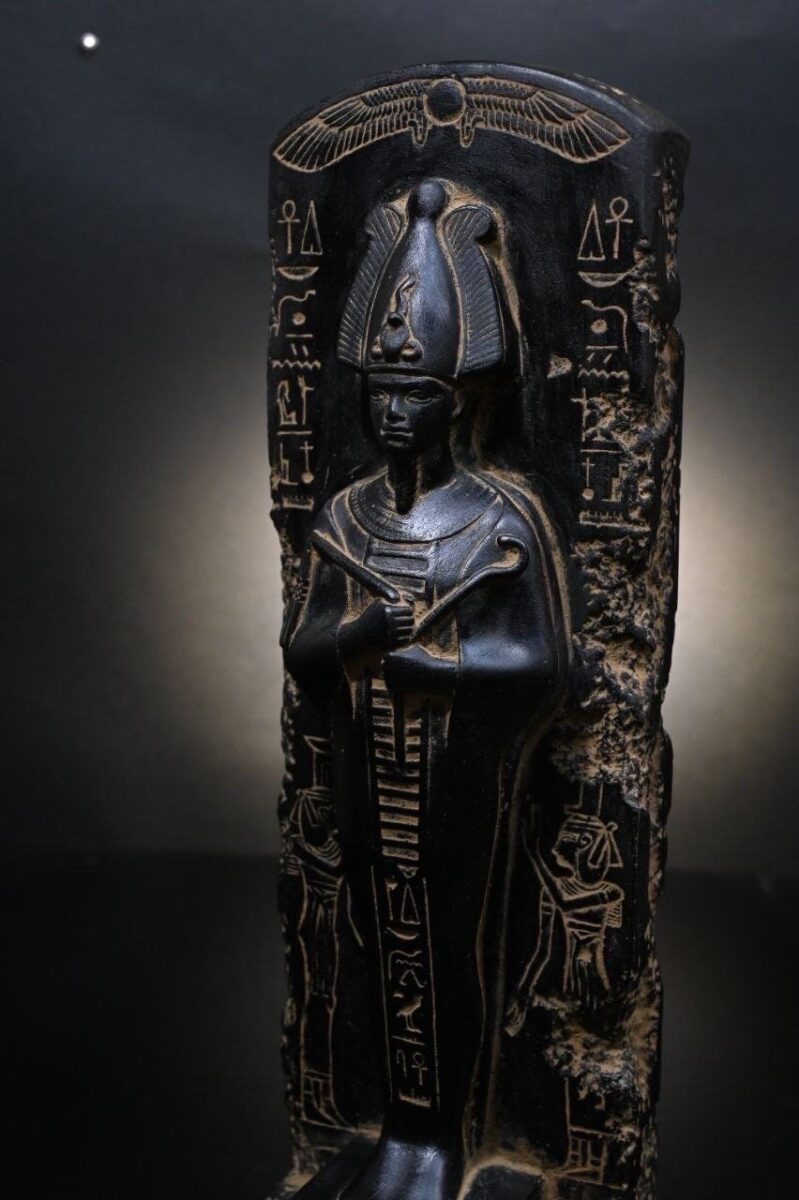
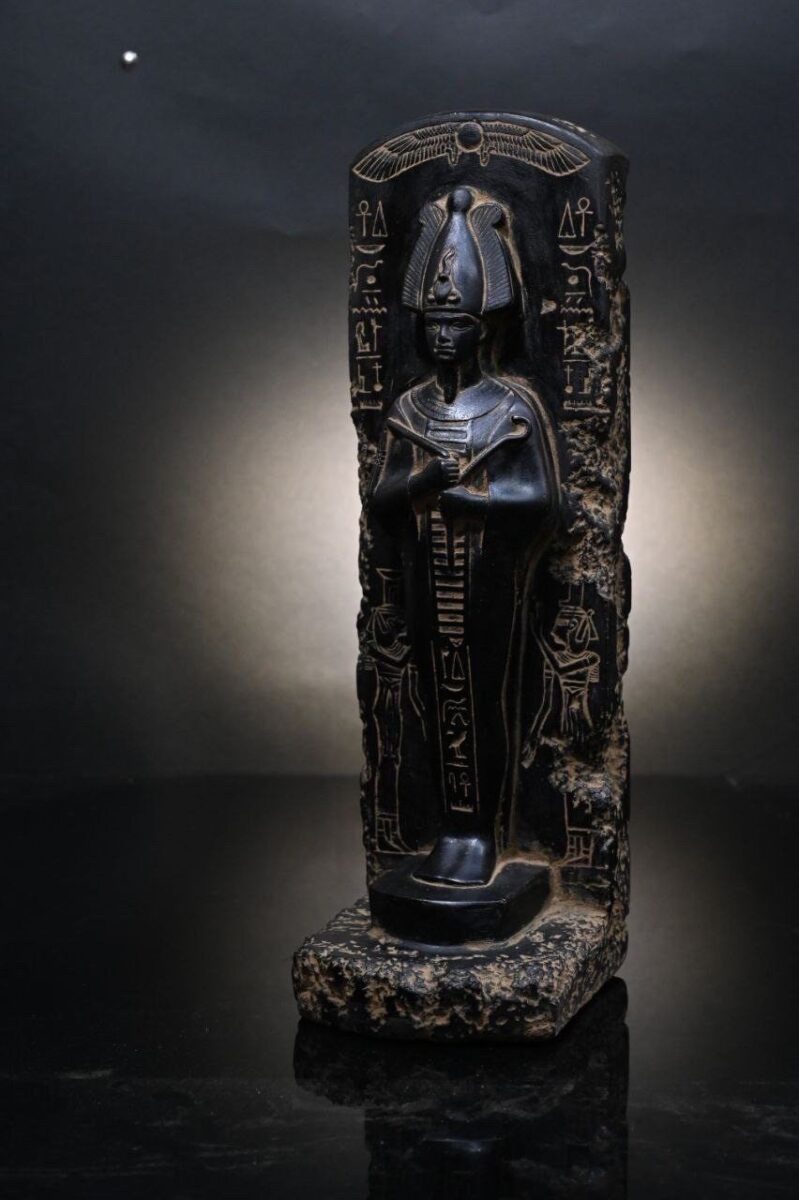
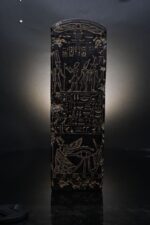
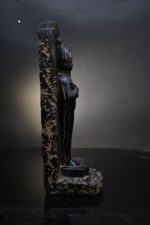
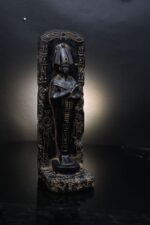
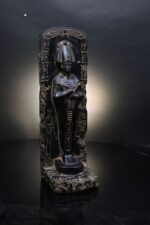
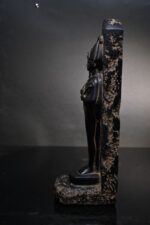
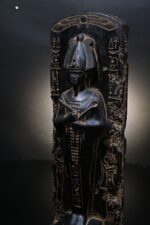
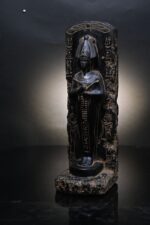
Add a powerful symbol of ancient Egyptian resurrection to your collection with this Osiris Basalt Stone Sculpture, made in Egypt from compressed basalt stone and measuring 37 × 12 × 10 cm. Inspired by Osiris, the god of regeneration, the afterlife, and the dead, it is a distinctive choice for collectors, Egyptian décor, and unique cultural gifts.
Osiris Basalt Stone Sculpture – Egyptian God of Resurrection Statue
Description of Art
Osiris Basalt Stone Sculpture made in Egypt and inspired by one of the most important funerary and regenerative deities of ancient Egyptian religion.
Standing 37 cm high, this impressive sculpture represents Osiris in his recognizable mummiform appearance, traditionally associated with the Atef crown, royal crook, and flail. Museum examples consistently show Osiris as a shrouded or mummiform figure holding the crook and flail, symbols connected with Egyptian kingship.
Dimensions
Height: 37 cm
Width: 12 cm
Depth: 10 cm
Material: Compressed Basalt Stone
Origin: Made in Egypt
Subject: God Osiris
Style: Ancient Egyptian Inspired
Who Was the Egyptian God Osiris?
Osiris was one of ancient Egypt’s principal gods associated with the dead, resurrection, regeneration, and the afterlife. The British Museum describes him as a major god of resurrection connected with the life-giving forces of nature, while the Metropolitan Museum identifies him as foremost among Egyptian funerary gods and ruler of the underworld.
His major associations included:
Resurrection
Regeneration
The afterlife
The deceased
Funerary religion
Kingship
Vegetation and renewed life
These themes make the Osiris Basalt Stone Sculpture particularly meaningful for collectors interested in Egyptian ideas surrounding death and rebirth.
Osiris and Resurrection
One of Osiris’s defining characteristics was his connection with renewed existence after death.
Ancient Egyptian funerary beliefs linked Osiris with the hope that the deceased could achieve regeneration and a new form of life. British Museum funerary objects explicitly connect Osiris figures with ensuring resurrection and new life after death.
For modern symbolic interpretation, an Osiris statue can therefore evoke:
Rebirth • Renewal • Regeneration • Continuity • Transformation
Osiris, Isis, and Horus
In one of the most famous Egyptian mythological traditions, Osiris was the husband and brother of Isis and the father of Horus. Isis was strongly associated with motherhood, protection, magic, and healing, while Horus became one of Egypt’s great royal gods.
The family of:
Osiris – Isis – Horus
became extremely important in Egyptian religious tradition.
It is better, however, to describe them as an important divine family or triad rather than calling Osiris the “head of the general trinity,” which is not standard historical terminology.
The Myth of Osiris and Seth
According to important Egyptian traditions, Osiris was killed by his brother Seth, after which Isis restored his body through her magical abilities.
The myth developed into one of ancient Egypt’s central narratives of death, restoration, legitimate kingship, and continued existence.
Horus, the son of Osiris and Isis, later became involved in the struggle with Seth for royal authority.
This mythology helped establish Osiris as a powerful symbol of the deceased ruler who achieved renewed existence, while Horus represented living kingship.
Osiris as Ruler of the Afterlife
Osiris became the ruler of the realm of the dead and the divine figure whom successful deceased individuals hoped eventually to encounter.
The British Museum describes the final stage of the afterlife judgment as determining whether the deceased was worthy to meet Osiris, god of the dead and ruler of the underworld, and continue into the Field of Reeds.
This makes his image one of the most important symbols associated with ancient Egyptian funerary religion.
The Atef Crown
The original description calls Osiris’s crown the “Attaf” crown.
The correct spelling is:
Atef Crown
The Atef is one of the most recognizable elements of Osiris’s iconography. Museum statues show him wearing this tall crown, often accompanied by feathers and additional decorative elements.
Its distinctive appearance helps immediately identify Osiris in Egyptian sculpture and relief art.
The Crook and Flail
Osiris is traditionally shown holding the crook and flail across his body.
The Metropolitan Museum identifies these objects as insignia associated with Egyptian kingship.
Therefore, instead of saying only that Osiris holds a “shepherd’s staff,” the historically stronger description is:
“Osiris holds the royal crook and flail, traditional symbols of Egyptian kingship.”
These elements reinforce his identity as both a deceased divine king and ruler of the afterlife.
Osiris and the West
Ancient Egyptian funerary thought frequently associated the west with death because the sun disappeared below the western horizon each evening.
For this reason, Osiris could carry titles and associations connected with the western realm and the deceased.
Rather than simply calling him “god of the western world,” a stronger description is:
“Osiris was closely associated with the realm of the dead and the western necropolis.”
Osiris and Regeneration
Osiris was not simply a god representing death.
His religious meaning was deeply connected with life after death and regeneration.
The British Museum notes his close connection with natural renewal, particularly vegetation and germinating grain.
This dual association with death and renewed life is one of the reasons Osiris became such an enduring figure in Egyptian religion.
Osiris and Abydos
Abydos became one of the most important centers of the cult of Osiris. Modern archaeological research at the site describes ancient Abydos as a major cult-place of Osiris.
The city became deeply connected with his mythology, worship, and funerary significance.
For collectors of Egyptian mythology, Osiris therefore represents not only the afterlife but also one of the most important religious traditions of ancient Egypt.
Compressed Basalt Stone Construction
This Osiris Basalt Stone Sculpture is described as being made from compressed basalt stone.
The dark appearance of the material complements the solemn and monumental character of Osiris and gives the statue a substantial decorative presence.
The original description says the material gives the statue an “unbreakable quality.”
I recommend removing that claim.
No stone or stone-composite sculpture should be marketed as literally unbreakable. A safer description is:
“Crafted from compressed basalt stone for a solid and substantial finish.”
This sounds professional without making an absolute durability guarantee.
Egyptian-Inspired Statement Sculpture
At 37 cm high, the statue has enough presence to work as a prominent decorative object while remaining practical for indoor display.
It can be placed in:
Living rooms
Offices
Libraries
Shelves
Display cabinets
Collector rooms
Egyptian-themed interiors
Museum-inspired displays
Its vertical mummiform design and royal attributes make it immediately recognizable as an Osiris-inspired sculpture.
Symbolism for Modern Collectors
For a modern interpretation, the Osiris Basalt Stone Sculpture may represent:
Resurrection • Renewal • Transformation • Regeneration • Kingship • Eternal Life
These symbolic themes make the piece particularly appealing for collectors interested in the deeper religious beliefs of ancient Egyptian civilization.
Perfect for Collectors
The Osiris Basalt Stone Sculpture is a distinctive choice for:
Osiris collectors
Ancient Egyptian art enthusiasts
Egyptology lovers
Egyptian mythology fans
Stone sculpture collectors
Afterlife and funerary art enthusiasts
Egyptian home décor
Office and library décor
Museum-inspired displays
Unique cultural gifts
It can also complement sculptures of Isis, Horus, Anubis, Seth, Nephthys, Thoth, and Ma’at to create a broader ancient Egyptian mythology collection.
Product Details
Product: Osiris Basalt Stone Sculpture
Deity: Osiris
Material: Compressed Basalt Stone
Height: 37 cm
Width: 12 cm
Depth: 10 cm
Origin: Made in Egypt
Main Associations: Resurrection, Regeneration, Afterlife & the Dead
Traditional Appearance: Mummiform Figure
Crown: Atef Crown
Attributes: Royal Crook & Flail
Style: Ancient Egyptian Inspired
Type: Decorative Sculpture
Use: Collection, Home Décor, Office Décor & Cultural Gift
Related products
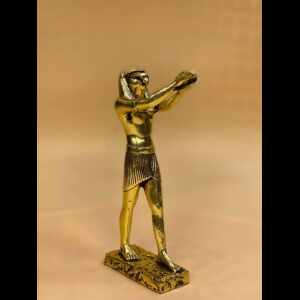
Horus-Ancient Egyptian Falcon God Horus statue-Egyptian Made-Antiques
Elevate your decor with our Egyptian Falcon God Horus figurine. Combining authentic pharaonic iconography with fine artisan craftsmanship and striking hand-finished details, this protective deity sculpture offers a timeless blend of ancient history, majestic presence, and regal aesthetic charm for any home or office display.
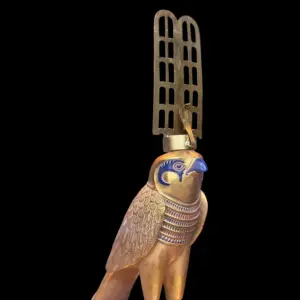
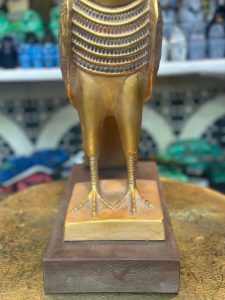
Horus Statue: Egyptian God of Protection, Gold Leaf Stone Sculpture
Elevate your decor with our Egyptian God of Protection sculpture. Combining authentic ancient Egyptian symbolism with fine artisan craftsmanship and striking hand-finished details, this powerful guardian deity statue offers a timeless blend of rich history, majestic presence, and protective aura for any home or office display.
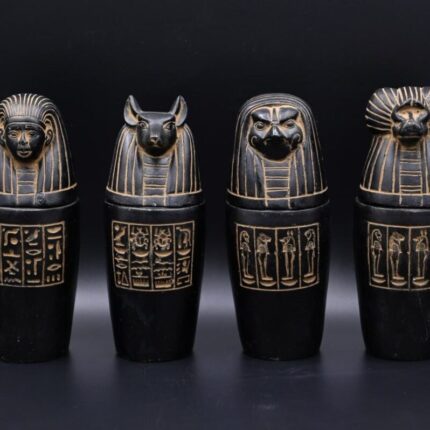
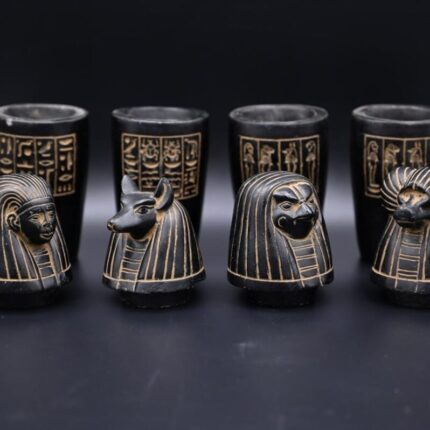
sons of Horus Statues Egyptian antiques – Egyptian deities-Egyptian mythology-sculpture gods
Elevate your collection with our sons of Horus Statues. Combining authentic ancient Egyptian iconography with fine artisan craftsmanship and rich hand-finished details, this protective guardian deity set offers a compelling blend of deep history, majestic presence, and timeless symbolic power for any home or office display.
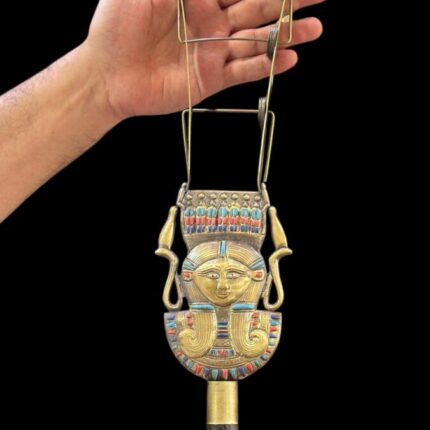
Hathor Sistrum: Copper, Ebony & Gemstone Egyptian Instrument
Add a luxurious touch of ancient Egyptian heritage to your collection with this Copper Ebony Hathor Sistrum, handcrafted in Egypt from copper and ebony wood with turquoise, lapis lazuli, and red coral details. Standing 40 cm high, it is inspired by Hathor, the goddess of music, joy, love, and beauty, making it a distinctive collectible and cultural gift.
Handcrafted Hathor Sistrum: Copper, Ebony & Gemstone Egyptian Instrument
Add a luxurious touch of ancient Egyptian heritage to your collection with this 40 cm Hathor Gemstone Sistrum, handcrafted in Egypt from copper and ebony wood with turquoise, lapis lazuli, and red coral details. Inspired by Hathor, the goddess of music, joy, love, and beauty, it is a distinctive choice for collectors, Egyptian décor, and unique cultural gifts.
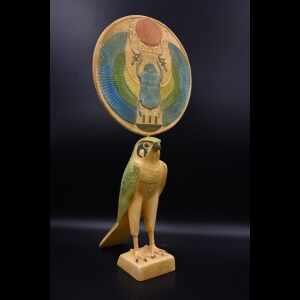
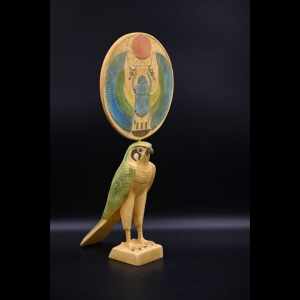
Handcrafted Limestone Horus Statue, Egyptian God of Protection (35cm)
Add a powerful symbol of ancient Egyptian kingship to your collection with this 35 cm Limestone Horus Statue, handcrafted in Egypt and featuring solar and winged scarab motifs. Inspired by Horus, the falcon god of the sky, royal authority, and protection, it is a striking choice for Egyptology collectors, Egyptian décor, mythology lovers, and museum-inspired displays.
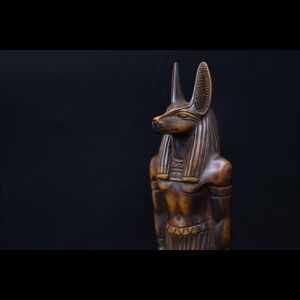
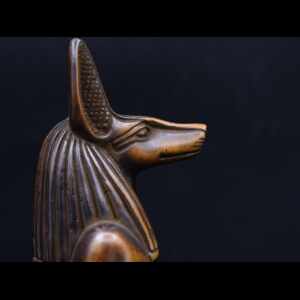
Handcrafted Anubis Statue: Egyptian God of Protection, Brown Stone (23cm)
Add a powerful symbol of ancient Egyptian protection to your collection with this 23 cm Brown Stone Anubis Statue, handcrafted in Egypt from natural stone. Inspired by Anubis, the canine-headed deity of mummification, funerary protection, and care of the deceased, it is a distinctive choice for collectors, Egyptian décor, museum-inspired displays, and unique cultural gifts.
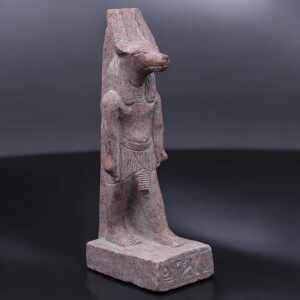
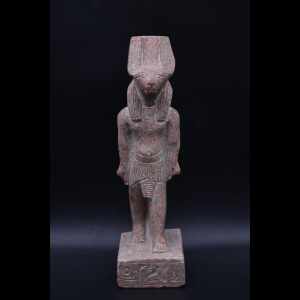
Handcrafted Red Granite Anubis Statue – Egyptian God of Afterlife (30cm)
Add a powerful symbol of ancient Egyptian protection to your collection with this 30 cm Red Granite Anubis Statue, handcrafted in Egypt from red granite. Inspired by Anubis, the canine-headed deity of mummification, funerary protection, and care of the deceased, it is a striking choice for collectors, Egyptian décor, museum-inspired displays, and unique cultural gifts.


Reviews
There are no reviews yet.