
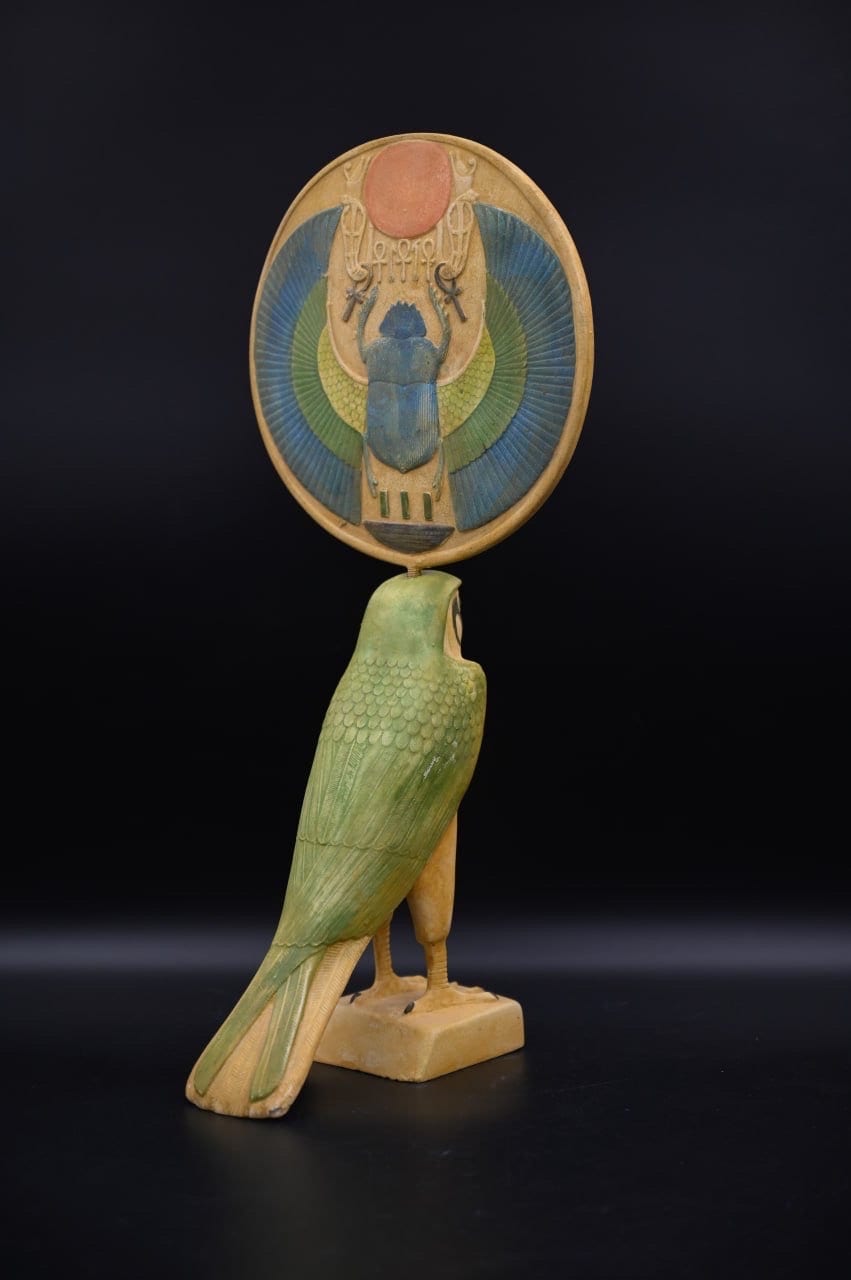
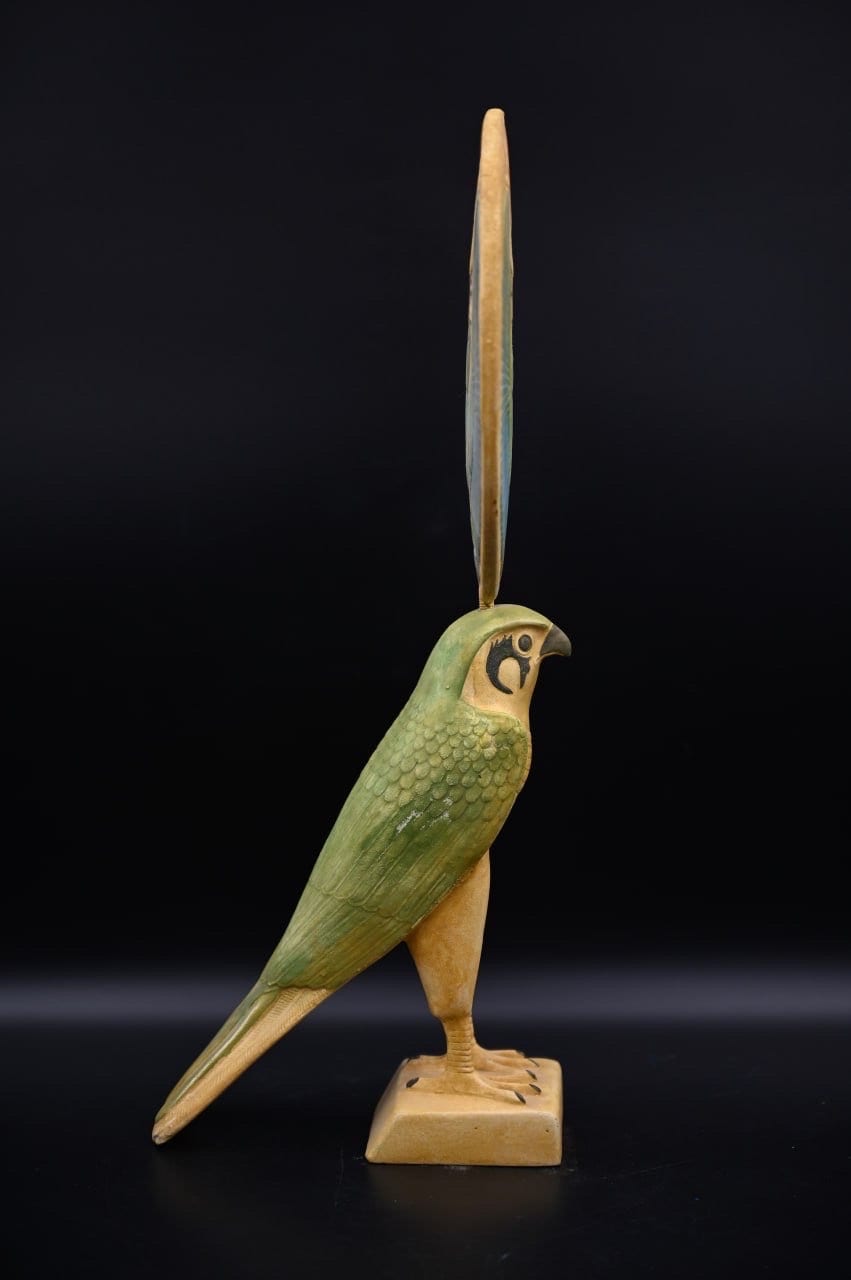
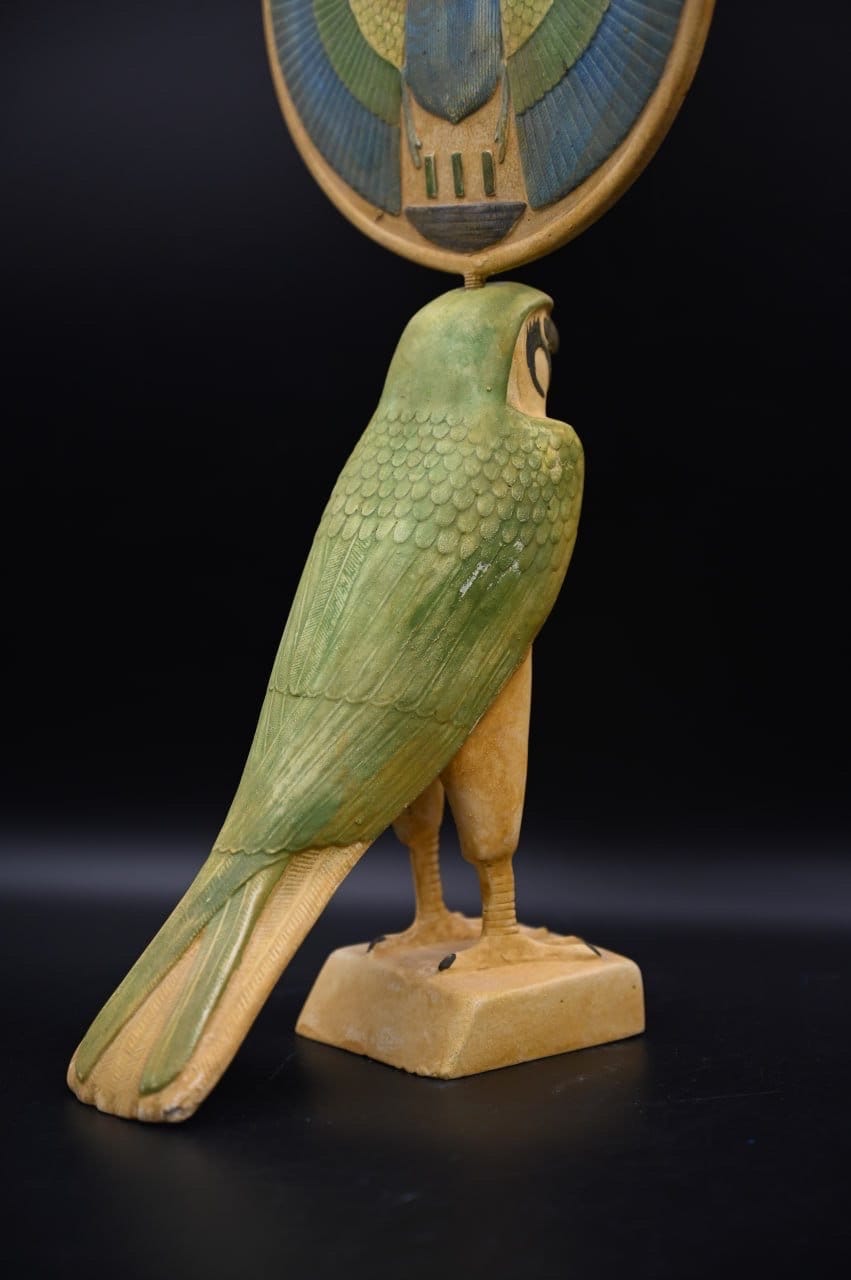
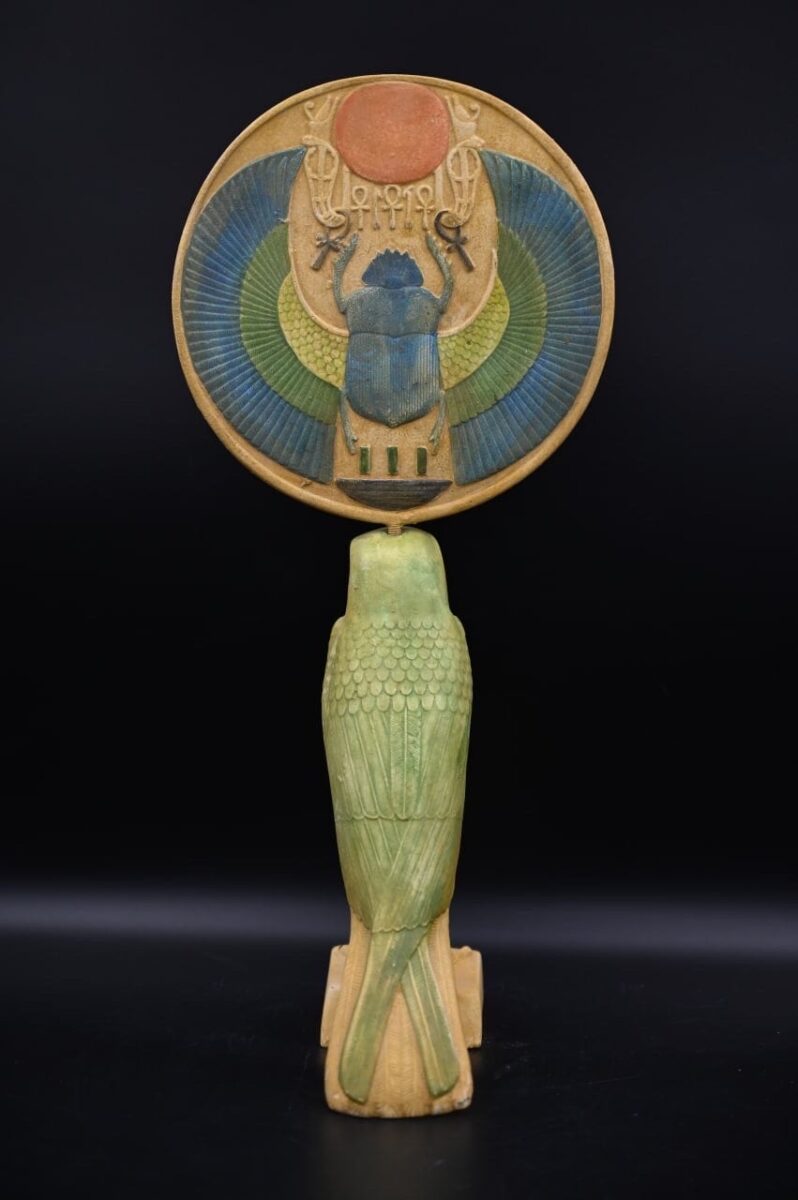
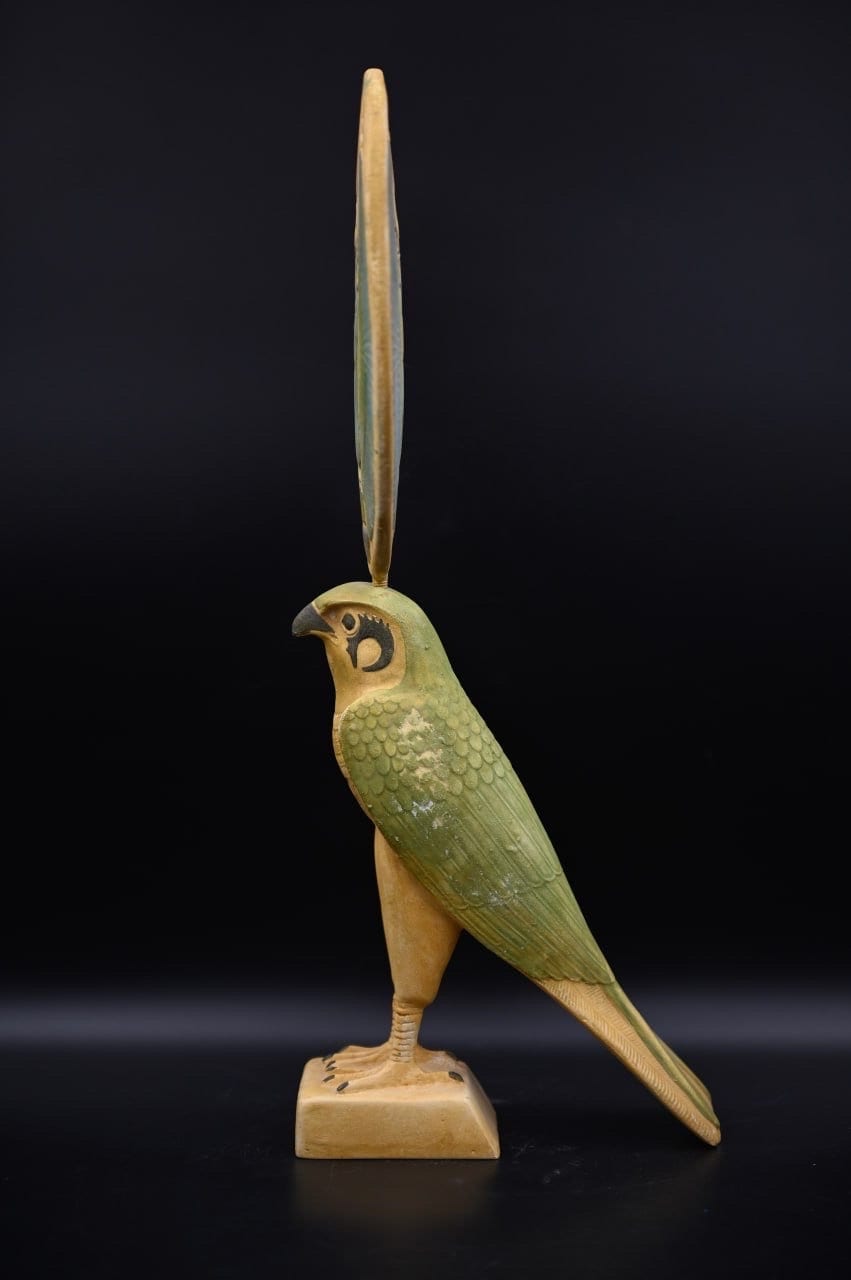
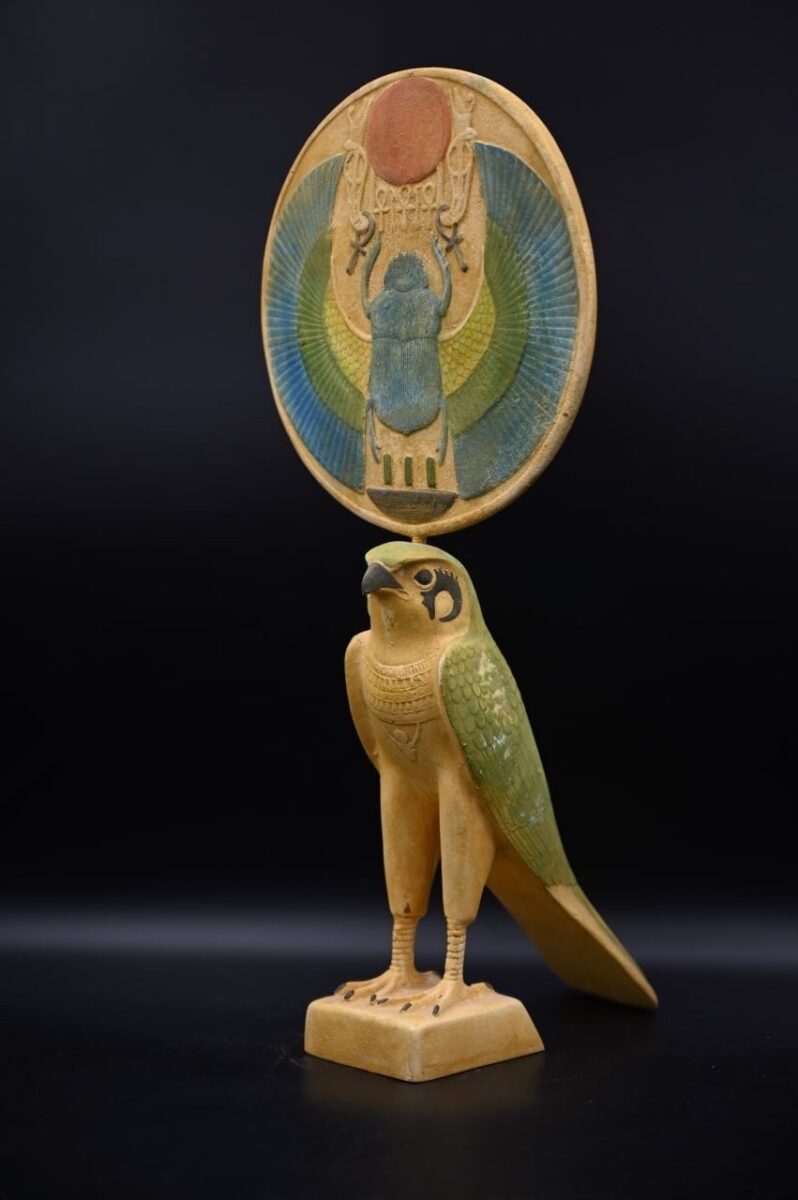
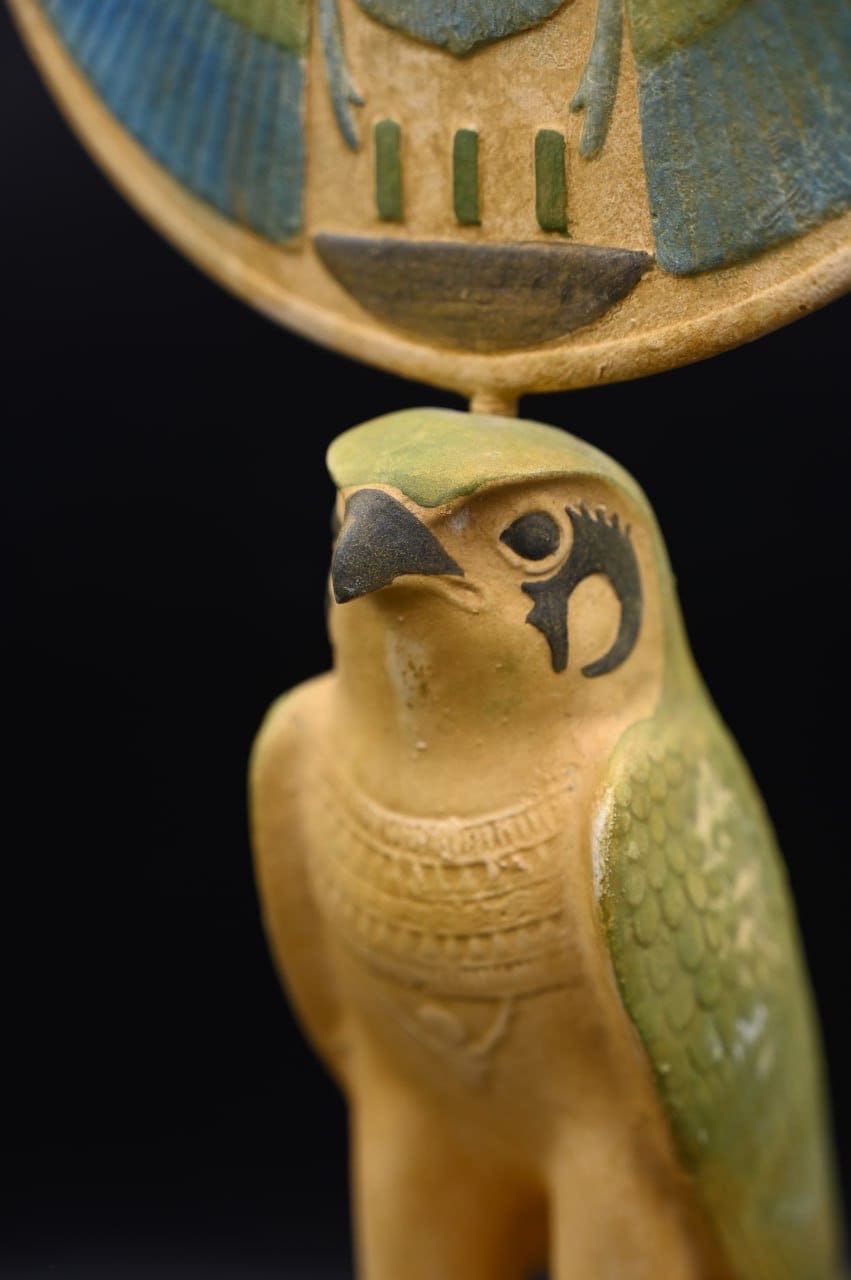
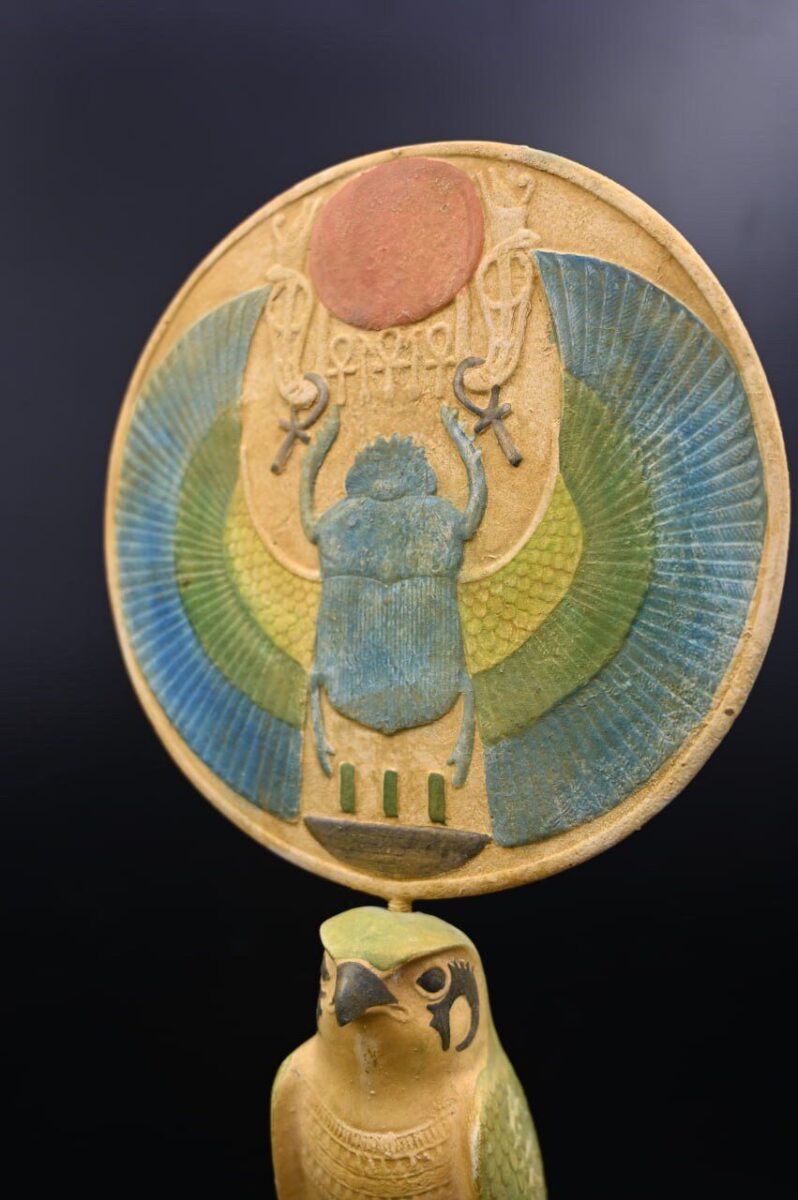
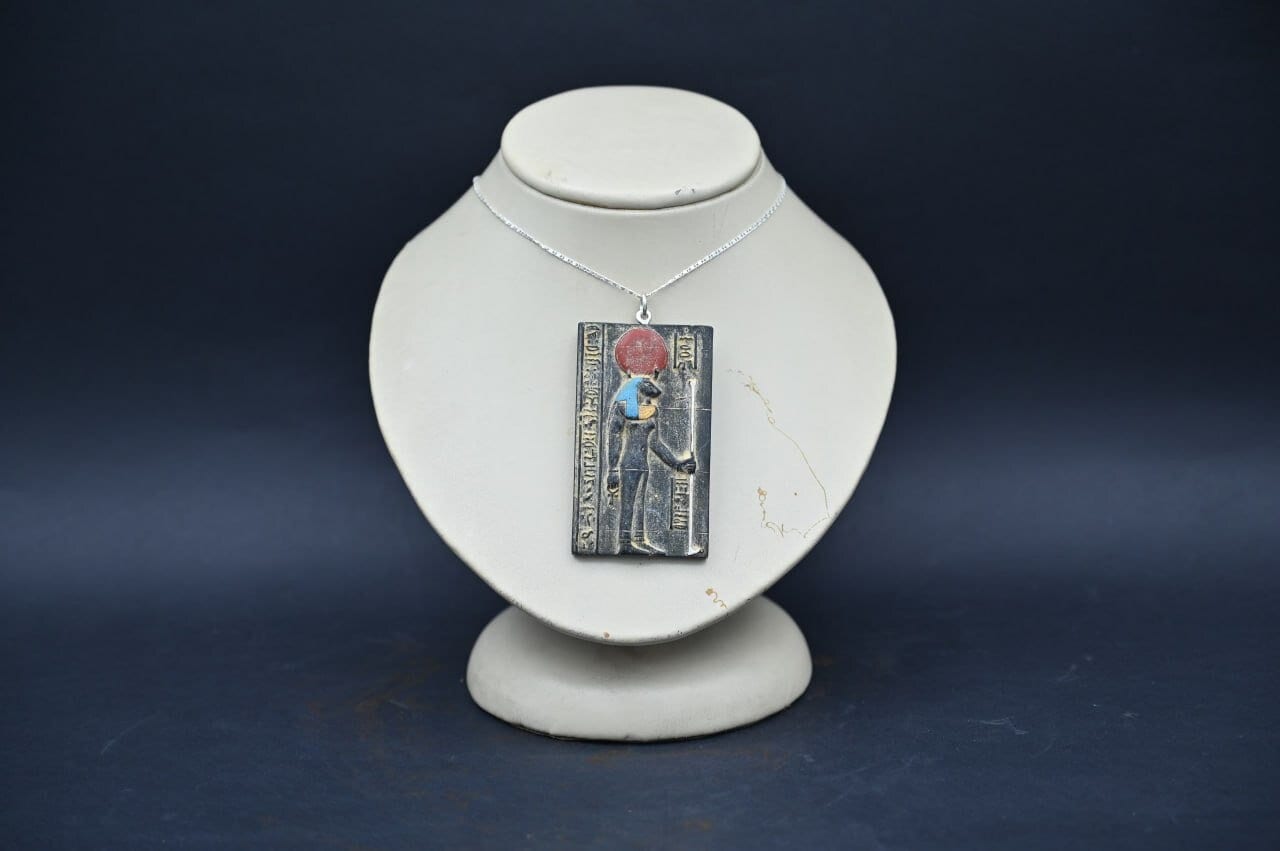
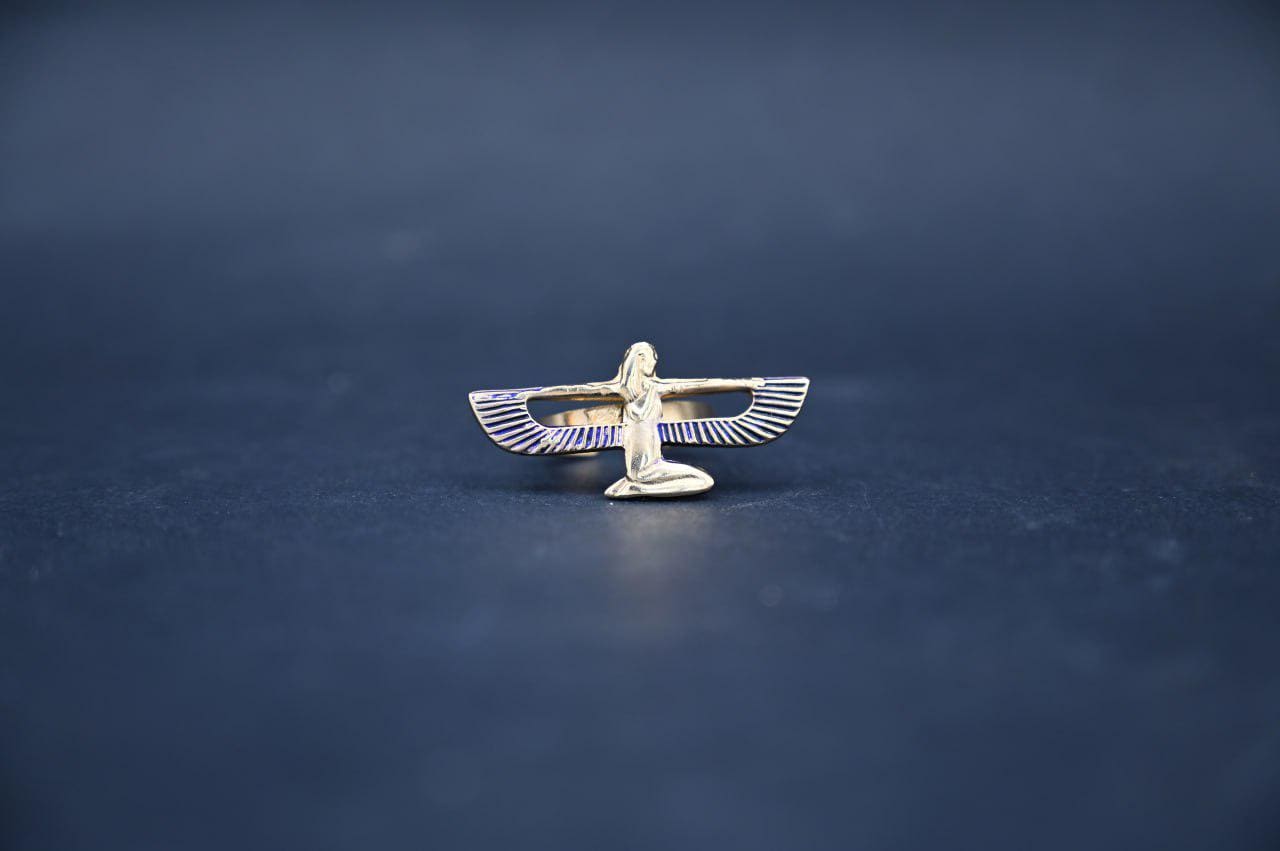
Handcrafted Limestone Horus Statue, Egyptian God of Protection (35cm)
$388.70
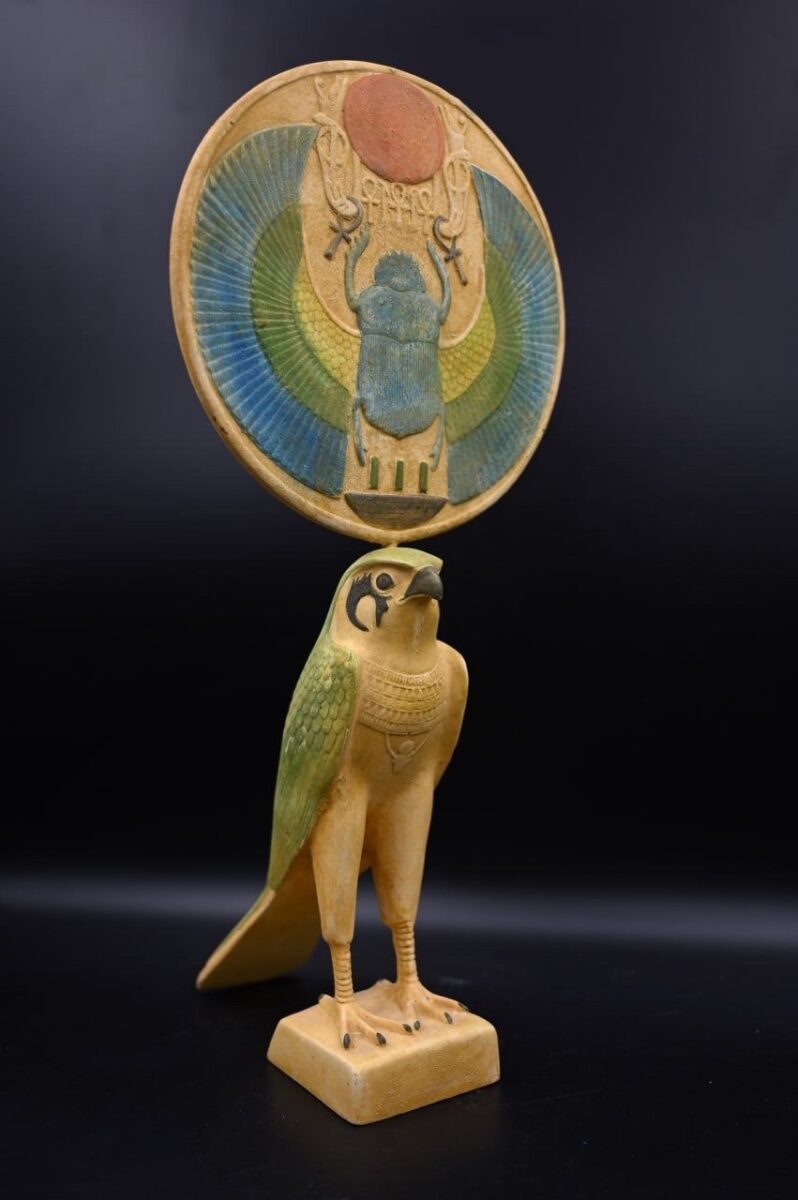
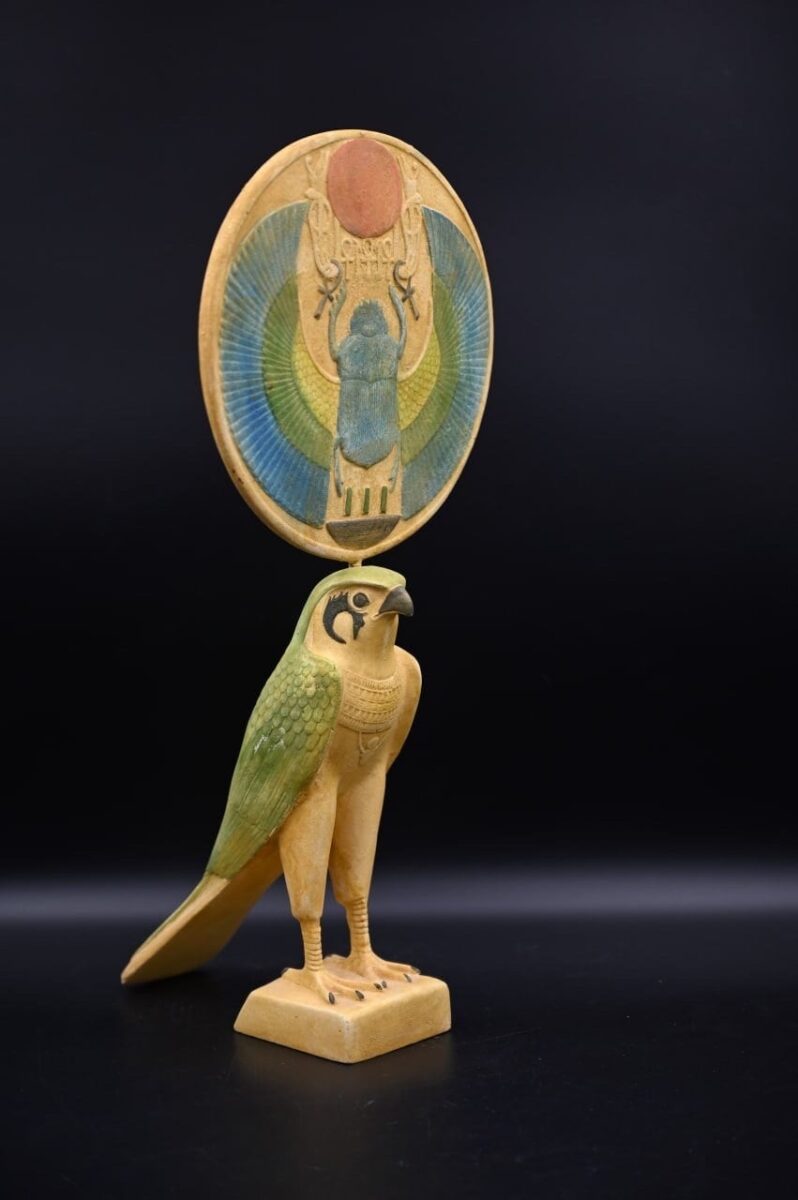
Add a powerful symbol of ancient Egyptian kingship to your collection with this 35 cm Limestone Horus Statue, handcrafted in Egypt and featuring solar and winged scarab motifs. Inspired by Horus, the falcon god of the sky, royal authority, and protection, it is a striking choice for Egyptology collectors, Egyptian décor, mythology lovers, and museum-inspired displays.
35 cm Limestone Horus Statue – Egyptian Falcon God Sculpture
Description of Art
35 cm Limestone Horus Statue handcrafted in Egypt and inspired by Horus, one of the most important gods of ancient Egyptian religion and a powerful symbol of the sky, kingship, royal authority, and protection.
Hand-carved from limestone, this distinctive statue stands 35 cm high and measures 15 cm in length. The design portrays Horus in his iconic falcon-associated form and incorporates a solar disk and winged scarab motif, creating an impressive composition inspired by ancient Egyptian religious and royal imagery.
With its combination of limestone craftsmanship and pharaonic symbolism, this sculpture makes a striking addition to Egyptology collections, offices, libraries, living rooms, display cabinets, and museum-inspired interiors.
Product Details
Material: Limestone
Height: 35 cm
Length: 15 cm
Deity: Horus
Main Motifs: Falcon Imagery, Solar Disk & Winged Scarab
Craftsmanship: Hand-Carved / Handcrafted
Origin: Made in Egypt
Style: Ancient Egyptian Inspired
Type: Decorative Egyptian Deity Sculpture
Who Was Horus?
Horus was one of the most enduring and important deities in ancient Egyptian religion.
He was strongly associated with:
The sky
Kingship
Royal authority
Protection
Divine legitimacy
Falcon imagery
Horus was commonly represented either as a falcon or as a man with the head of a falcon.
For modern symbolic interpretation, a 35 cm Limestone Horus Statue can evoke:
Protection • Leadership • Strength • Guardianship • Royal Authority
Horus Was Not Primarily the “God of Peace”
The original description calls Horus the “god of peace and protection.”
Protection is appropriate, but peace was not one of Horus’s principal ancient Egyptian roles.
For historically stronger product copy, describe him as:
“The ancient Egyptian god of the sky, kingship, royal authority, and protection.”
This is both more accurate and more useful for SEO.
Horus, Isis and Osiris
In one of the most famous Egyptian mythological traditions, Horus was the son of Isis and Osiris.
After Osiris was killed by Seth, Horus became involved in a long struggle with Seth over legitimate kingship.
Their conflict became an important mythological expression of:
Kingship • Succession • Authority • Legitimate Rule
Horus ultimately became closely associated with the rightful kingship of Egypt.
Horus and the Pharaoh
Horus had an especially important relationship with Egyptian royalty.
The living king could be closely identified with Horus within royal ideology, making falcon imagery a powerful expression of divine kingship.
This connection explains why Horus became associated with:
Royal Authority • Protection • Leadership • Divine Legitimacy
Rather than simply saying Horus “protected all kings, queens, and people,” it is more accurate to emphasize his close relationship with kingship and royal protection.
Horus and Seth
The source describes Seth simply as evil and as a usurper.
The mythology is more complex.
Seth represented dangerous and disruptive forces and was Horus’s major rival in the struggle for kingship. However, Seth was not universally considered an embodiment of absolute evil throughout Egyptian history.
He could also play protective roles, including defending the solar god Ra against Apep.
Therefore, the Horus–Seth conflict is better described as a struggle involving:
Kingship • Succession • Order • Rivalry • Divine Authority
rather than simply good versus evil.
The Solar Disk
This statue is described as featuring a sun disk.
Solar imagery occurs in several forms within Egyptian religion, and Horus could have solar associations in particular manifestations.
However, the solar disk should not be treated as a universal feature of every representation of Horus.
For this product, a safe description is:
“The statue incorporates solar imagery within its Egyptian-inspired design.”
The Winged Scarab
Another important decorative element is the winged scarab.
The scarab was particularly associated with Khepri, the deity of the rising morning sun, creation, transformation, and renewal.
Its strongest symbolic meanings include:
Rebirth
Renewal
Transformation
Solar regeneration
Protection
Therefore, the winged scarab should not be described as one of Horus’s primary forms.
Instead, say:
“The statue combines Horus imagery with a winged scarab motif symbolizing renewal, solar regeneration, and protection.”
This keeps the historical symbolism clear.
The Eye of Horus
One of the most famous symbols associated directly with Horus is the Eye of Horus, or Wedjat Eye.
Its principal symbolic meanings include:
Protection • Healing • Restoration • Completeness
If the actual statue visibly includes the Eye of Horus, this can be added to the product description as another important feature.
If it does not, it is better to mention the Eye only as historical background.
Horus of Edfu
Horus was worshipped in several forms throughout Egyptian history.
One particularly important form was Horus of Edfu, associated with the great Temple of Edfu.
Different manifestations of Horus reflected different theological traditions and aspects of his identity, including kingship, childhood, solar associations, and the unification of Egypt.
For an e-commerce listing, however, there is no need to identify this statue with a specific form of Horus unless its exact archaeological model is known.
Hand-Carved Limestone
The 35 cm Limestone Horus Statue is described as being hand-carved from limestone.
Limestone was extensively used throughout ancient Egyptian architecture, sculpture, relief work, and funerary art.
The natural stone appearance gives this modern sculpture a traditional character well suited to Egyptian-inspired decoration.
Handmade in Egypt
The statue is handcrafted by skilled Egyptian artisans and made in Egypt.
Its dimensions make it suitable for:
Living rooms
Offices
Libraries
Bookshelves
Display cabinets
Collector rooms
Egyptian-themed interiors
Museum-inspired displays
Museum-Inspired Replica
The original description states that the statue is “a replica of the original piece.”
Unless you know the exact museum object, excavation source, accession number, or archaeological reference, I recommend using:
Museum-Inspired Replica
or
Ancient Egyptian-Inspired Horus Sculpture
instead of claiming it is an exact replica of a specific original artifact.
Perfect for Collectors and Gifts
The 35 cm Limestone Horus Statue is an excellent choice for:
Horus collectors
Egyptology enthusiasts
Ancient Egyptian mythology lovers
Falcon symbolism collectors
Limestone sculpture collectors
Egyptian home décor
History enthusiasts
Museum-inspired displays
Unique cultural gifts
Product Specifications
Product: 35 cm Limestone Horus Statue
Deity: Horus
Material: Limestone
Height: 35 cm
Length: 15 cm
Width: Not Provided
Depth: Not Provided
Main Motifs: Horus, Solar Disk & Winged Scarab
Horus Associations: Sky, Kingship, Royal Authority & Protection
Winged Scarab Symbolism: Rebirth, Renewal, Solar Regeneration & Protection
Craftsmanship: Hand-Carved / Handcrafted
Origin: Made in Egypt
Style: Ancient Egyptian Inspired
Type: Decorative Egyptian Deity Sculpture
Related products
Horus-Ancient Egyptian Falcon God Horus statue-Egyptian Made-Antiques
Elevate your decor with our Egyptian Falcon God Horus figurine. Combining authentic pharaonic iconography with fine artisan craftsmanship and striking hand-finished details, this protective deity sculpture offers a timeless blend of ancient history, majestic presence, and regal aesthetic charm for any home or office display.
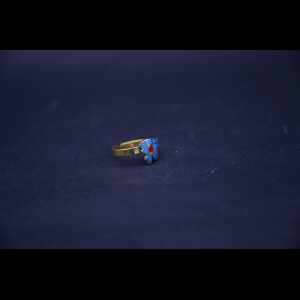
Egyptian Eye of Horus Ring: Ancient Symbol, in Egypt
Add a powerful touch of ancient Egyptian symbolism to your style with this Horus Adjustable Egyptian Ring, handcrafted in Egypt with a free-size unisex design. Inspired by Horus, the falcon god of kingship, sky, royal authority, and protection, it is a distinctive choice for jewelry lovers, collectors, mythology enthusiasts, and unique cultural gifts.
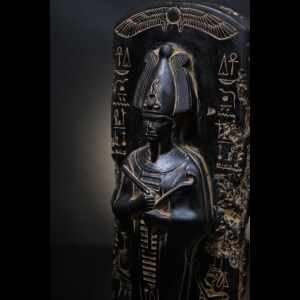
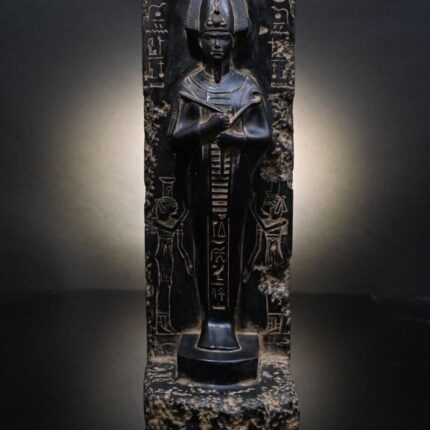
Black Basalt Osiris Sculpture, Ancient Egyptian God Statue
Add a powerful symbol of ancient Egyptian resurrection to your collection with this Osiris Basalt Stone Sculpture, made in Egypt from compressed basalt stone and measuring 37 × 12 × 10 cm. Inspired by Osiris, the god of regeneration, the afterlife, and the dead, it is a distinctive choice for collectors, Egyptian décor, and unique cultural gifts.
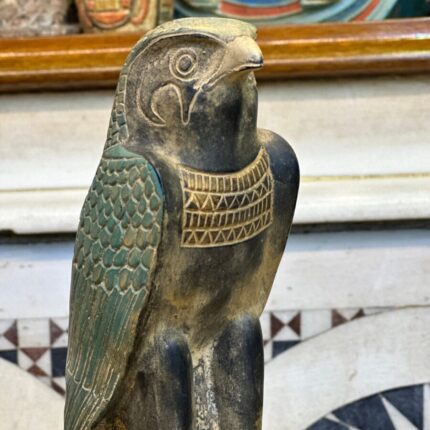
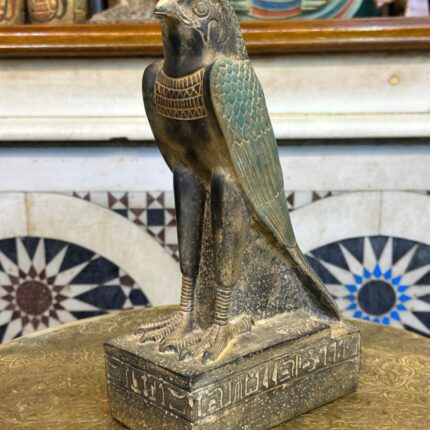
Vintage Horus-Egyptian god of Protection-peace-ancient Egyptian gods-deity-mythology-sculpture antiques-Raplica-ancient Egyptian mythology
Add a powerful symbol of ancient Egyptian kingship to your collection with this 27 cm Colored Horus Statue, crafted from stone and featuring beautifully colored details with Egyptian-style inscriptions on the base. Inspired by Horus, the falcon god of the sky, royal authority, and protection, it is ideal for collectors, Egyptian décor, mythology lovers, and unique cultural gifts.
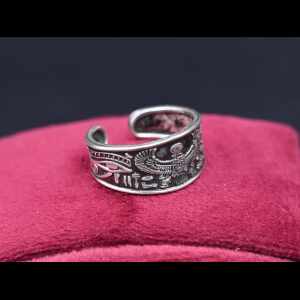
Horus ring-amazing Ring the symbol of good luck-good life-ancient Egyptian ornament-mythology
Add a powerful symbol of ancient Egyptian kingship to your jewelry collection with this Pure Silver Horus Ring, handcrafted in Egypt from pure silver with a unisex free-size design. Inspired by Horus, the falcon god of the sky, royal authority, and protection, it is a distinctive choice for silver jewelry collectors, mythology lovers, Egyptology enthusiasts, and unique cultural gifts.
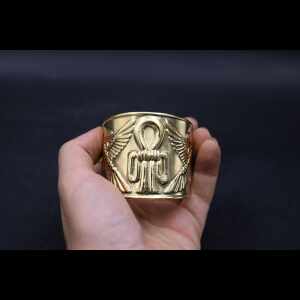
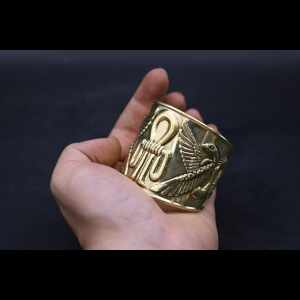
Brass Hathor Knot Bracelet: Egyptian Winged Cobra Talisman
Add a powerful touch of ancient Egyptian symbolism to your jewelry collection with this Brass Winged Cobra Egyptian Bracelet, crafted from brass and featuring an Egyptian-inspired knot centerpiece flanked by protective winged cobras. Inspired by ancient themes of guardianship and royal power, it is a distinctive choice for mythology lovers, Egyptology enthusiasts, statement-jewelry collectors, and unique cultural gifts.
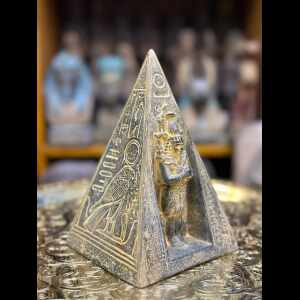
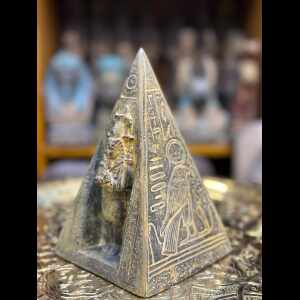
Egyptian Black Stone Pyramid – Handcrafted Horus Monument
Add a striking touch of ancient Egyptian symbolism to your space with this Black Stone Horus Pyramid, crafted from solid black stone and measuring 17 × 10 × 10 cm. Decorated with Horus and other Egyptian-inspired motifs, it is a distinctive choice for collectors, mythology lovers, office décor, Egyptian-themed interiors, and unique cultural gifts.
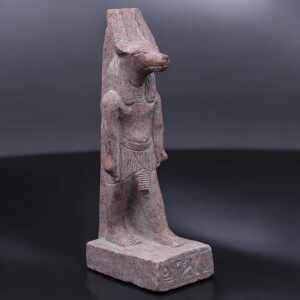
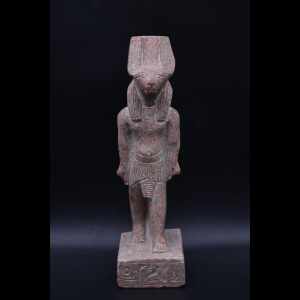
Handcrafted Red Granite Anubis Statue – Egyptian God of Afterlife (30cm)
Add a powerful symbol of ancient Egyptian protection to your collection with this 30 cm Red Granite Anubis Statue, handcrafted in Egypt from red granite. Inspired by Anubis, the canine-headed deity of mummification, funerary protection, and care of the deceased, it is a striking choice for collectors, Egyptian décor, museum-inspired displays, and unique cultural gifts.


Reviews
There are no reviews yet.