
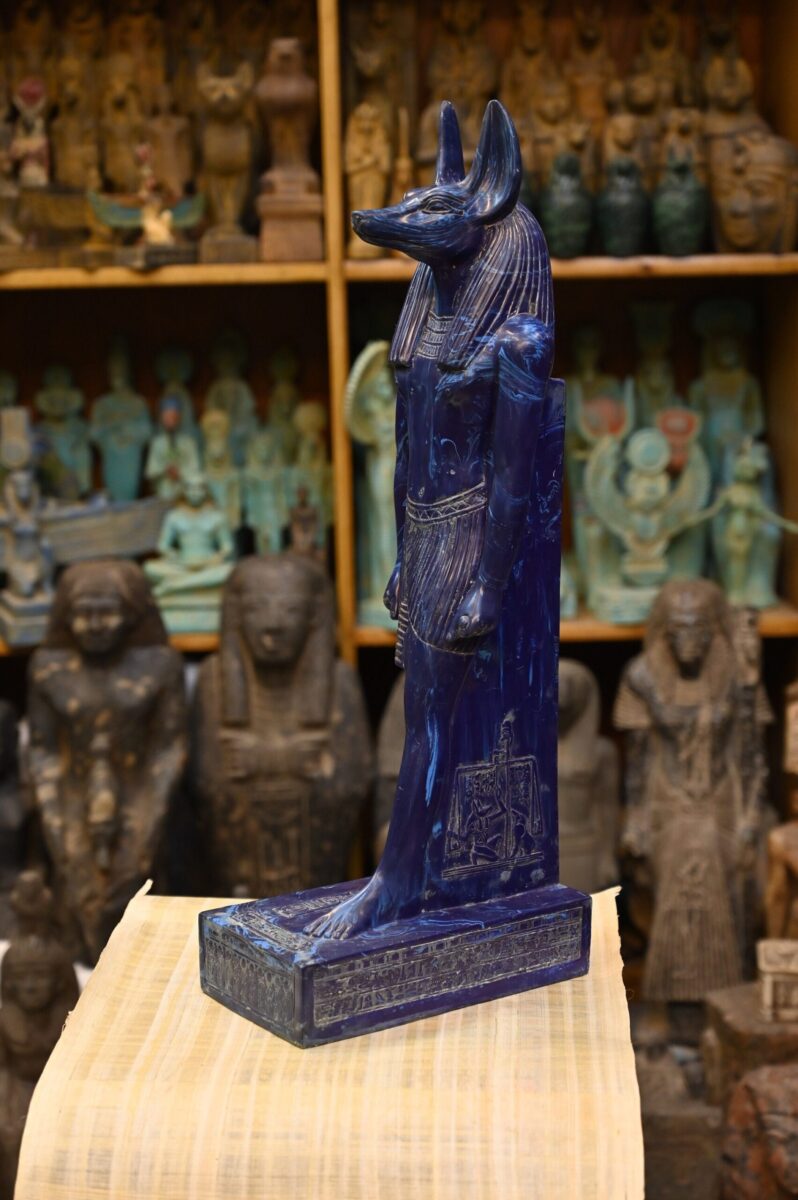
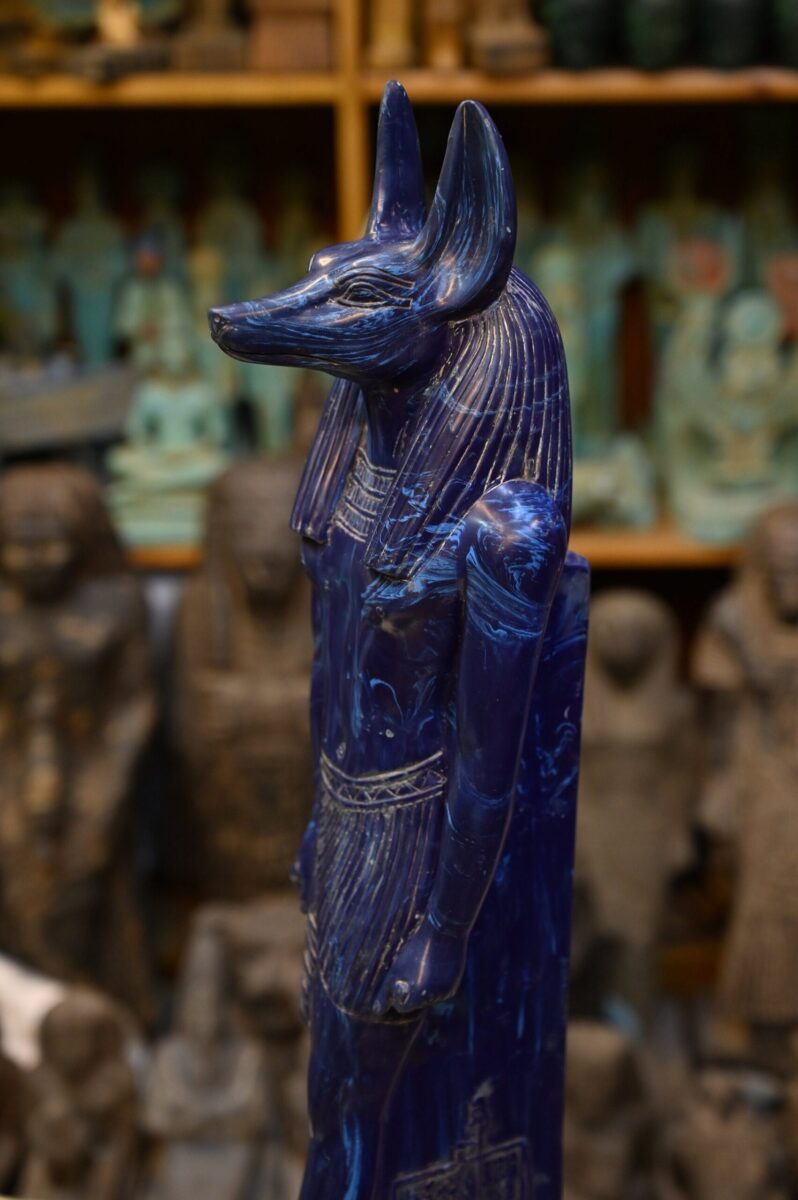
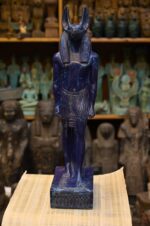
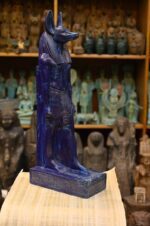
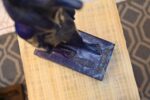
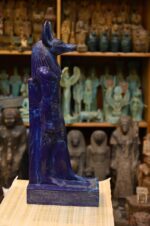
Elegant Statue of God Anubis-Lapis Lazuli Stone–Antique Egyptian Protection of the Dead Royal Cemetery-Mummification sculptures
$715.00
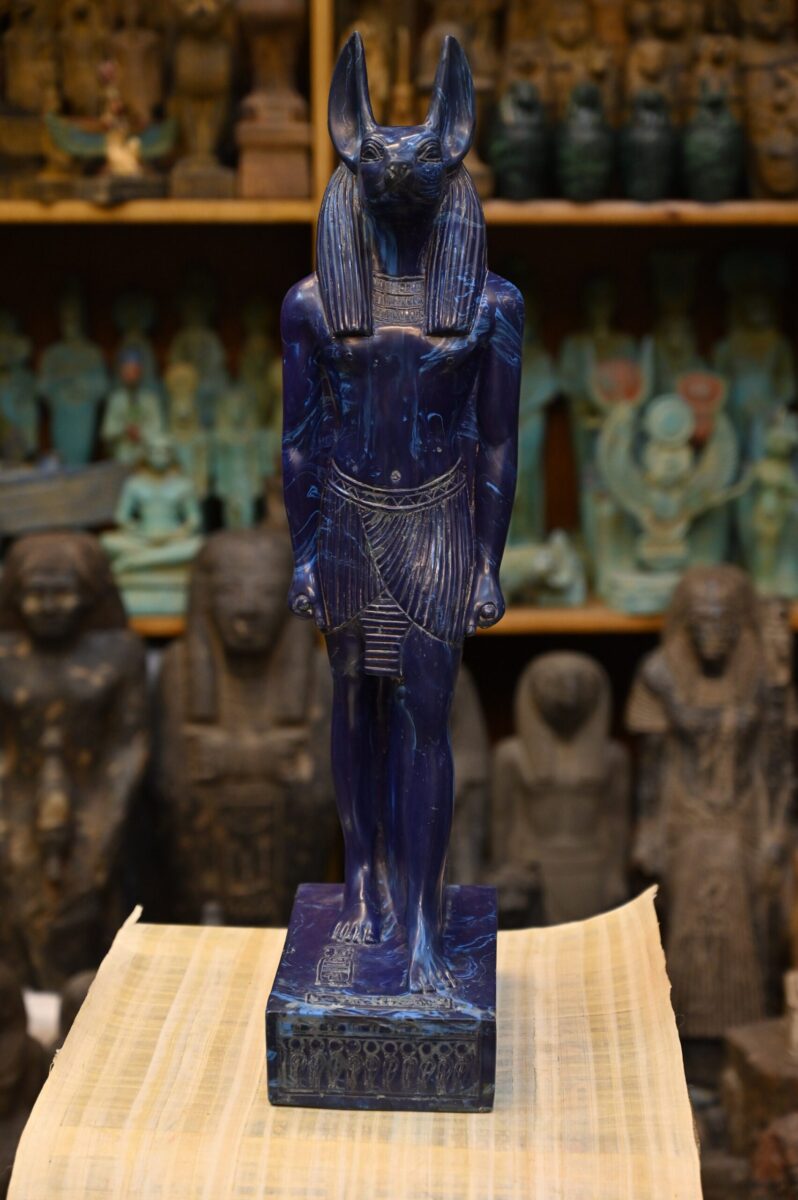
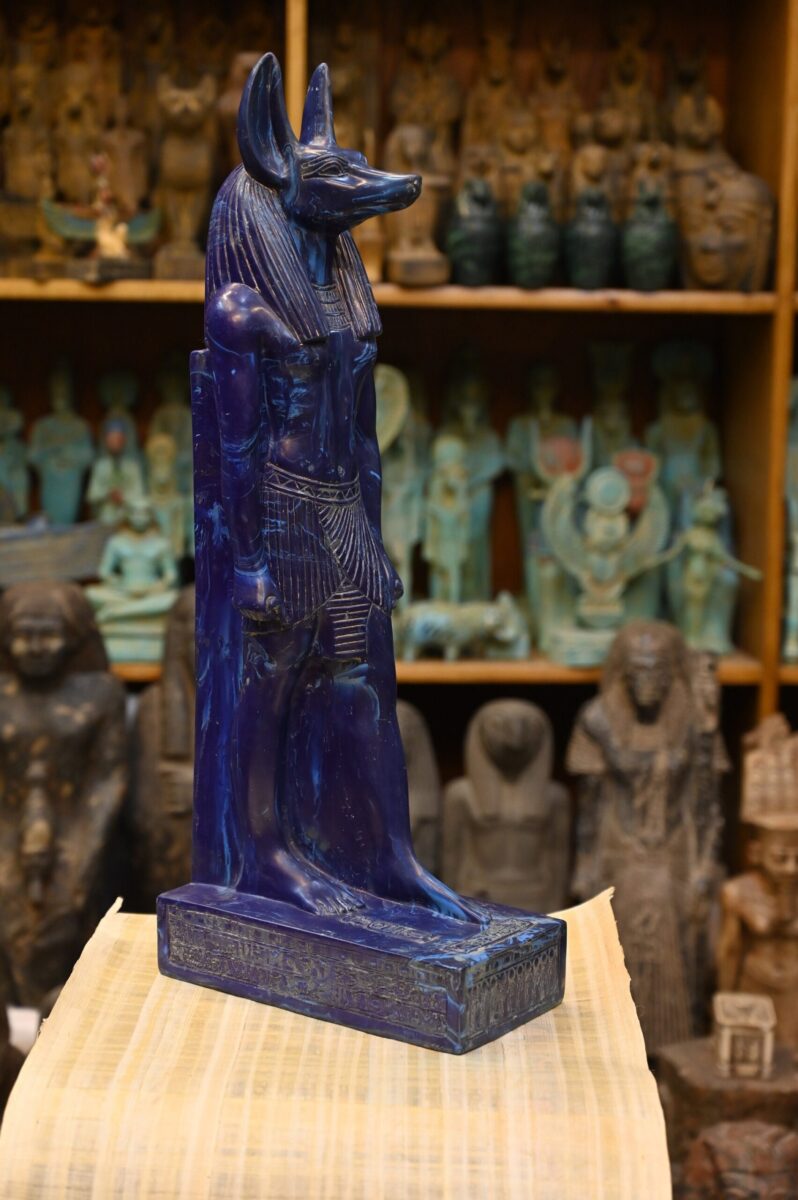
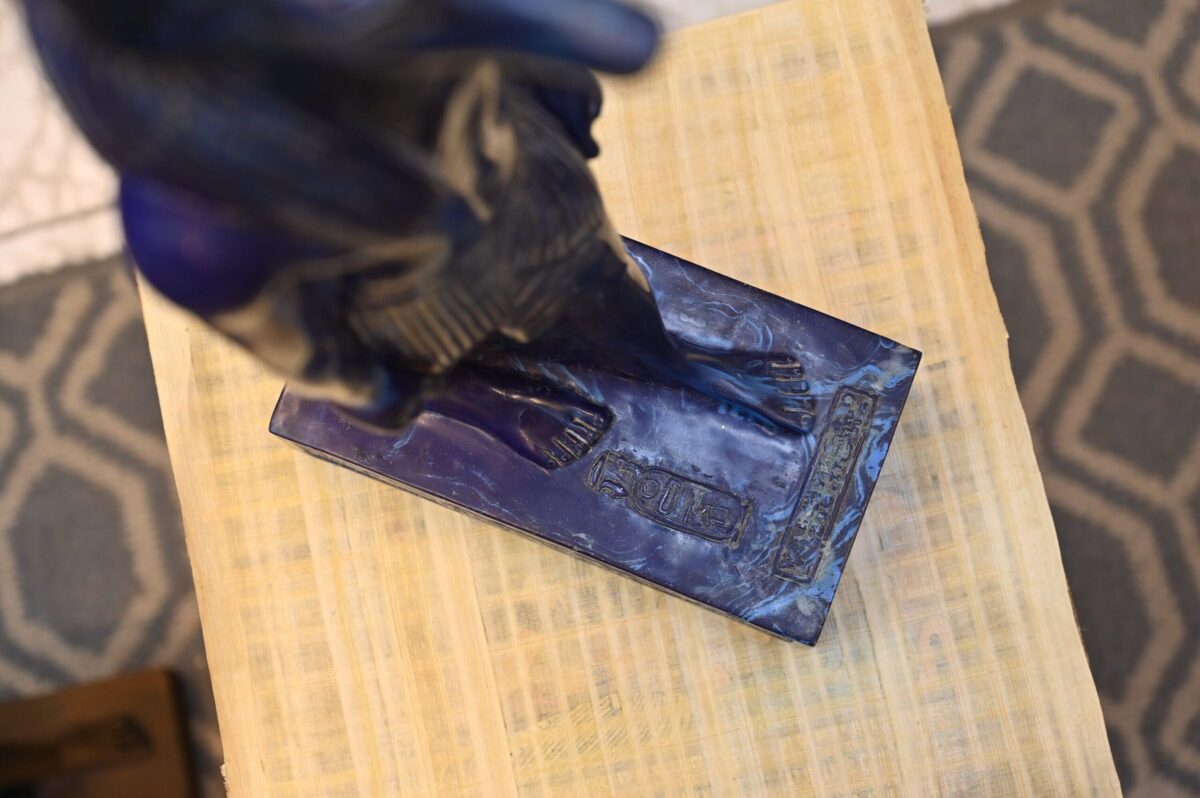
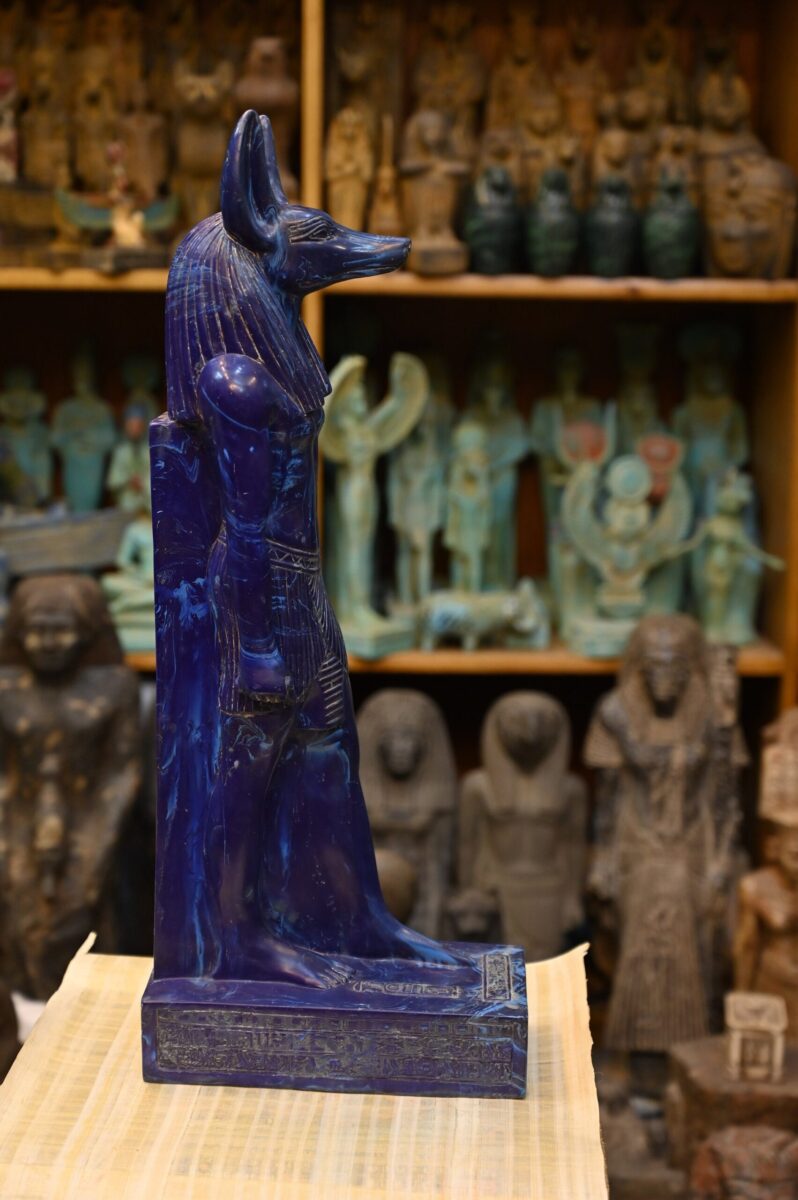
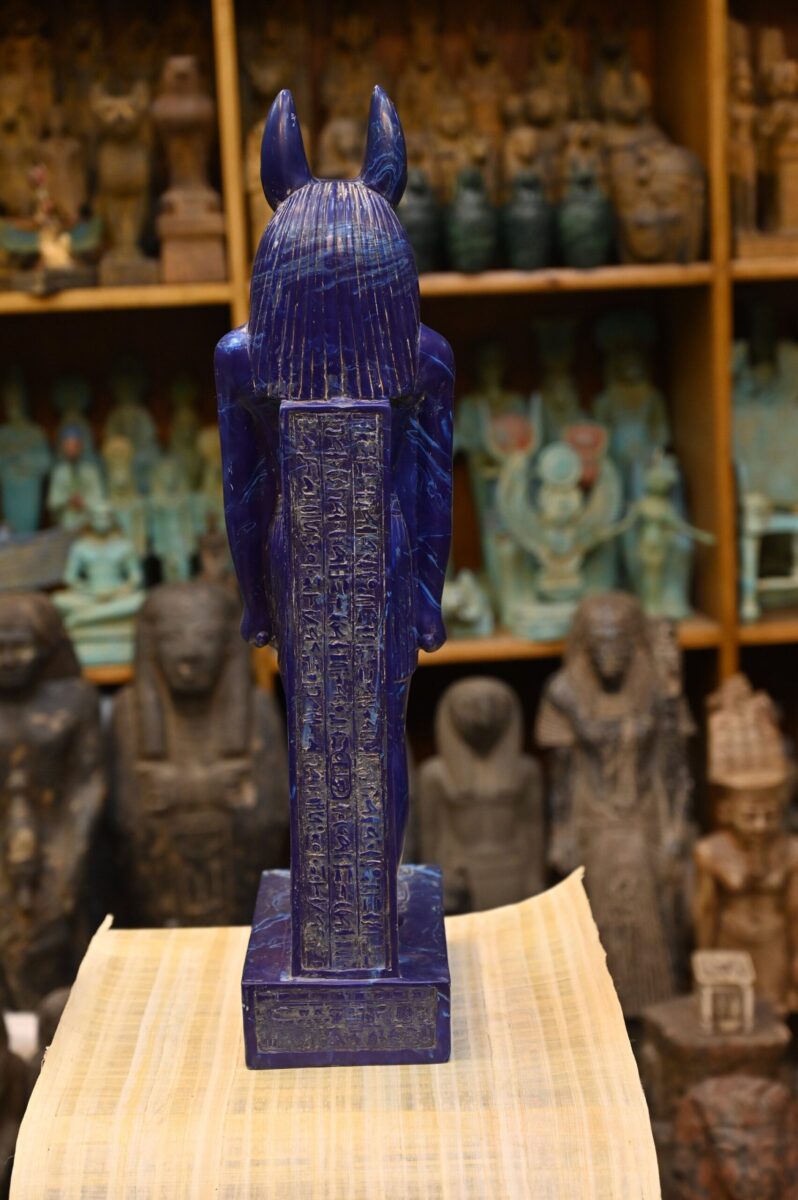
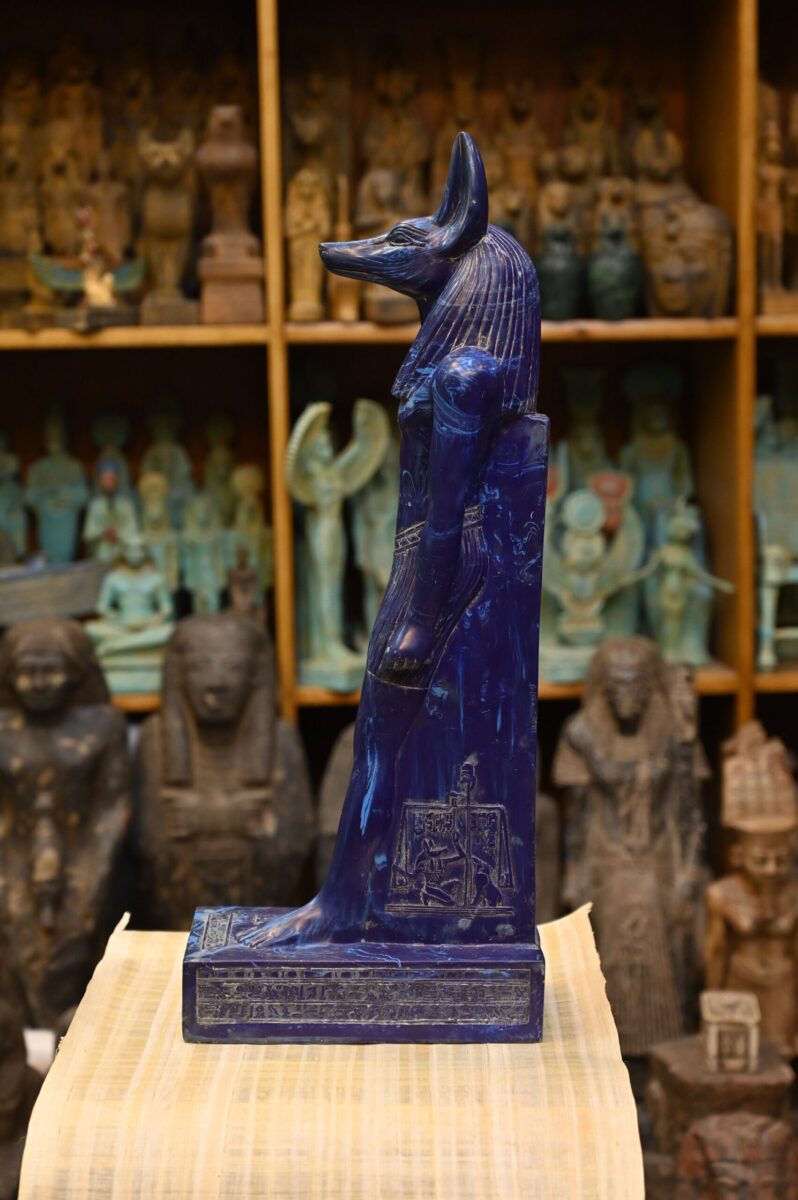
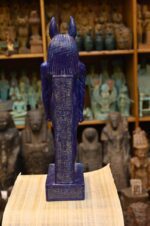
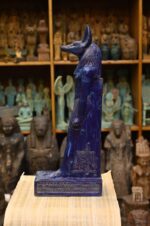
Add a powerful symbol of ancient Egyptian protection to your collection with this Lapis Lazuli Anubis Sculpture, measuring 53 × 12 × 22 cm and inspired by Anubis, the god of mummification, funerary protection, and the afterlife. A striking choice for collectors, mythology lovers, Egyptian décor, museum-inspired displays, and unique cultural gifts.
Lapis Lazuli Anubis Sculpture – Large Egyptian Funerary God Statue
Description of Art
Lapis Lazuli Anubis Sculpture featuring one of the most recognizable deities of ancient Egyptian religion.
According to the supplied product details, this impressive sculpture is made of lapis lazuli and stands 53 cm high, creating a substantial decorative presence for Egyptian art collections, display rooms, offices, libraries, and museum-inspired interiors.
Dimensions
Height: 53 cm
Width: 12 cm
Depth: 22 cm
Material: Lapis Lazuli
Subject: God Anubis
Style: Ancient Egyptian Inspired
Anubis was especially associated with mummification, embalming, cemeteries, funerary protection, and the deceased. Museum collections identify him as one of ancient Egypt’s major mortuary gods and a protector of the necropolis.
Who Was Anubis?
Anubis was one of the oldest and most recognizable funerary deities of ancient Egypt.
He was commonly represented either as a jackal-like canine or as a man with the head of a jackal. The Metropolitan Museum specifically identifies Anubis as the Egyptian god of mummification and explains the close connection between jackals and Egyptian burial grounds.
His major associations included:
- Mummification
- Embalming
- Protection of graves
- Cemeteries
- Protection of the deceased
- Funerary rituals
- Judgment after death
- Guidance through the afterlife
For historical accuracy, it is better to describe Anubis as a funerary god and protector of the dead rather than simply calling him the “god of death.”
Anubis and Mummification
One of Anubis’s most important roles was his connection with embalming.
The Metropolitan Museum notes that Anubis oversaw the embalming process and held an important role as protector of the necropolis.
This association made Anubis an important figure in Egyptian funerary religion and burial practices.
For a modern collector, an Anubis sculpture can symbolically evoke:
Protection • Guardianship • Transition • Renewal • Ancient Egyptian Heritage
Anubis and the Weighing of the Heart
Anubis also played a major role in the ancient Egyptian judgment of the deceased.
In the famous Weighing of the Heart, Anubis supervised or attended the balance used to test the heart of the deceased. The Metropolitan Museum specifically describes him as supervising the weighing of the heart for Osiris.
This scene became one of the most recognizable images associated with Egyptian ideas about death and judgment.
It is important to distinguish Anubis’s role from that of Thoth, who is typically shown recording the result.
Anubis and Osiris
The original description says that Anubis was “replaced by Osiris as lord of the underworld.”
This is too simplified.
As the cult of Osiris became increasingly important, Osiris assumed the dominant role as ruler of the realm of the dead, while Anubis continued to have essential functions involving mummification, protection, embalming, and judgment. Ancient Egyptian funerary imagery frequently shows Anubis and Osiris together rather than presenting one as simply eliminating the role of the other.
This makes the relationship between the two gods complementary rather than simply replacement.
Why Is Anubis Shown as a Jackal?
Anubis’s canine imagery was closely connected with cemeteries.
The Metropolitan Museum explains that jackals were associated with burial areas and could be seen around graveyards. Ancient Egyptians transformed this potentially threatening animal into a divine protector of the dead.
The British Museum similarly identifies the jackal as Anubis’s characteristic animal and connects this imagery with cemeteries and embalming.
This gives the jackal form strong symbolic meaning connected with:
Guardianship • Protection • Funerary Care
Anubis and the Color Black
Anubis is frequently shown with a black body or black jackal head.
The color should not simply be interpreted as the natural color of a real jackal. In Egyptian symbolism, black could relate both to the transformed appearance of the deceased and to ideas of fertility, regeneration, and renewal associated with the dark soil of Egypt.
For product marketing, this helps explain why Anubis imagery can carry themes not only of death but also of renewal and continued existence.
Anubis and Wepwawet
The original description refers to a deity named “Wabot” and calls him Anubis’s brother.
This is most likely confusion with Wepwawet, another ancient Egyptian canine deity.
Wepwawet was a separate deity with his own identity and religious role. The British Museum notes that Anubis and Wepwawet were often associated and could even become confused in later periods, but they should not simply be described as the same god or definitively as brothers.
The Metropolitan Museum likewise distinguishes Anubis, associated strongly with embalming, from Wepwawet, who could escort the deceased into the afterlife.
Anubis Was Important in Egyptian Religion and Myth
The original description also says:
“Anubis played no role in Egyptian mythology.”
That statement should be removed.
Anubis had significant religious and mythological roles involving the preparation of the dead, protection of graves, embalming, funerary judgment, and guiding or protecting the deceased. Museum objects repeatedly identify him as an important mortuary deity.
A much better description is:
“Anubis played a major role in ancient Egyptian funerary religion and beliefs surrounding mummification, protection of the dead, and the afterlife.”
Large Egyptian Statement Sculpture
At 53 cm high, the Lapis Lazuli Anubis Sculpture is considerably larger than many small Egyptian figurines and amulets.
Its tall proportions make it particularly suitable as:
- Collector-room décor
- Shelf centerpiece
- Egyptian-themed interior art
- Office décor
- Library decoration
- Historical display
- Museum-inspired décor
- Statement sculpture
The dimensions of 53 × 12 × 22 cm give the piece a vertical, commanding appearance appropriate for depicting a powerful protective deity.
Lapis Lazuli Appearance
Lapis lazuli is especially recognizable for its rich blue appearance, making it visually distinctive in Egyptian-inspired art.
According to the supplied product description, this statue is made from lapis lazuli, giving the sculpture a very different character from conventional black, basalt, granite, or painted Anubis statues.
If the product is instead artificial lapis, lapis composite, or another material with lapis decoration, that should be stated specifically in the listing rather than describing it as solid natural lapis lazuli.
Museum-Inspired Egyptian Decor
The original title uses terms such as “Egyptian antique” and “museum piece.”
Because this is a modern handcrafted product, those phrases could imply that the item is an authentic ancient artifact.
Safer and stronger terms include:
Egyptian-inspired sculpture
Anubis replica statue
Museum-inspired Anubis sculpture
Handcrafted Egyptian décor
This keeps the listing clear for buyers while preserving its historical character.
Perfect for Collectors
The Lapis Lazuli Anubis Sculpture is a distinctive choice for:
- Anubis collectors
- Ancient Egyptian art enthusiasts
- Egyptology lovers
- Egyptian mythology fans
- Lapis lazuli collectors
- Funerary art enthusiasts
- Stone sculpture collectors
- Egyptian décor
- Museum-inspired interiors
- Unique cultural gifts
It can also complement collections featuring Osiris, Isis, Horus, Thoth, Ma’at, Sekhmet, Bastet, and other Egyptian deities.
Product Details
Product: Lapis Lazuli Anubis Sculpture
Deity: Anubis
Material: Lapis Lazuli
Height: 53 cm
Width: 12 cm
Depth: 22 cm
Main Associations: Mummification, Embalming, Funerary Protection & Afterlife
Form: Jackal / Jackal-Headed Deity
Style: Ancient Egyptian Inspired
Type: Large Decorative Sculpture
Use: Collection, Home Décor, Office Décor & Cultural Gift
Related products
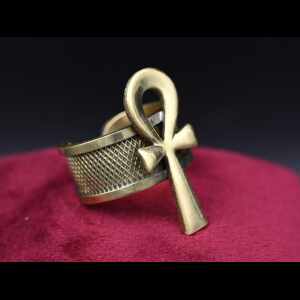
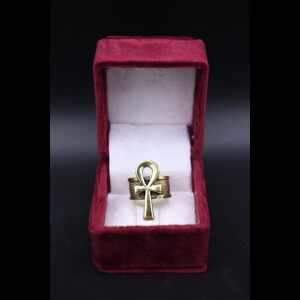
Oxidized Copper Ankh Ring: Egyptian Key of Life Symbol
Add a timeless symbol of ancient Egyptian life to your jewelry collection with this Oxidized Copper Ankh Ring, handcrafted in Egypt from oxidized copper with a unisex free-size design. Inspired by the Ankh, the iconic Key of Life symbolizing life, vitality, regeneration, and continuity, it is a distinctive choice for mythology lovers, copper jewelry collectors, and unique cultural gifts.
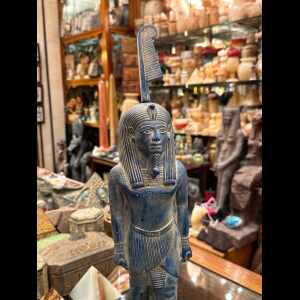
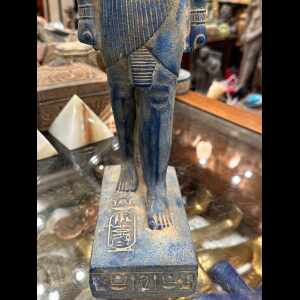
Handmade Blue Stone Statue: Egyptian God Shu, God of Air (35 cm)
Add a distinctive symbol of ancient Egyptian creation mythology to your collection with this Blue Stone Shu God Statue, handmade in Egypt and measuring 35 × 7 × 9 cm. Inspired by Shu, the god of air and atmosphere who separated the sky goddess Nut from the earth god Geb, it is ideal for collectors, Egyptian décor, mythology lovers, and unique cultural gifts.
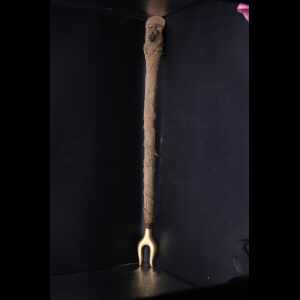
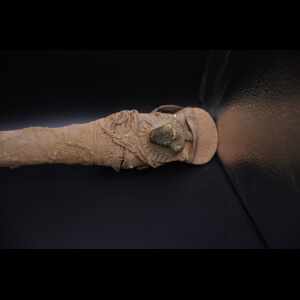
Sekhmet Scepter Was Stick, Egyptian Symbol of Strength, 50cm, Made in Egypt
Add a powerful symbol of ancient Egyptian authority to your collection with this 50 cm Sekhmet Was Scepter, handcrafted in Egypt from wood, linen, and copper. Featuring a Sekhmet-inspired design and the iconic Was symbol of dominion and power, it is a distinctive choice for Egyptology collectors, mythology lovers, Egyptian décor, and museum-inspired displays.
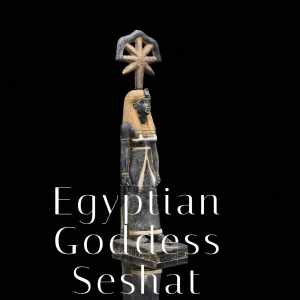
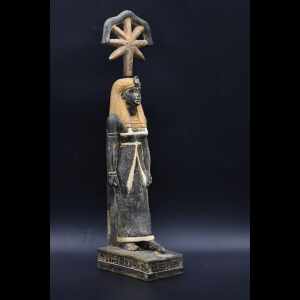
Seshat Statue: Egyptian Goddess of Wisdom Stone Sculpture
Add a distinctive symbol of ancient Egyptian knowledge to your collection with this 35 cm Seshat Stone Statue, handcrafted in Egypt and measuring 35 × 7 × 9 cm. Inspired by Seshat, the goddess of writing, record keeping, measurement, mathematics, and building planning, it is an exceptional choice for Egyptology collectors, writers, libraries, offices, and unique cultural gifts.
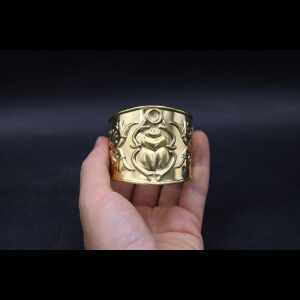
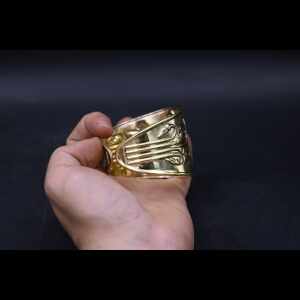
Egyptian Scarab Bracelet: Brass Beetle Amulet, Ancient Mythology Jewelry
Add a meaningful symbol of ancient Egyptian renewal to your jewelry collection with this Brass Scarab Beetle Bracelet, handcrafted in Egypt from brass and featuring a detailed scarab centerpiece. Inspired by the ancient symbolism of rebirth, transformation, solar renewal, and protection, it is a distinctive choice for mythology lovers, Egyptology enthusiasts, jewelry collectors, and unique cultural gifts.
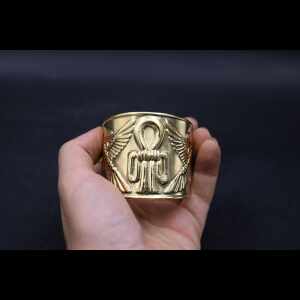
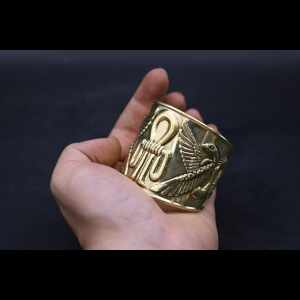
Brass Hathor Knot Bracelet: Egyptian Winged Cobra Talisman
Add a powerful touch of ancient Egyptian symbolism to your jewelry collection with this Brass Winged Cobra Egyptian Bracelet, crafted from brass and featuring an Egyptian-inspired knot centerpiece flanked by protective winged cobras. Inspired by ancient themes of guardianship and royal power, it is a distinctive choice for mythology lovers, Egyptology enthusiasts, statement-jewelry collectors, and unique cultural gifts.
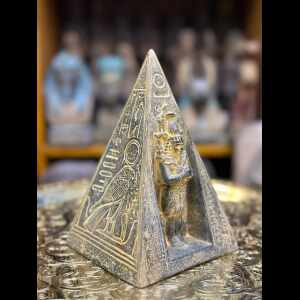
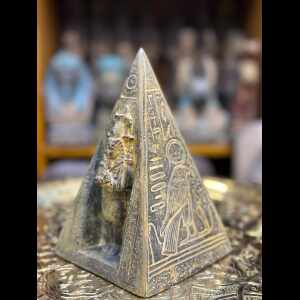
Egyptian Black Stone Pyramid – Handcrafted Horus Monument
Add a striking touch of ancient Egyptian symbolism to your space with this Black Stone Horus Pyramid, crafted from solid black stone and measuring 17 × 10 × 10 cm. Decorated with Horus and other Egyptian-inspired motifs, it is a distinctive choice for collectors, mythology lovers, office décor, Egyptian-themed interiors, and unique cultural gifts.
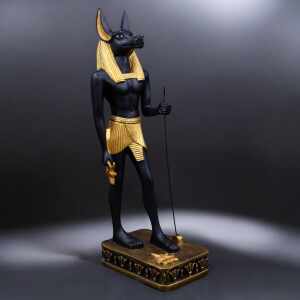
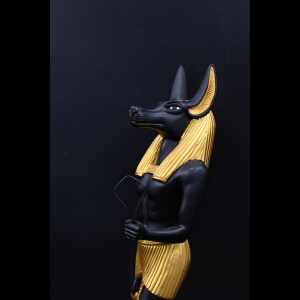
Handcrafted Anubis Statue: Egyptian God of Mummification, 40cm Natural Stone
Add a powerful symbol of ancient Egyptian protection to your collection with this 40 cm Natural Stone Anubis Statue, handcrafted in Egypt from natural stone. Inspired by Anubis, the canine-headed deity of mummification, funerary protection, and care of the deceased, it is a striking choice for collectors, Egyptian décor, museum-inspired displays, and unique cultural gifts.


Reviews
There are no reviews yet.