
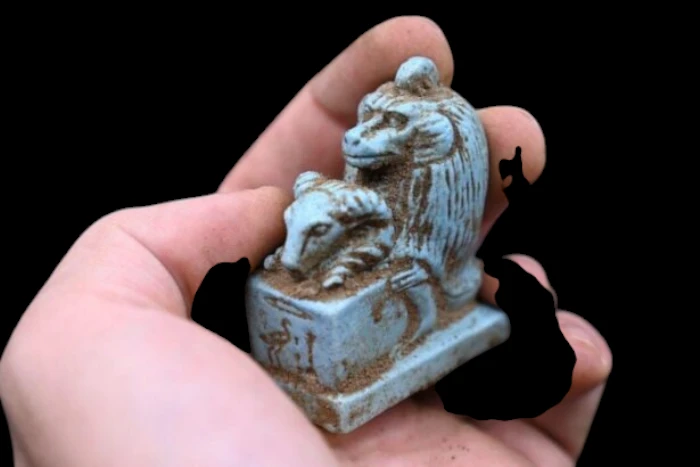
Egyptian Sons of Horus Relief: Ancient Replica
$195.00
Four Sons of Horus Wall Relief – Egyptian Stone Wall Decor
Description of Art
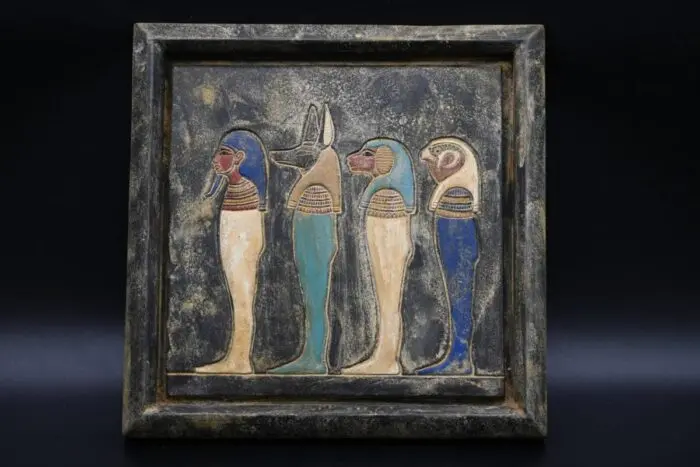
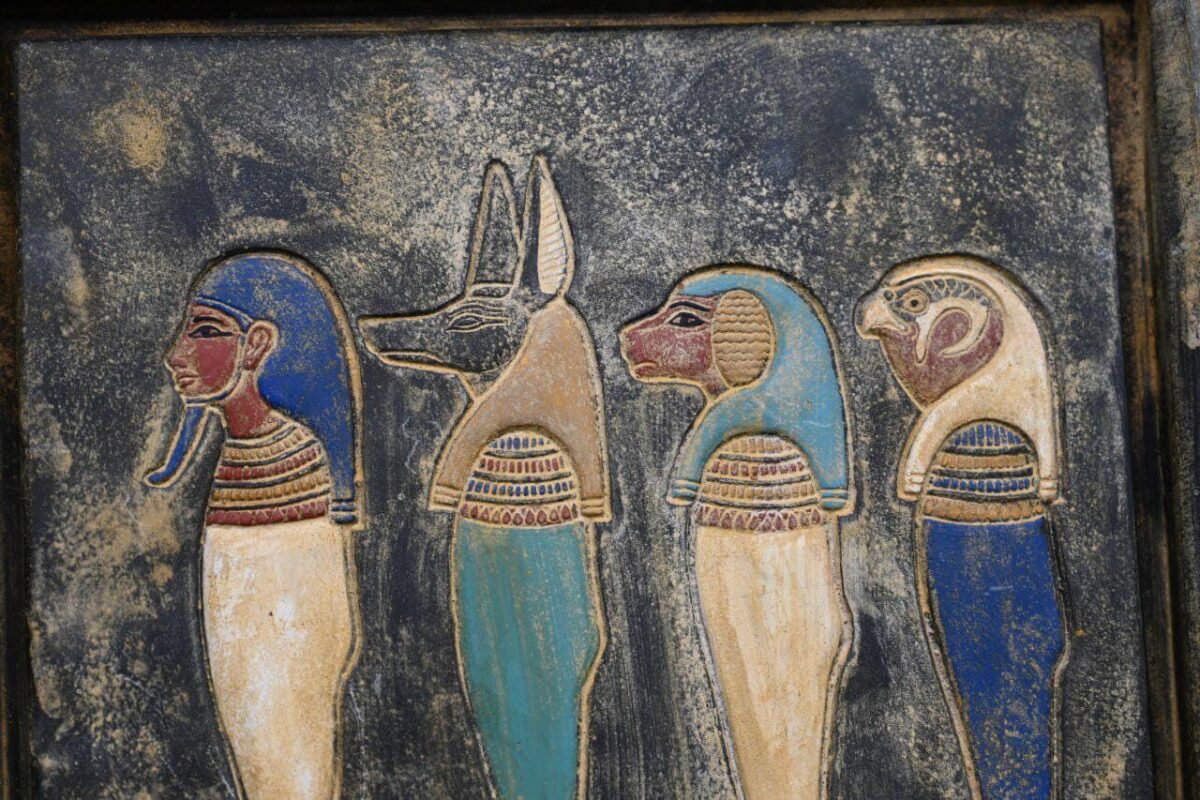
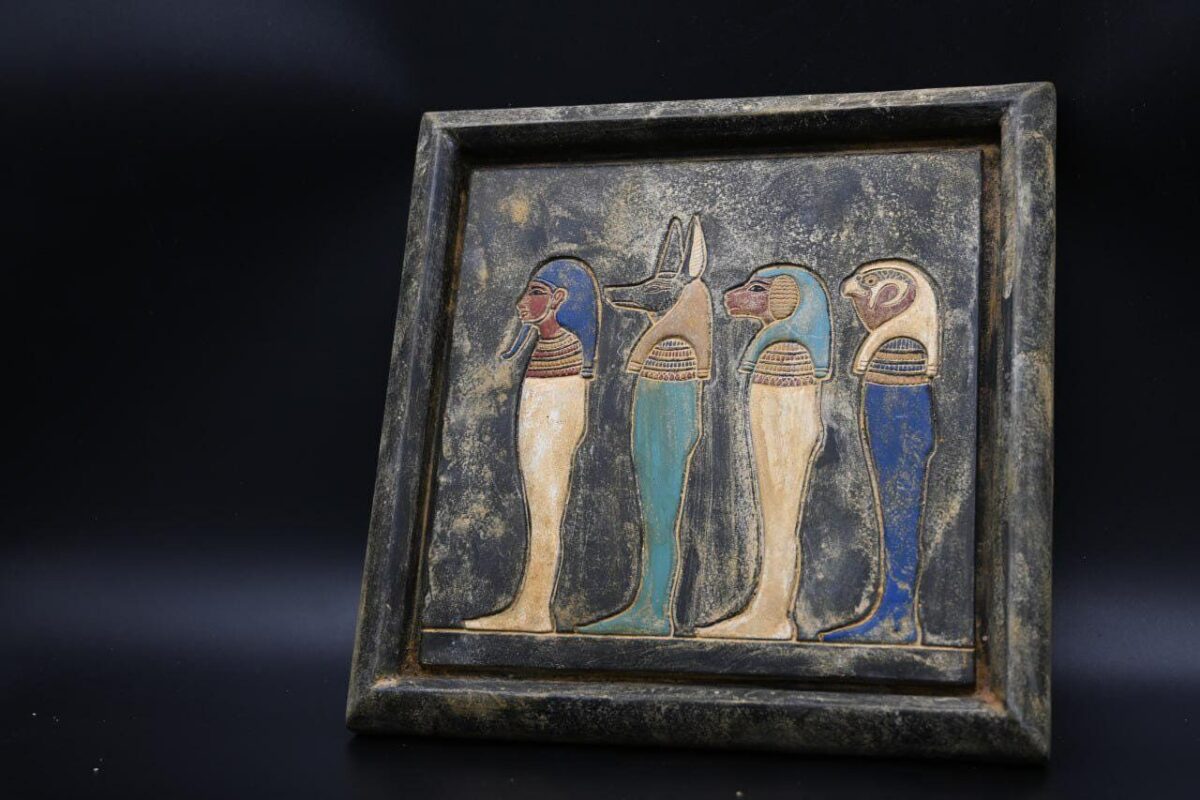
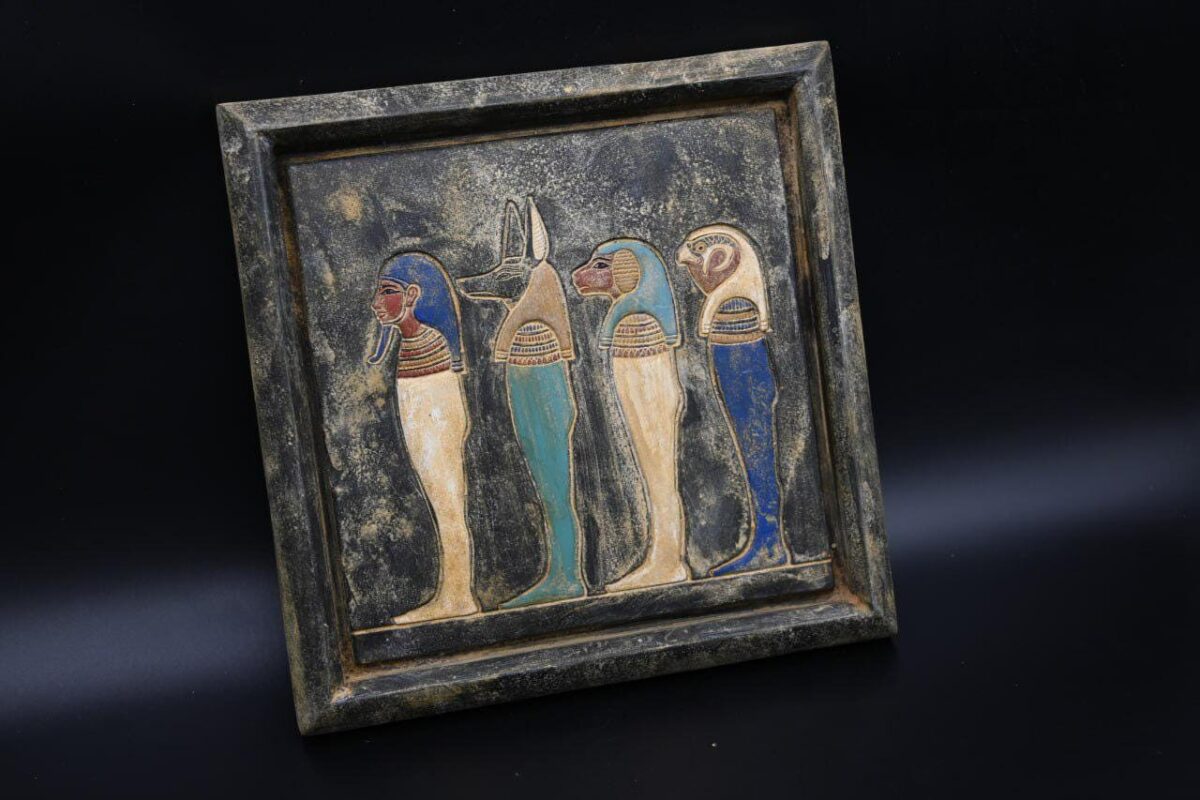
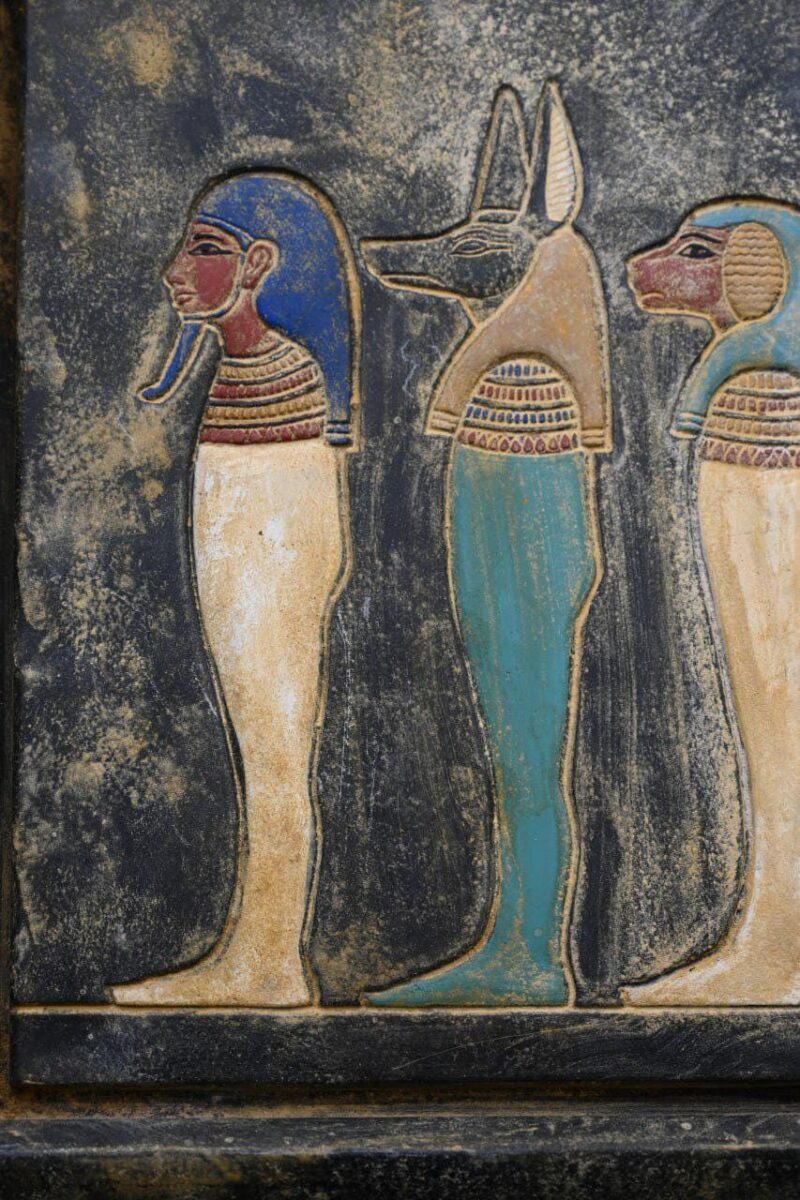
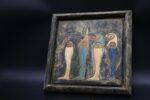
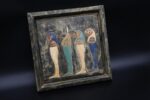
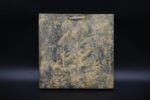
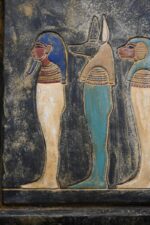
Four Sons of Horus Wall Relief made of stone and decorated with beautiful Egyptian-inspired inscriptions.
Designed to be hung on the wall, this decorative relief takes inspiration from Imsety, Hapy, Duamutef, and Qebehsenuef, the four ancient Egyptian funerary deities traditionally known as the Sons of Horus.
The Four Sons of Horus were closely connected with mummification and the protection of the internal organs of the deceased. They became especially famous through their association with canopic jars.
This stone wall piece is ideal for Egyptian art collectors, history lovers, archaeology enthusiasts, museum-inspired interiors, and distinctive cultural décor.
Who Were the Four Sons of Horus?
The Four Sons of Horus were a group of protective funerary deities in ancient Egyptian religion.
Their names were:
- Imsety
- Hapy
- Duamutef
- Qebehsenuef
They were responsible for protecting important organs removed from the body during the mummification process.
Their protective role made them important figures in Egyptian funerary beliefs and resulted in their appearance on canopic jars, amulets, funerary objects, and other burial equipment.
The Four Sons and Canopic Jars
Canopic jars were containers used to hold organs removed from the body during mummification.
Traditionally, four major organs were associated with the Four Sons of Horus:
Imsety – Liver
Hapy – Lungs
Duamutef – Stomach
Qebehsenuef – Intestines
Each deity therefore acted as a divine protector of a particular part of the deceased’s body.
This connection between preservation, protection, and the afterlife gives the Four Sons of Horus Wall Relief strong historical inspiration.
Imsety – Protector of the Liver
Imsety was traditionally represented with a human head.
His primary responsibility was protecting the liver of the deceased. The British Museum and Metropolitan Museum both identify Imsety with the protection of the liver.
Among the four deities, his human-headed appearance makes him especially easy to distinguish from his animal-headed companions.
Hapy – Protector of the Lungs
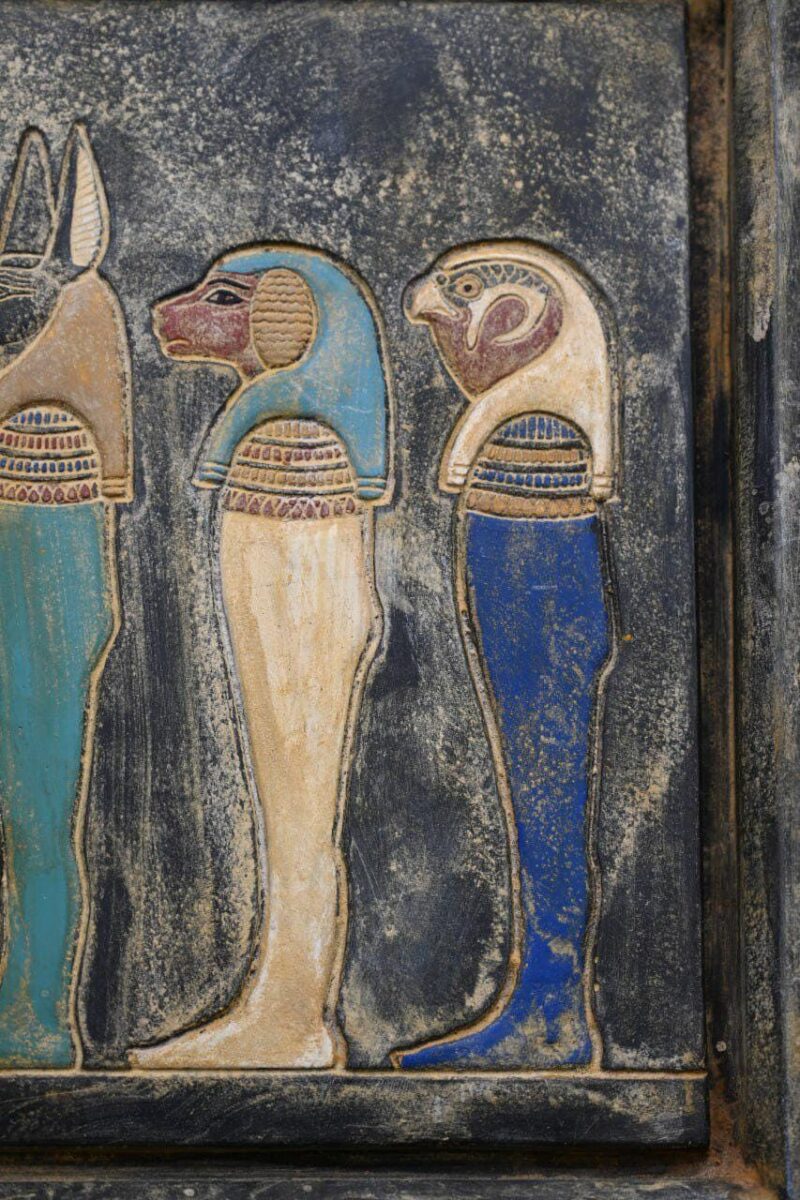
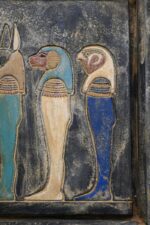
Hapy was represented with the head of a baboon.
He was traditionally responsible for protecting the lungs.
Hapy should not be confused with Hapi, the well-known deity associated with the Nile inundation. Although their names are often rendered similarly in English, they represent different figures in Egyptian religion.
Duamutef – Protector of the Stomach
Duamutef was traditionally shown with the head of a jackal.
His role was to protect the stomach of the deceased. Museum examples of canopic jars and funerary figures identify Duamutef specifically with this organ.
His jackal-headed form can resemble imagery associated with Anubis, but Duamutef was a separate funerary deity with his own role among the Four Sons of Horus.
Qebehsenuef – Protector of the Intestines
Qebehsenuef, whose name may also appear in alternative spellings, was represented with the head of a falcon.
He traditionally protected the intestines.
The falcon-headed form gives Qebehsenuef a distinctive appearance within the group.
The Four Iconic Heads
Later and especially familiar representations of the Four Sons of Horus distinguish them through four characteristic heads:
Imsety – Human
Hapy – Baboon
Duamutef – Jackal
Qebehsenuef – Falcon
These forms became closely associated with canopic jar lids and are among the most recognizable images connected with ancient Egyptian mummification.
Earlier canopic jars did not always use these four different animal-headed lids. For example, Middle Kingdom sets could have human-headed lids throughout, so the familiar four-head arrangement should not be treated as universal for every period.
Protection in the Afterlife
The Four Sons of Horus were not simply decorative figures.
Their principal role was protection.
Ancient Egyptians believed that preserving the body was important for successful existence after death. The organs removed during mummification therefore required divine protection, and the Four Sons became closely involved with that process.
For modern collectors, their imagery can evoke themes such as:
- Protection
- Preservation
- Guardianship
- The afterlife
- Ancient Egyptian spirituality
- Funerary tradition
- Egyptian cultural heritage
Egyptian Inscriptions and Wall Art
The decorative inscriptions featured on this stone relief give it a strong Pharaonic-inspired appearance.
Designed specifically for wall hanging, the Four Sons of Horus Wall Relief can become a distinctive focal point in:
- Living rooms
- Offices
- Libraries
- Hallways
- Collector rooms
- Egyptian-themed interiors
- Historical displays
- Museum-inspired spaces
It can also complement other decorative pieces inspired by Horus, Anubis, Osiris, Isis, Thoth, Ma’at, and ancient Egyptian funerary traditions.
Made of Stone
This wall relief is made of stone, providing a substantial appearance that works naturally with its ancient Egyptian-inspired design.
Because it is a modern decorative item, it should be presented as an Egyptian-inspired wall relief or replica, rather than an authentic ancient artifact.
Perfect for Egyptian Art Collectors
The Four Sons of Horus Wall Relief is ideal for:
- Ancient Egyptian art collectors
- Egyptology enthusiasts
- Archaeology lovers
- Canopic jar collectors
- Egyptian mythology fans
- History lovers
- Stone wall-art collectors
- Museum-inspired décor
- Unique cultural gifts
Its combination of Egyptian inscriptions, stone construction, and funerary symbolism makes it a distinctive addition to an Egyptian-themed collection.
Product Details
Product: Four Sons of Horus Wall Relief
Material: Stone
Display Type: Wall Hanging
Figures: Imsety, Hapy, Duamutef & Qebehsenuef
Imsety: Human Head – Protector of the Liver
Hapy: Baboon Head – Protector of the Lungs
Duamutef: Jackal Head – Protector of the Stomach
Qebehsenuef: Falcon Head – Protector of the Intestines
Style: Ancient Egyptian / Pharaonic Inspired
Theme: Protection, Mummification & Afterlife
Type: Decorative Stone Wall Relief
Use: Home Décor, Office Décor, Collection & Cultural Gift
Shipping
Please provide a valid and reachable phone number to complete the international shipping process.
Keep an eye on your inbox for shipping updates and tracking information.
Your Four Sons of Horus Wall Relief should be carefully packaged to help protect the stone piece during transportation.
Related products
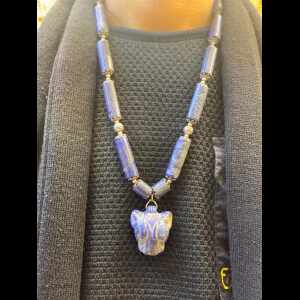
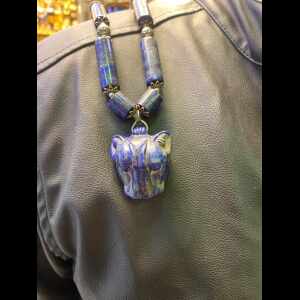
Handmade Lapis Lazuli Sekhmet Necklace: Egyptian Goddess Jewelry
Add a powerful touch of ancient Egyptian symbolism to your jewelry collection with this 150 g Lapis Sekhmet Necklace, handcrafted from natural lapis lazuli stone with elegant silver-tone metal accents. Inspired by Sekhmet, the lioness goddess of strength, protection, healing, and solar power, it is a striking choice for mythology lovers, statement-jewelry collectors, and unique cultural gifts.
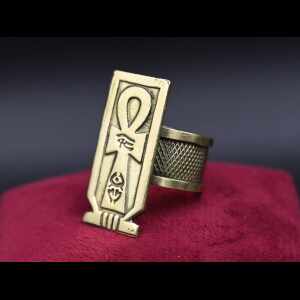
Oxidized Copper Ankh Ring: Ancient Egyptian Key of Life Symbol
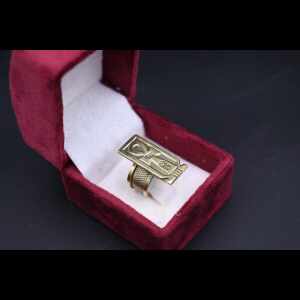
Add a timeless symbol of ancient Egyptian life to your jewelry collection with this Oxidized Copper Ankh Ring, handcrafted in Egypt from oxidized copper with a unisex free-size design. Inspired by the iconic Key of Life representing life, vitality, renewal, and continuity, it is a distinctive choice for mythology lovers, copper jewelry collectors, and unique cultural gifts.
Scarab ring-amazing Ring the symbol of good luck-good life-ancient Egyptian ornament-mythology
Add a meaningful symbol of ancient Egyptian renewal to your jewelry collection with this Unisex Egyptian Scarab Ring, handcrafted in Egypt with a flexible free-size design for women and men. Inspired by the scarab’s ancient associations with rebirth, transformation, solar regeneration, and protection, it is a distinctive choice for mythology lovers, Egyptology enthusiasts, and unique cultural gifts.
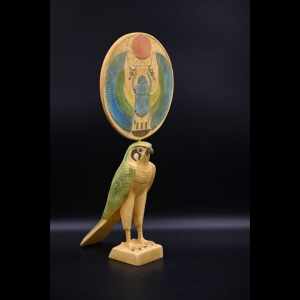
Handcrafted Limestone Horus Statue, Egyptian God of Protection (35cm)
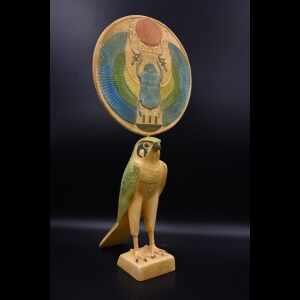
Add a powerful symbol of ancient Egyptian kingship to your collection with this 35 cm Limestone Horus Statue, handcrafted in Egypt and featuring solar and winged scarab motifs. Inspired by Horus, the falcon god of the sky, royal authority, and protection, it is a striking choice for Egyptology collectors, Egyptian décor, mythology lovers, and museum-inspired displays.
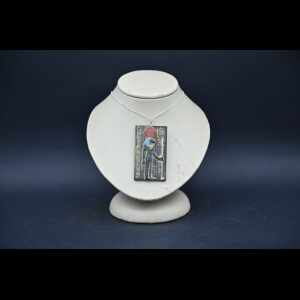
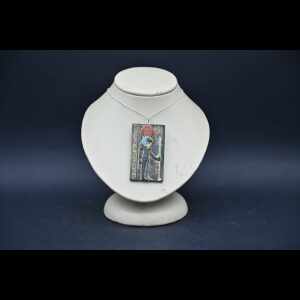
Handmade Stone Sekhmet Amulet, Egyptian Goddess of War
Add a powerful symbol of ancient Egyptian strength to your collection with this Sekhmet Stone Protection Amulet, crafted from stone and inspired by Sekhmet, the lioness goddess of war, protection, healing, medicine, and solar power. A distinctive choice for Egyptology enthusiasts, mythology lovers, symbolic décor collectors, and unique cultural gifts.
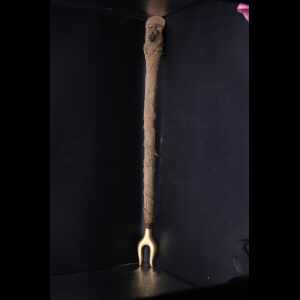
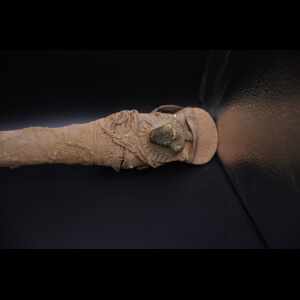
Sekhmet Scepter Was Stick, Egyptian Symbol of Strength, 50cm, Made in Egypt
Add a powerful symbol of ancient Egyptian authority to your collection with this 50 cm Sekhmet Was Scepter, handcrafted in Egypt from wood, linen, and copper. Featuring a Sekhmet-inspired design and the iconic Was symbol of dominion and power, it is a distinctive choice for Egyptology collectors, mythology lovers, Egyptian décor, and museum-inspired displays.
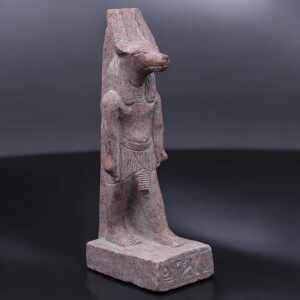
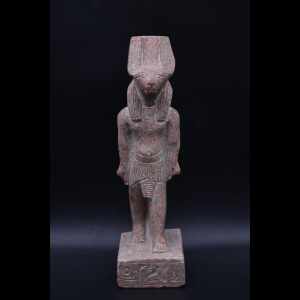
Handcrafted Red Granite Anubis Statue – Egyptian God of Afterlife (30cm)
Add a powerful symbol of ancient Egyptian protection to your collection with this 30 cm Red Granite Anubis Statue, handcrafted in Egypt from red granite. Inspired by Anubis, the canine-headed deity of mummification, funerary protection, and care of the deceased, it is a striking choice for collectors, Egyptian décor, museum-inspired displays, and unique cultural gifts.
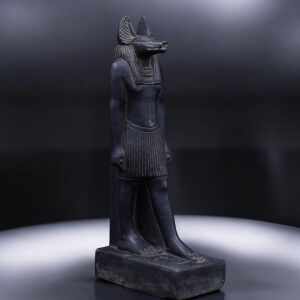
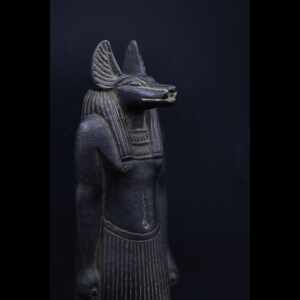
Handcrafted Basalt Stone Anubis Statue – Egyptian Mythology Decor (30cm)
Add a powerful symbol of ancient Egyptian protection to your collection with this 30 cm Basalt Anubis Statue, handcrafted in Egypt from natural basalt stone. Inspired by Anubis, the canine-headed deity of mummification, funerary protection, and care of the deceased, it is a distinctive choice for collectors, Egyptian décor, museum-inspired displays, and unique cultural gifts.


Reviews
There are no reviews yet.