
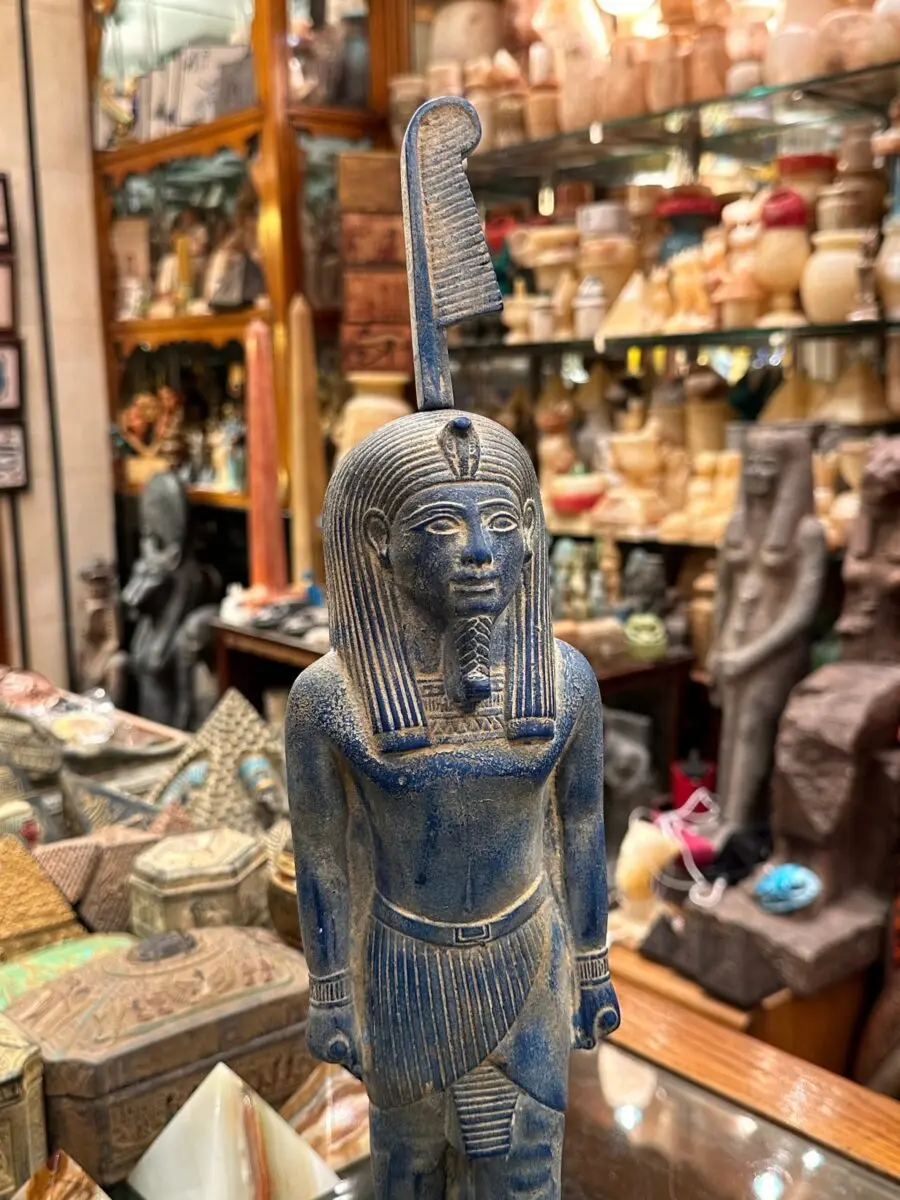
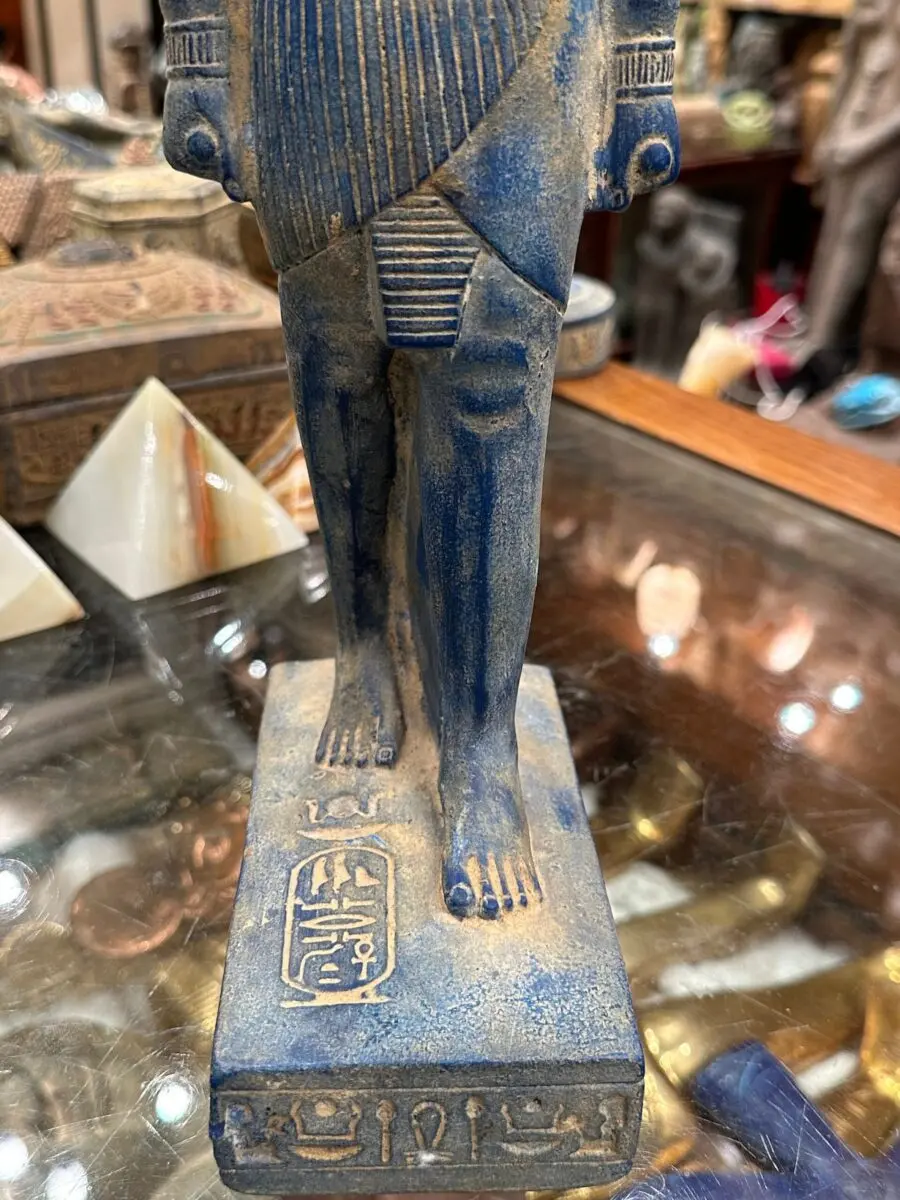
Blue Stone Statue: Egyptian God Shu, God of Air (35 cm)
$261.30
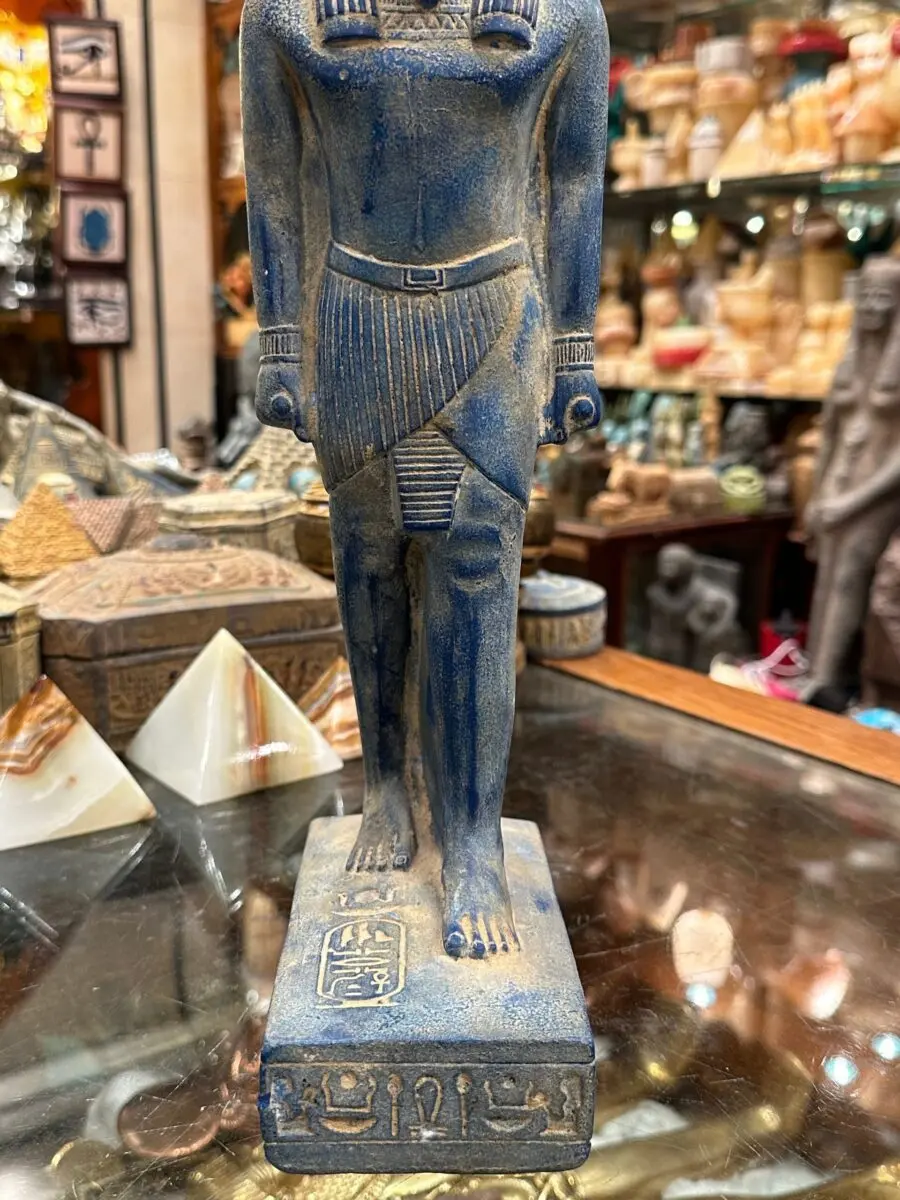
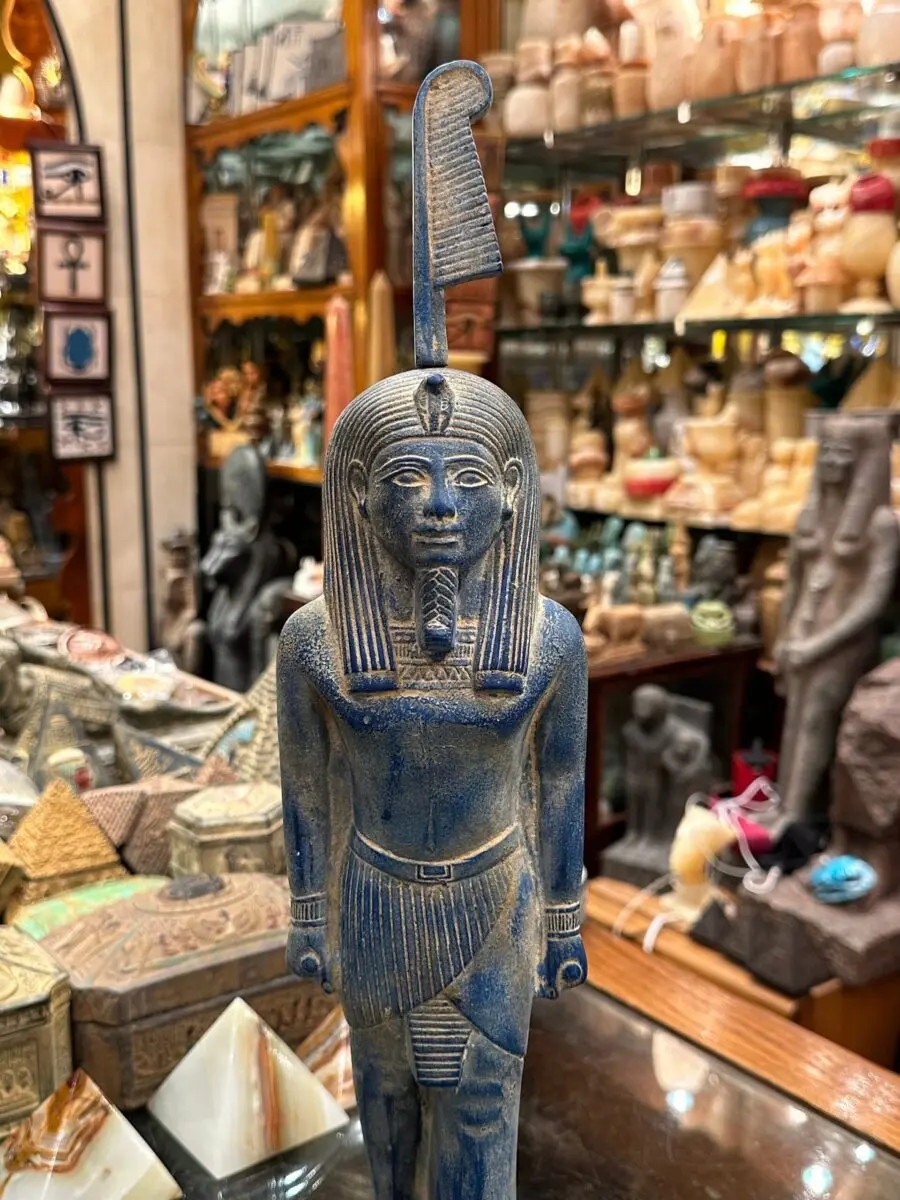
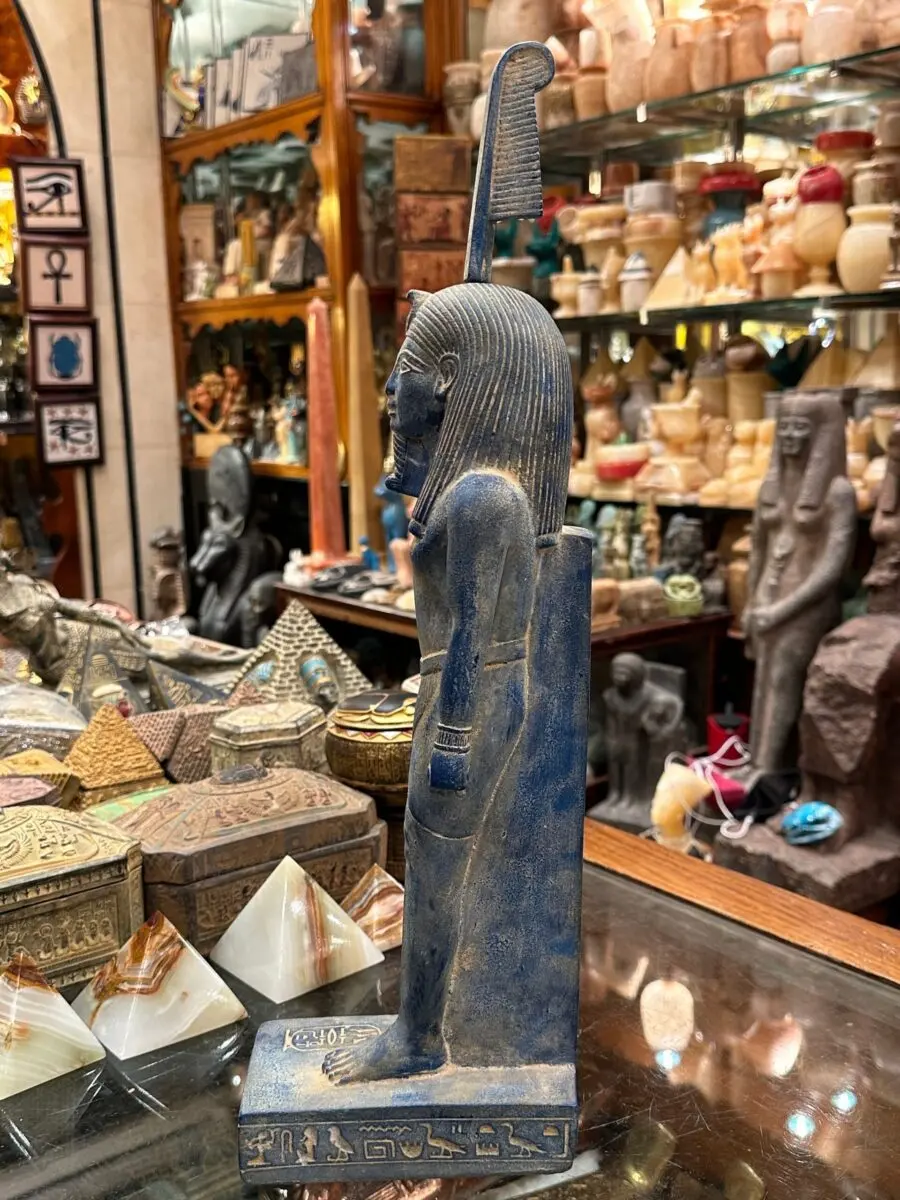
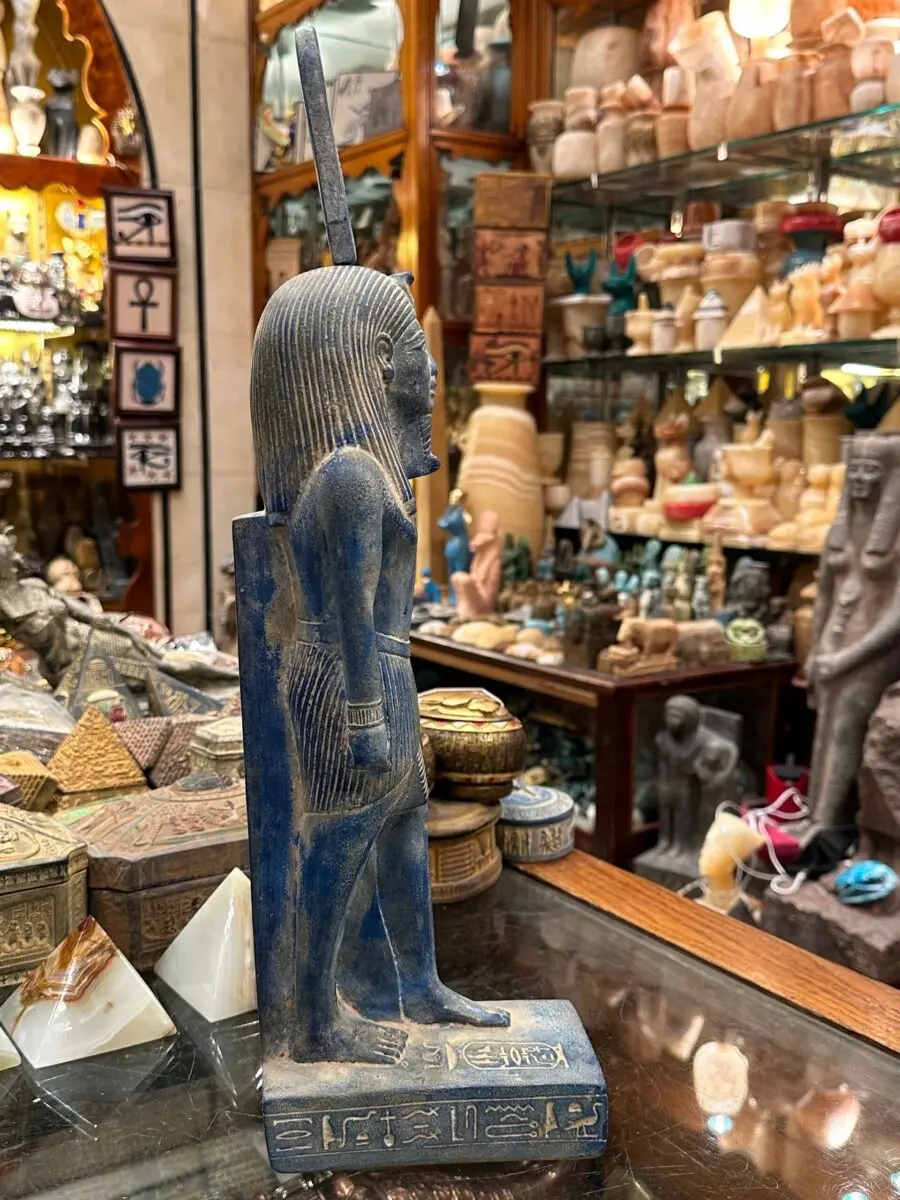
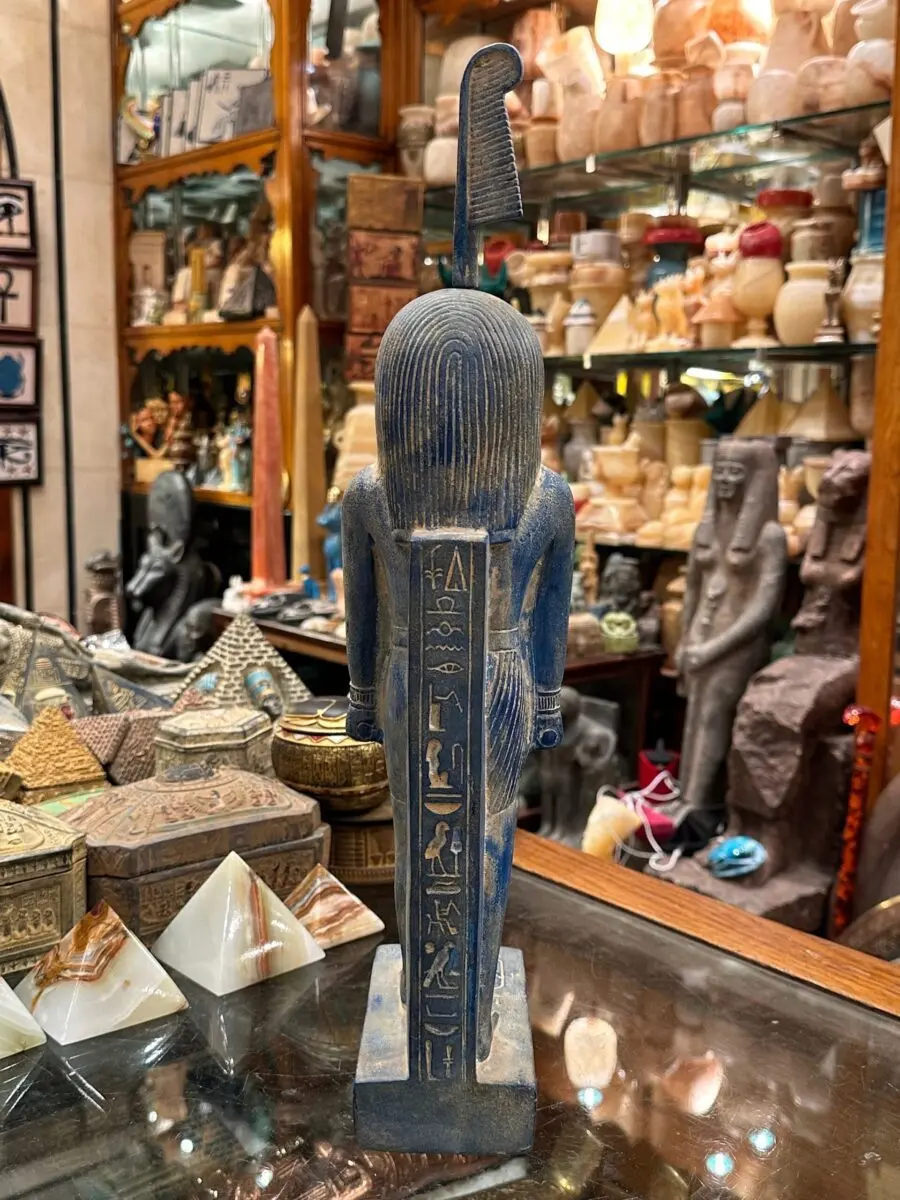
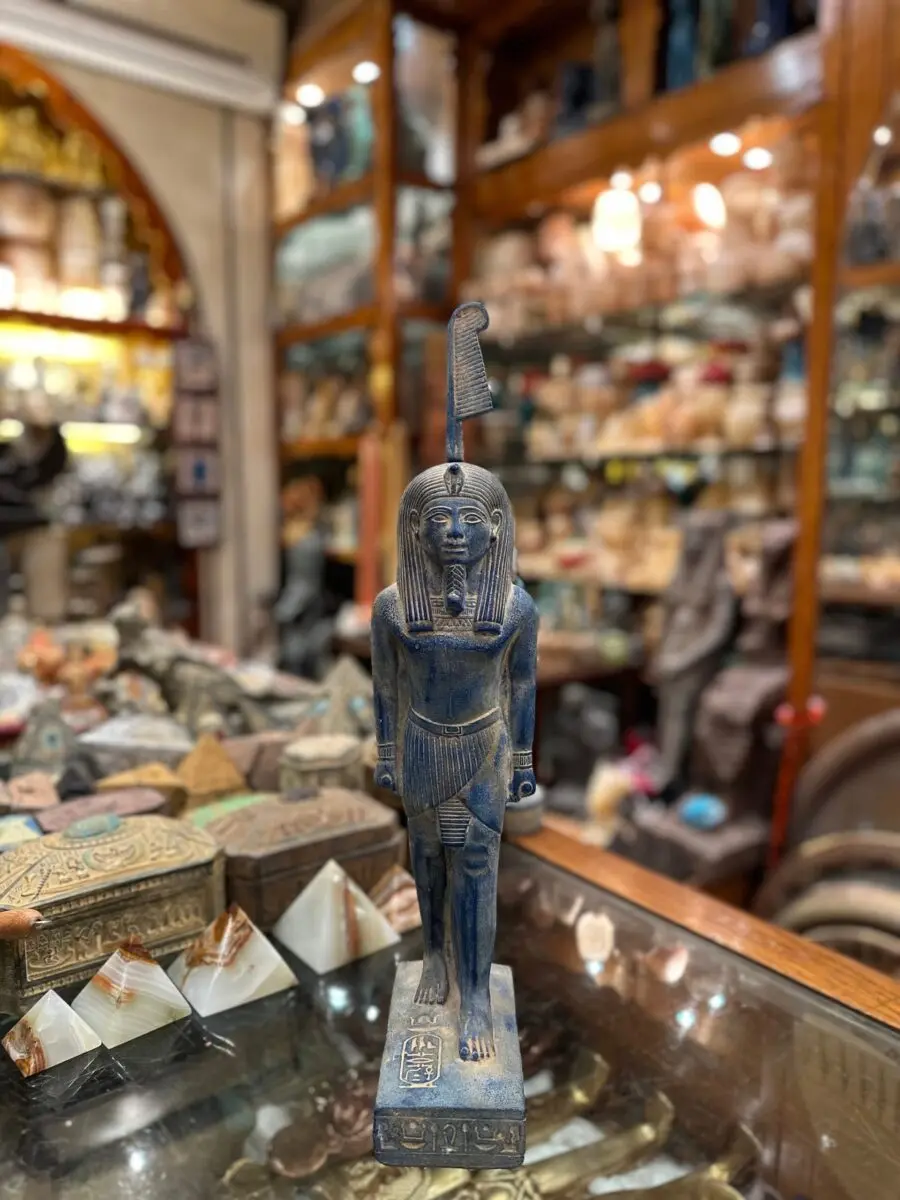
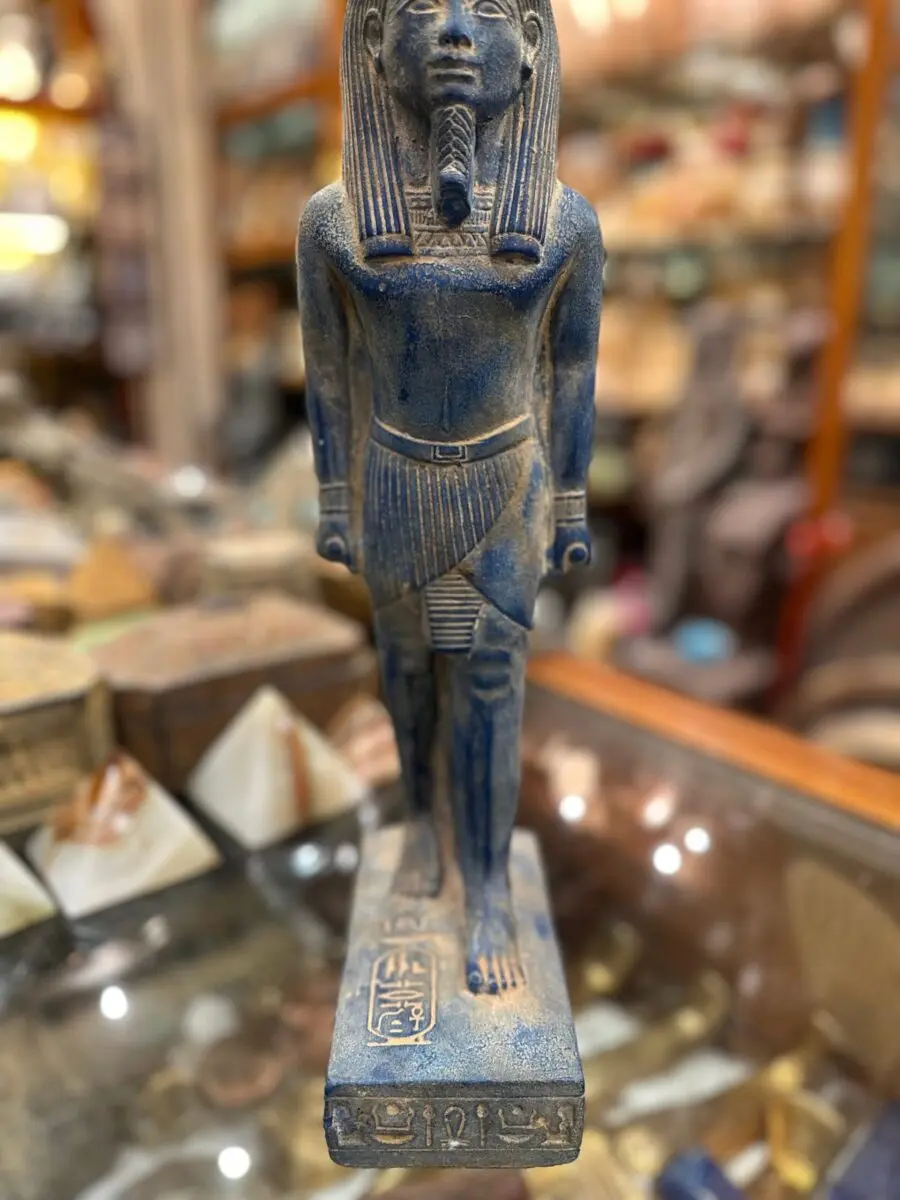
Add a distinctive symbol of ancient Egyptian creation mythology to your collection with this Blue Stone Shu God Statue, handcrafted in Egypt and measuring 35 × 7 × 9 cm. Inspired by Shu, the god of air, atmosphere, and cosmic balance, it is a unique choice for mythology lovers, collectors, Egyptian décor, and cultural gifts.
Blue Stone Shu God Statue – Handmade Egyptian Air Deity Sculpture
Description of Art
Blue Stone Shu God Statue handcrafted in Egypt by skilled Egyptian artisans and inspired by Shu, the ancient Egyptian god of air and the atmosphere.
Measuring 35 cm high, 7 cm wide, and 9 cm deep, this elegant blue stone sculpture represents an important deity in the Heliopolitan creation tradition. Shu was associated with the atmosphere and was famously depicted supporting or separating Nut, the sky goddess, from Geb, the earth god.
Its slender form and distinctive blue appearance make it an eye-catching choice for Egyptian mythology collections, home décor, offices, libraries, and museum-inspired displays.
Product Details
Material: Blue Stone
Height: 35 cm
Width: 7 cm
Depth: 9 cm
Deity: Shu
Craftsmanship: Handmade by Skilled Egyptian Artisans
Origin: Made in Egypt
Style: Ancient Egyptian Inspired
Who Was the Egyptian God Shu?
Shu was an important deity in ancient Egyptian creation mythology and was principally regarded as the god of air and the atmosphere.
His strongest associations included:
- Air
- Atmosphere
- Space between earth and sky
- Cosmic order
- Creation
- Life-giving atmospheric conditions
Although Shu can have broader associations with life and creation in some traditions, “God of Air and Atmosphere” is the historically strongest description for the product.
For modern symbolic interpretation, the Blue Stone Shu God Statue can evoke:
Air • Balance • Creation • Space • Life • Cosmic Harmony
Shu and the Creation of the World
Shu occupies an important position in the Heliopolitan creation tradition.
According to this theology, the creator deity Atum brought forth Shu and Tefnut. Shu represented air, while Tefnut represented moisture. Egypt’s Ministry of Tourism and Antiquities describes Ra-Atum as creating Shu and Tefnut before Geb and Nut emerged from this divine generation.
This places Shu near the beginning of one of ancient Egypt’s most influential divine genealogies.
Shu and Tefnut
Shu was closely paired with Tefnut, the goddess of moisture.
The British Museum identifies Tefnut as the sister and consort of Shu and records them as the parents of Geb and Nut.
Their complementary roles can be summarized as:
Shu – Air & Atmosphere
Tefnut – Moisture, Dew & Rain
Together they represented elemental forces essential to the organization of the created world.
This also makes the Blue Stone Shu God Statue a natural companion piece to a Tefnut statue in an Egyptian mythology collection.
Shu, Geb, and Nut
One of the most recognizable scenes involving Shu shows him separating his children:
Geb – God of the Earth
Nut – Goddess of the Sky
The British Museum describes Shu as the god of the atmosphere and explains the creation scene in which Nut was raised above Geb to form the heavenly canopy.
This image gave Shu a crucial cosmic function: he occupied and maintained the space between earth and sky.
For a modern collector, this can symbolically represent:
Balance • Separation • Order • Support • Stability of the Cosmos
How Was Shu Depicted?
Shu was commonly shown as a human male figure, often identifiable by a feather worn on his head.
The British Museum describes him as a man with a feather on his head, frequently shown holding Nut and Geb apart.
This raised-arm pose is among the most recognizable visual expressions of his role in Egyptian cosmology.
If your specific statue includes the tall feather, that feature is especially appropriate to highlight in product photos and listing images.
Shu and Life
The original description calls Shu the “god of air and life.”
This is acceptable with some qualification.
His principal identity was as the god of air and atmosphere, while some traditions also gave him creative or life-giving functions. The British Museum notes traditions in which Shu could be connected with creating or sustaining life through breath.
For SEO accuracy, I recommend wording it as:
“Shu, the ancient Egyptian god of air and the atmosphere, whose life-giving breath and cosmic role were connected with creation.”
This is stronger than presenting “God of Life” as his main formal title.
Shu and the Heliopolitan Ennead
Shu belonged to the important family of deities associated with Heliopolis.
The Heliopolitan sequence included:
- Atum
- Shu
- Tefnut
- Geb
- Nut
- Osiris
- Isis
- Seth
- Nephthys
The British Museum confirms that Geb and Nut were the children of Shu and Tefnut and grandchildren of the creator Atum.
This places Shu among the earliest divine generations in Egyptian creation theology.
Was Shu the God of Space?
Calling Shu a god of space can be useful if explained correctly.
His primary role concerned air and atmosphere, but his mythological function of holding Nut above Geb made him the personification of the space separating heaven and earth.
Therefore, the product description can accurately say:
“Shu personified the air and atmospheric space between earth and sky.”
That is more precise than simply calling him the generic god of all space.
About Shu’s Name
The original text states that Shu’s name comes directly from a word meaning dryness or emptiness.
Ancient Egyptian divine-name etymologies can be complex and are sometimes debated, so I would avoid presenting a single translation as completely certain.
For an e-commerce listing, his well-established roles—air, atmosphere, and cosmic separation—are more useful and reliable than a speculative etymology.
Blue Stone Craftsmanship
This Blue Stone Shu God Statue is described as being made from blue stone.
The product information does not specify whether this means natural stone, artificial stone, a stone composite, or a specific geological material.
For that reason, it is best to keep the material exactly as supplied:
Material: Blue Stone
and avoid automatically calling it:
- Lapis lazuli
- Basalt
- Granite
- Limestone
- Turquoise stone
unless the exact material is confirmed.
The rich blue appearance gives the statue a distinctive visual character that complements its association with air, sky, and the atmosphere.
Handmade in Egypt
The statue is handcrafted in Egypt by skilled artisans.
Its 35 cm height gives it a noticeable presence while the narrow 7 × 9 cm footprint makes it practical for many display locations.
It can work beautifully as:
- Shelf décor
- Desk decoration
- Office décor
- Library art
- Egyptian-themed home décor
- Collector display
- Mythology collection
- Museum-inspired interior decoration
A Meaningful Egyptian Collectible
Shu is less commonly represented in modern Egyptian décor than gods such as Anubis, Horus, or Ra.
That makes the Blue Stone Shu God Statue especially appealing to collectors interested in developing a more complete Egyptian pantheon.
It pairs particularly well with statues of:
- Tefnut
- Geb
- Nut
- Atum
- Ra
- Osiris
- Isis
- Seth
- Nephthys
Together, these figures can create a display inspired by ancient Egyptian creation mythology.
Symbolism for Modern Collectors
For modern decorative interpretation, Shu can represent:
Air • Freedom • Balance • Creation • Support • Cosmic Harmony
These symbolic themes make the statue suitable not only for Egyptology enthusiasts but also for buyers seeking a meaningful decorative object inspired by ancient concepts of nature and balance.
Perfect for Collectors and Gifts
The Blue Stone Shu God Statue is a distinctive choice for:
- Ancient Egyptian art collectors
- Shu enthusiasts
- Egyptology lovers
- Egyptian mythology fans
- Creation-myth collectors
- Handmade art enthusiasts
- Egyptian décor
- Office and library displays
- Museum-inspired collections
- Unique cultural gifts
Product Specifications
Product: Blue Stone Shu God Statue
Deity: Shu
Material: Blue Stone
Height: 35 cm
Width: 7 cm
Depth: 9 cm
Craftsmanship: Handmade by Egyptian Artisans
Origin: Made in Egypt
Main Associations: Air, Atmosphere & Creation
Divine Partner: Tefnut
Children: Geb & Nut
Typical Symbol: Feather Headdress
Style: Ancient Egyptian Inspired
Type: Decorative Egyptian Deity Sculpture
Use: Collection, Home Décor, Office Décor & Cultural Gift
| Dimensions | 9 × 7 × 35 in |
|---|
Related products
Handmade Lapis Lazuli Sekhmet Necklace: Egyptian Goddess Jewelry
Add a powerful touch of ancient Egyptian symbolism to your jewelry collection with this 150 g Lapis Sekhmet Necklace, handcrafted from natural lapis lazuli stone with elegant silver-tone metal accents. Inspired by Sekhmet, the lioness goddess of strength, protection, healing, and solar power, it is a striking choice for mythology lovers, statement-jewelry collectors, and unique cultural gifts.
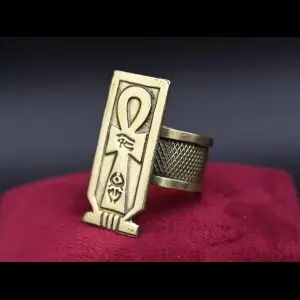
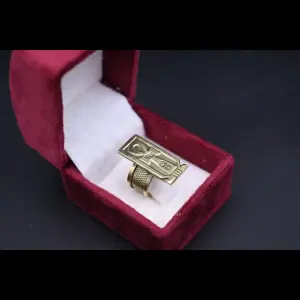
Oxidized Copper Ankh Ring: Ancient Egyptian Key of Life Symbol
Add a timeless symbol of ancient Egyptian life to your jewelry collection with this Oxidized Copper Ankh Ring, handcrafted in Egypt from oxidized copper with a unisex free-size design. Inspired by the iconic Key of Life representing life, vitality, renewal, and continuity, it is a distinctive choice for mythology lovers, copper jewelry collectors, and unique cultural gifts.
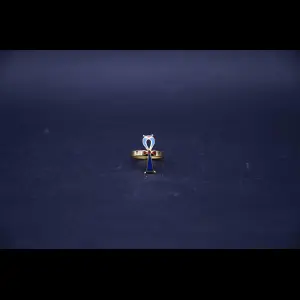
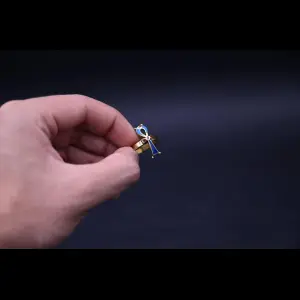
Egyptian Ankh Ring: Key of Life, Good Luck Symbol
Add a timeless symbol of ancient Egyptian life to your jewelry collection with this Unisex Ankh Key of Life Ring, handcrafted in Egypt with a flexible free-size design for women and men. Inspired by the iconic Ankh symbolizing life, vitality, renewal, and continuity, it is a distinctive choice for mythology lovers, Egyptology enthusiasts, pharaonic jewelry collectors, and unique cultural gifts.

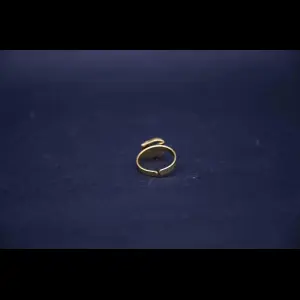
Egyptian Eye of Horus Ring: Ancient Symbol, Handmade in Egypt
Add a powerful symbol of ancient Egyptian kingship to your jewelry collection with this Unisex Horus Pharaonic Ring, handcrafted in Egypt with a flexible free-size design for women and men. Inspired by Horus, the falcon god of the sky, royal authority, and protection, it is a distinctive choice for mythology lovers, Egyptology enthusiasts, symbolic jewelry collectors, and unique cultural gifts.
Handcrafted Lapis Lazuli Sobek Statue – Egyptian Crocodile God Art (33 cm)
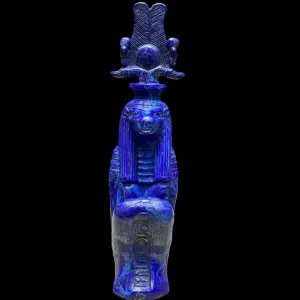
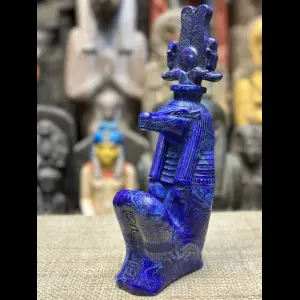
Add a powerful symbol of ancient Egyptian strength to your collection with this 33 cm Lapis Lazuli Sobek Statue, handcrafted in Egypt and inspired by Sobek, the crocodile god associated with the Nile, fertility, protection, strength, and royal power. Measuring 33 × 7 × 10 cm, it is a striking choice for collectors, Egyptian décor, mythology lovers, and unique cultural gifts.
Brass Hathor Knot Bracelet: Egyptian Winged Cobra Talisman
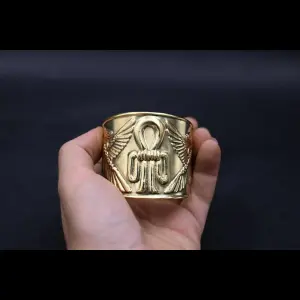
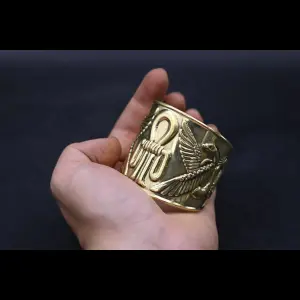
Add a powerful touch of ancient Egyptian symbolism to your jewelry collection with this Brass Winged Cobra Egyptian Bracelet, crafted from brass and featuring an Egyptian-inspired knot centerpiece flanked by protective winged cobras. Inspired by ancient themes of guardianship and royal power, it is a distinctive choice for mythology lovers, Egyptology enthusiasts, statement-jewelry collectors, and unique cultural gifts.
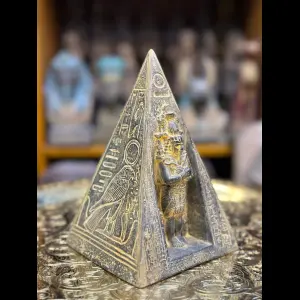
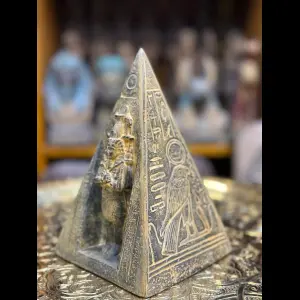
Egyptian Black Stone Pyramid – Handcrafted Horus Monument
Add a striking touch of ancient Egyptian symbolism to your space with this Black Stone Horus Pyramid, crafted from solid black stone and measuring 17 × 10 × 10 cm. Decorated with Horus and other Egyptian-inspired motifs, it is a distinctive choice for collectors, mythology lovers, office décor, Egyptian-themed interiors, and unique cultural gifts.
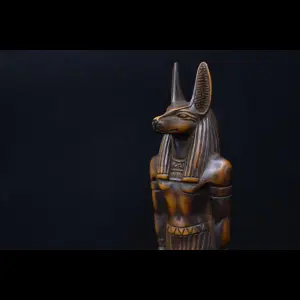
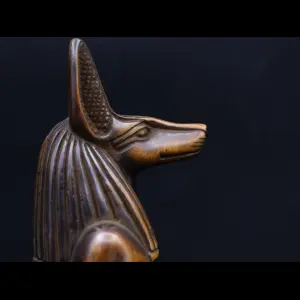
Handcrafted Anubis Statue: Egyptian God of Protection, Brown Stone (23cm)
Add a powerful symbol of ancient Egyptian protection to your collection with this 23 cm Brown Stone Anubis Statue, handcrafted in Egypt from natural stone. Inspired by Anubis, the canine-headed deity of mummification, funerary protection, and care of the deceased, it is a distinctive choice for collectors, Egyptian décor, museum-inspired displays, and unique cultural gifts.


Reviews
There are no reviews yet.