
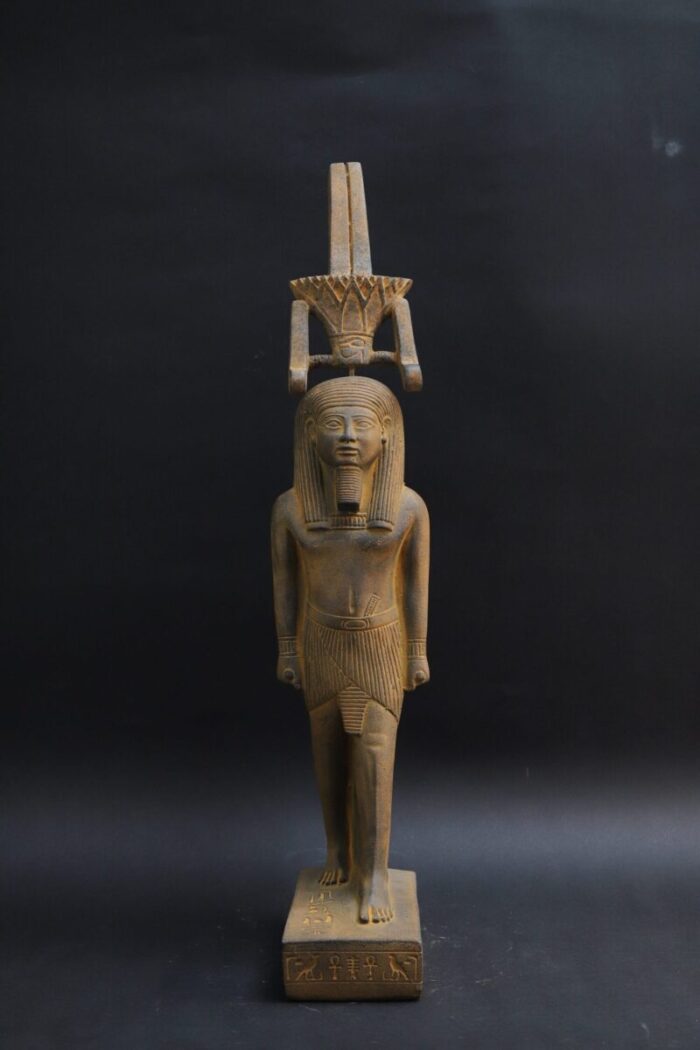
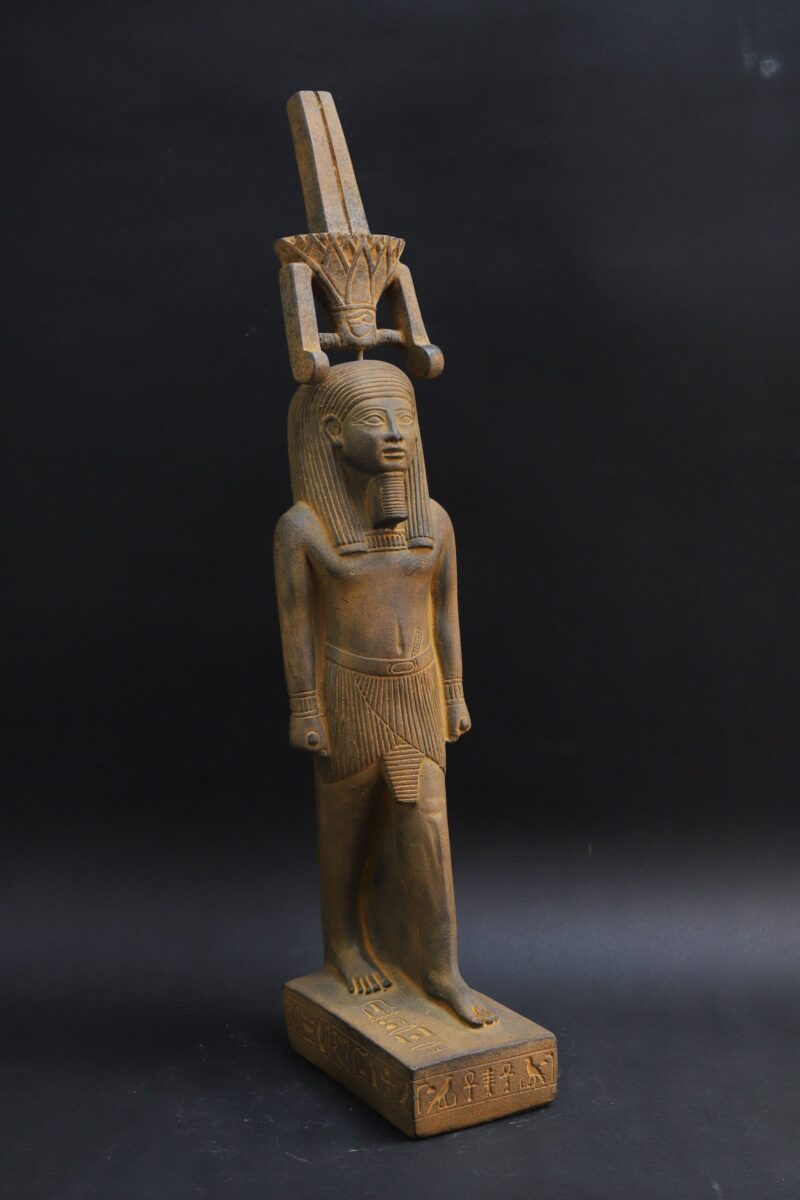
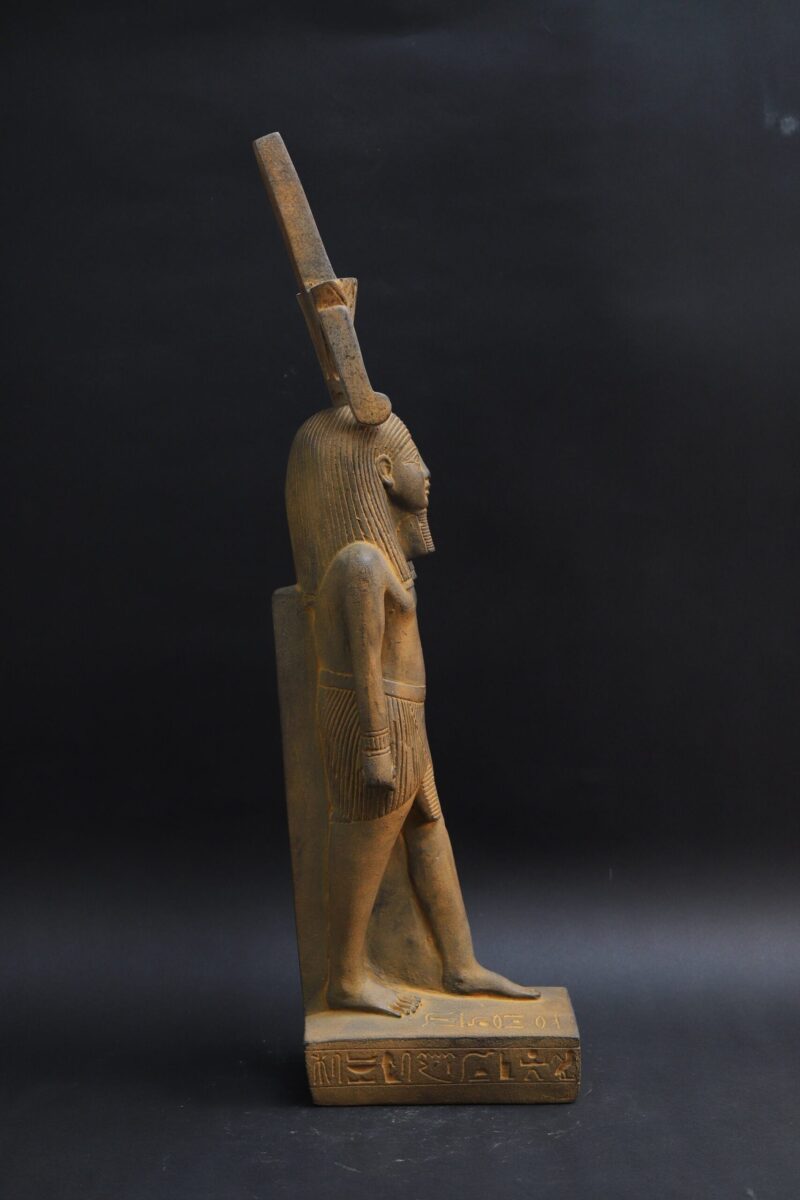
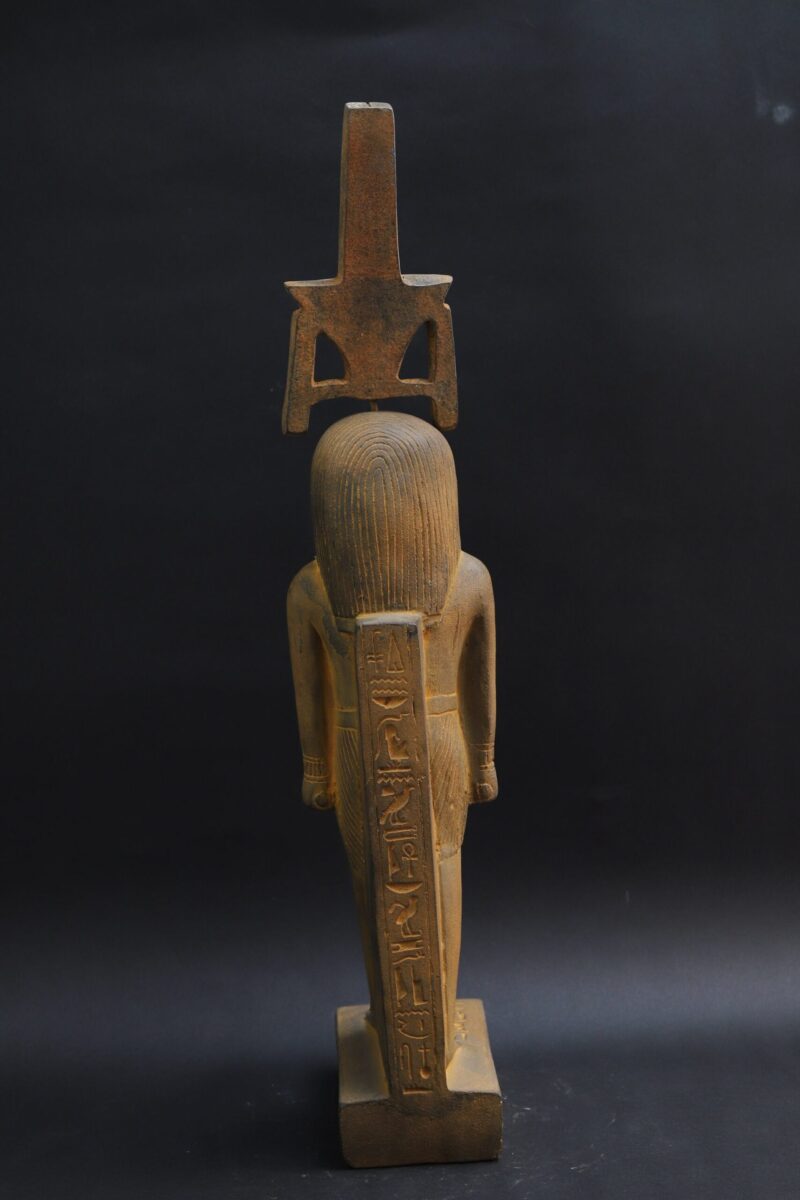
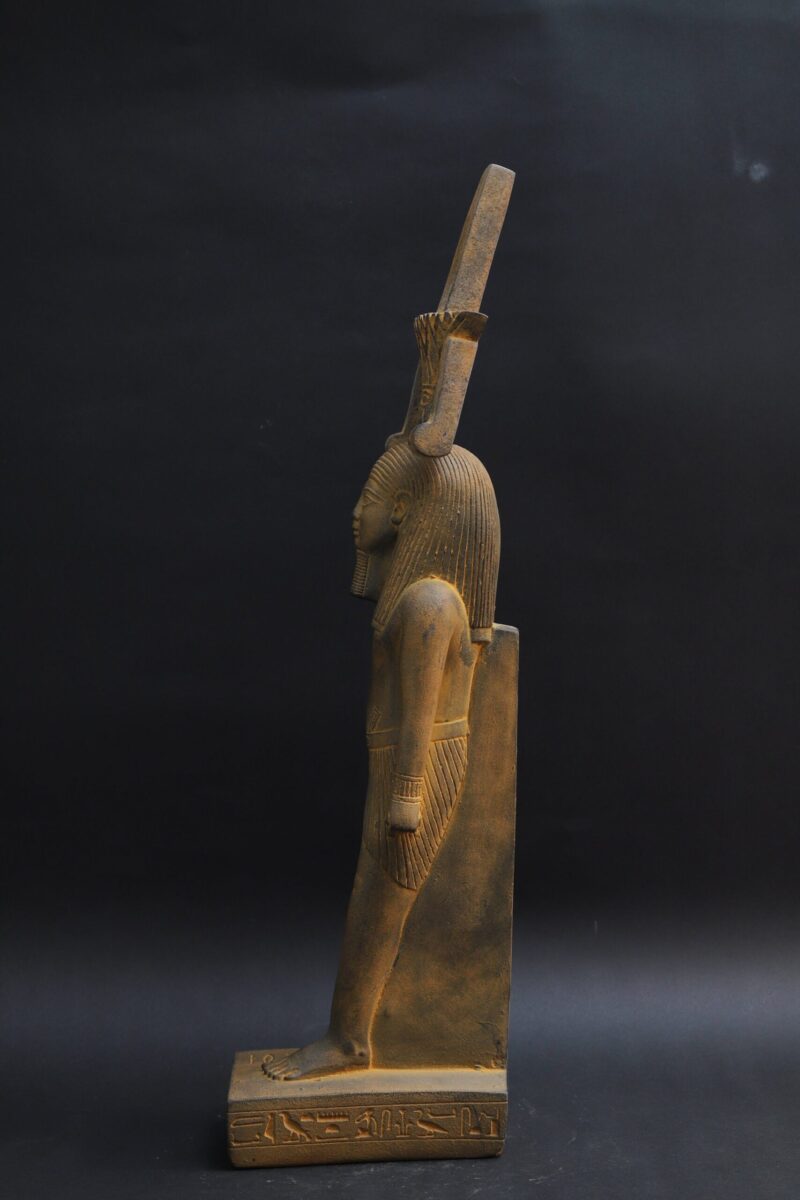
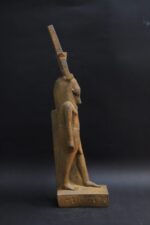
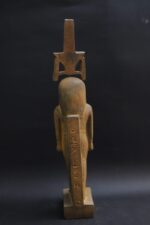
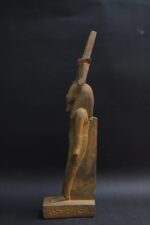
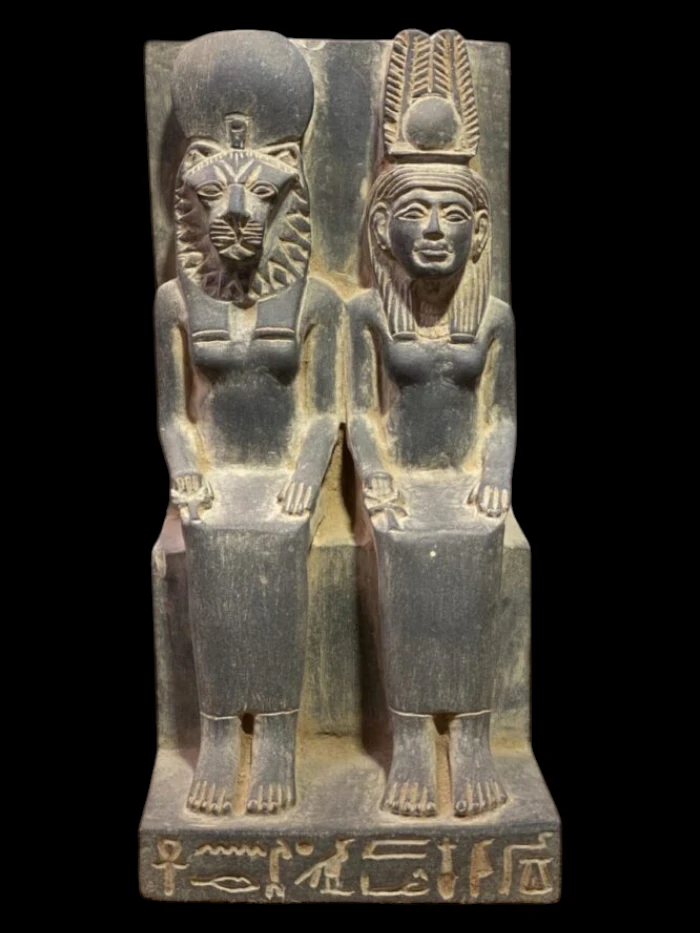
Nefertum Statue, Egyptian God of Healing & Beauty, Ancient Deities Sculpture
$325.00
Nefertum Lotus God Statue – Ancient Egyptian Perfume Deity Sculpture
Description of Art
Nefertum Lotus God Statue inspired by the ancient Egyptian deity associated with the lotus flower, perfume, fragrance, renewal, and the youthful rising sun.
Standing 35 cm high, 7 cm wide, and 9 cm deep, this elegant Egyptian-inspired sculpture makes a distinctive decorative piece for collectors, history enthusiasts, mythology lovers, and Pharaonic-themed interiors.
Nefertum, also spelled Nefertem, was closely identified with the lotus flower and regeneration. Ancient representations commonly show him wearing a lotus headdress, often accompanied by two tall feathers.
Who Was the Egyptian God Nefertum?
Nefertum was an ancient Egyptian deity strongly associated with the lotus and the regenerative power of the rising sun.
The Metropolitan Museum describes Nefertum as representing youthful power and identifies him with the lotus flower, which itself symbolized the newborn sun and regeneration.
His symbolism can therefore include:
- Lotus flowers
- Perfume and fragrance
- Renewal
- Rebirth
- Youthful vitality
- Solar symbolism
- Healing traditions
- Ancient Egyptian creation imagery
These themes make the Nefertum Lotus God Statue especially appealing to collectors interested in symbolic Egyptian art.
Nefertum and the Lotus Flower
The lotus is the most important visual symbol associated with Nefertum.
Ancient Egyptian tradition connected the opening of the lotus at dawn with the appearance of the sun and the renewal of creation. The Metropolitan Museum specifically links Nefertum with the opening lotus at dawn, the sun, and creation.
Because the flower opens in connection with daylight, it became a powerful image of:
Rebirth • Regeneration • New Beginnings • Solar Renewal
This is why a lotus-inspired Nefertum statue carries much deeper symbolism than simply floral decoration.
Nefertum, Ptah, and Sekhmet
Nefertum was closely connected with the major gods of Memphis.
He was regarded as the son of Ptah and Sekhmet, forming the younger member of the divine family commonly called the Memphite Triad. The Metropolitan Museum explicitly identifies him as the child of Ptah and Sekhmet.
The family can be summarized as:
Ptah – Creator god and patron of craftsmen
Sekhmet – Lioness goddess of power, protection, and healing
Nefertum – Lotus deity of regeneration and youthful solar power
This relationship gives Nefertum an important place within the religious traditions of ancient Memphis.
Nefertum and Perfume
Nefertum became strongly associated with pleasant fragrance and perfume, particularly through his relationship with fragrant flowers and the lotus.
This connection made him an especially appropriate deity for imagery involving scent, beauty, freshness, and renewal.
The traditional Egyptian image of the lotus and its fragrance also connected the flower with divine freshness and regeneration, reinforcing Nefertum’s identity as a youthful solar deity.
For modern symbolic interpretation, a Nefertum Lotus God Statue can therefore evoke:
Fragrance • Beauty • Freshness • Renewal • Vitality
Nefertum and Healing
The supplied description calls Nefertum a god of healing.
Healing is a valid secondary association, particularly through fragrant substances and Egyptian medicinal traditions, but historically his strongest defining characteristics are the lotus, perfume, regeneration, and solar renewal.
For SEO and historical accuracy, it is therefore better to describe Nefertum as a deity associated with perfume and healing traditions, rather than presenting medicine as his primary divine role.
Nefertum and Beauty
Nefertum is also frequently connected in modern descriptions with beauty because of his association with flowers, pleasant fragrance, youth, and renewal.
However, “god of beauty” should not replace his more historically distinctive identity as the lotus and fragrance deity.
For this product, emphasizing his elegant floral symbolism makes the description both attractive and more historically accurate.
Nefertum’s Distinctive Headdress
Ancient statues and amulets of Nefertum frequently show him with an elaborate floral headdress.
The Metropolitan Museum describes examples in which he wears a lotus headdress with two tall feathers, making this one of his key identifying features.
This characteristic allows Nefertum to be distinguished from many other youthful Egyptian gods.
His representation can therefore combine:
- Youthful human form
- Lotus flower
- Tall feathers
- Egyptian royal or divine costume
- Solar and regenerative symbolism
The Lotus and the Rising Sun
The ancient Egyptian lotus carried particularly strong associations with the sun.
Because the flower appeared to open with daylight, Egyptian religious imagery connected it with the emergence of the newborn sun.
Nefertum consequently became associated with the first light and renewal of creation, and the Met identifies the lotus connected with him as a symbol of the newborn sun and regeneration.
This makes the statue particularly meaningful as a symbol of:
- New beginnings
- Renewal
- Personal growth
- Vitality
- Transformation
- Rebirth
Nefertum in Ancient Egyptian Art
Nefertum appears in ancient Egyptian statues and amulets in several materials and periods.
Museum collections preserve representations of him in faience, silver, bronze, and copper alloys, showing that his imagery remained important across a long period of Egyptian history.
The Brooklyn Museum also preserves imagery describing Nefertum as Ptah’s son, recognizable through the lotus on his head.
Egyptian-Inspired Decorative Sculpture
The Nefertum Lotus God Statue is ideal for display in:
- Living rooms
- Offices
- Libraries
- Study rooms
- Display cabinets
- Egyptian-themed interiors
- Collector rooms
- Historical displays
- Museum-inspired spaces
Its slender dimensions of 35 × 7 × 9 cm make it particularly suitable for vertical shelf or cabinet displays.
Perfect for Collectors
This statue is a distinctive choice for:
- Ancient Egyptian art collectors
- Nefertum enthusiasts
- Egyptian mythology lovers
- Lotus symbolism collectors
- Perfume and fragrance enthusiasts
- History lovers
- Archaeology enthusiasts
- Egyptian décor collections
- Museum-inspired displays
- Unique cultural gifts
It can also complement statues inspired by Ptah, Sekhmet, Ra, Thoth, Horus, Isis, Osiris, and other ancient Egyptian deities.
Product Details
Product: Nefertum Lotus God Statue
Deity: Nefertum / Nefertem
Height: 35 cm
Width: 7 cm
Depth: 9 cm
Associated Symbol: Lotus Flower
Divine Family: Ptah, Sekhmet & Nefertum
Main Associations: Lotus, Perfume, Renewal & Solar Regeneration
Additional Association: Healing Traditions
Style: Ancient Egyptian / Pharaonic Inspired
Type: Decorative Egyptian-Inspired Sculpture
Use: Collection, Home Décor, Office Décor & Cultural Gift
Related products
Handmade Blue Stone Statue: Egyptian God Shu, God of Air (35 cm)
Add a distinctive symbol of ancient Egyptian creation mythology to your collection with this Blue Stone Shu God Statue, handmade in Egypt and measuring 35 × 7 × 9 cm. Inspired by Shu, the god of air and atmosphere who separated the sky goddess Nut from the earth god Geb, it is ideal for collectors, Egyptian décor, mythology lovers, and unique cultural gifts.
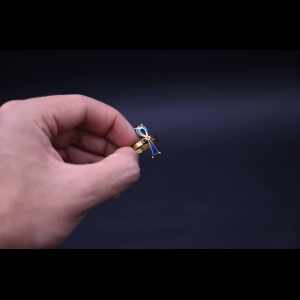
Egyptian Ankh Ring: Key of Life, Good Luck Symbol
Add a timeless symbol of ancient Egyptian life to your jewelry collection with this Unisex Ankh Key of Life Ring, handcrafted in Egypt with a flexible free-size design for women and men. Inspired by the iconic Ankh symbolizing life, vitality, renewal, and continuity, it is a distinctive choice for mythology lovers, Egyptology enthusiasts, pharaonic jewelry collectors, and unique cultural gifts.
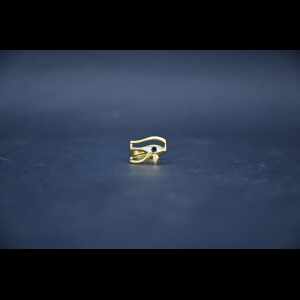
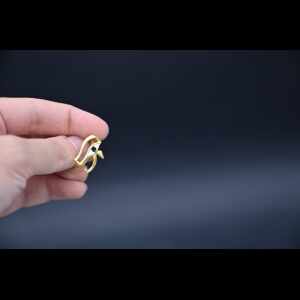
Egyptian Eye of Horus Ring, Ancient Symbol, Handmade in Egypt
Add a powerful symbol of ancient Egyptian kingship to your jewelry collection with this Egyptian Falcon God Horus Ring, handcrafted in Egypt with a unisex free-size design. Inspired by Horus, the falcon god of the sky, royal authority, and protection, it is a distinctive choice for women and men, mythology lovers, Egyptology enthusiasts, and unique cultural gifts.
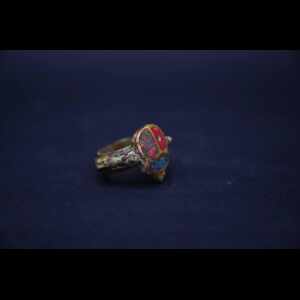
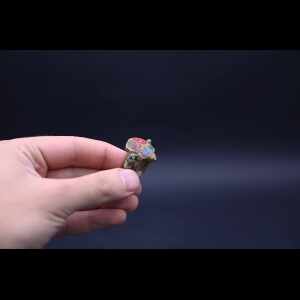
Scarab ring-amazing Ring the symbol of good luck-good life-ancient Egyptian ornament-mythology
Add a meaningful symbol of ancient Egyptian renewal to your jewelry collection with this Unisex Egyptian Scarab Ring, handcrafted in Egypt with a flexible free-size design for women and men. Inspired by the scarab’s ancient associations with rebirth, transformation, solar regeneration, and protection, it is a distinctive choice for mythology lovers, Egyptology enthusiasts, and unique cultural gifts.
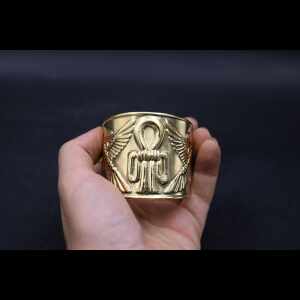
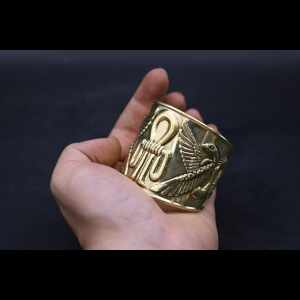
Brass Hathor Knot Bracelet: Egyptian Winged Cobra Talisman
Add a powerful touch of ancient Egyptian symbolism to your jewelry collection with this Brass Winged Cobra Egyptian Bracelet, crafted from brass and featuring an Egyptian-inspired knot centerpiece flanked by protective winged cobras. Inspired by ancient themes of guardianship and royal power, it is a distinctive choice for mythology lovers, Egyptology enthusiasts, statement-jewelry collectors, and unique cultural gifts.
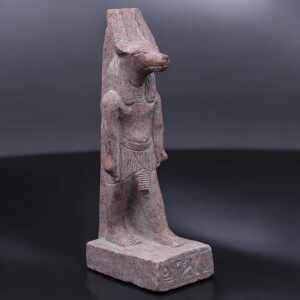
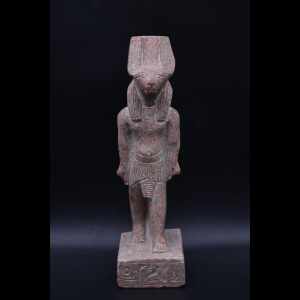
Handcrafted Red Granite Anubis Statue – Egyptian God of Afterlife (30cm)
Add a powerful symbol of ancient Egyptian protection to your collection with this 30 cm Red Granite Anubis Statue, handcrafted in Egypt from red granite. Inspired by Anubis, the canine-headed deity of mummification, funerary protection, and care of the deceased, it is a striking choice for collectors, Egyptian décor, museum-inspired displays, and unique cultural gifts.
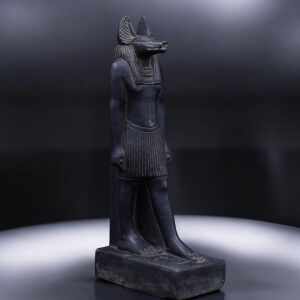
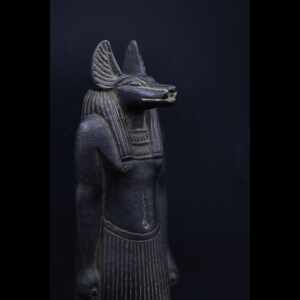
Handcrafted Basalt Stone Anubis Statue – Egyptian Mythology Decor (30cm)
Add a powerful symbol of ancient Egyptian protection to your collection with this 30 cm Basalt Anubis Statue, handcrafted in Egypt from natural basalt stone. Inspired by Anubis, the canine-headed deity of mummification, funerary protection, and care of the deceased, it is a distinctive choice for collectors, Egyptian décor, museum-inspired displays, and unique cultural gifts.
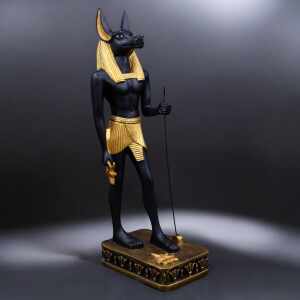
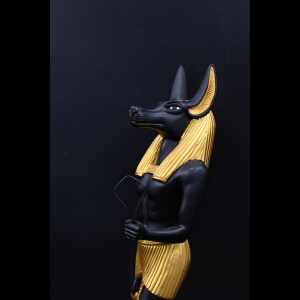
Handcrafted Anubis Statue: Egyptian God of Mummification, 40cm Natural Stone
Add a powerful symbol of ancient Egyptian protection to your collection with this 40 cm Natural Stone Anubis Statue, handcrafted in Egypt from natural stone. Inspired by Anubis, the canine-headed deity of mummification, funerary protection, and care of the deceased, it is a striking choice for collectors, Egyptian décor, museum-inspired displays, and unique cultural gifts.


Reviews
There are no reviews yet.