
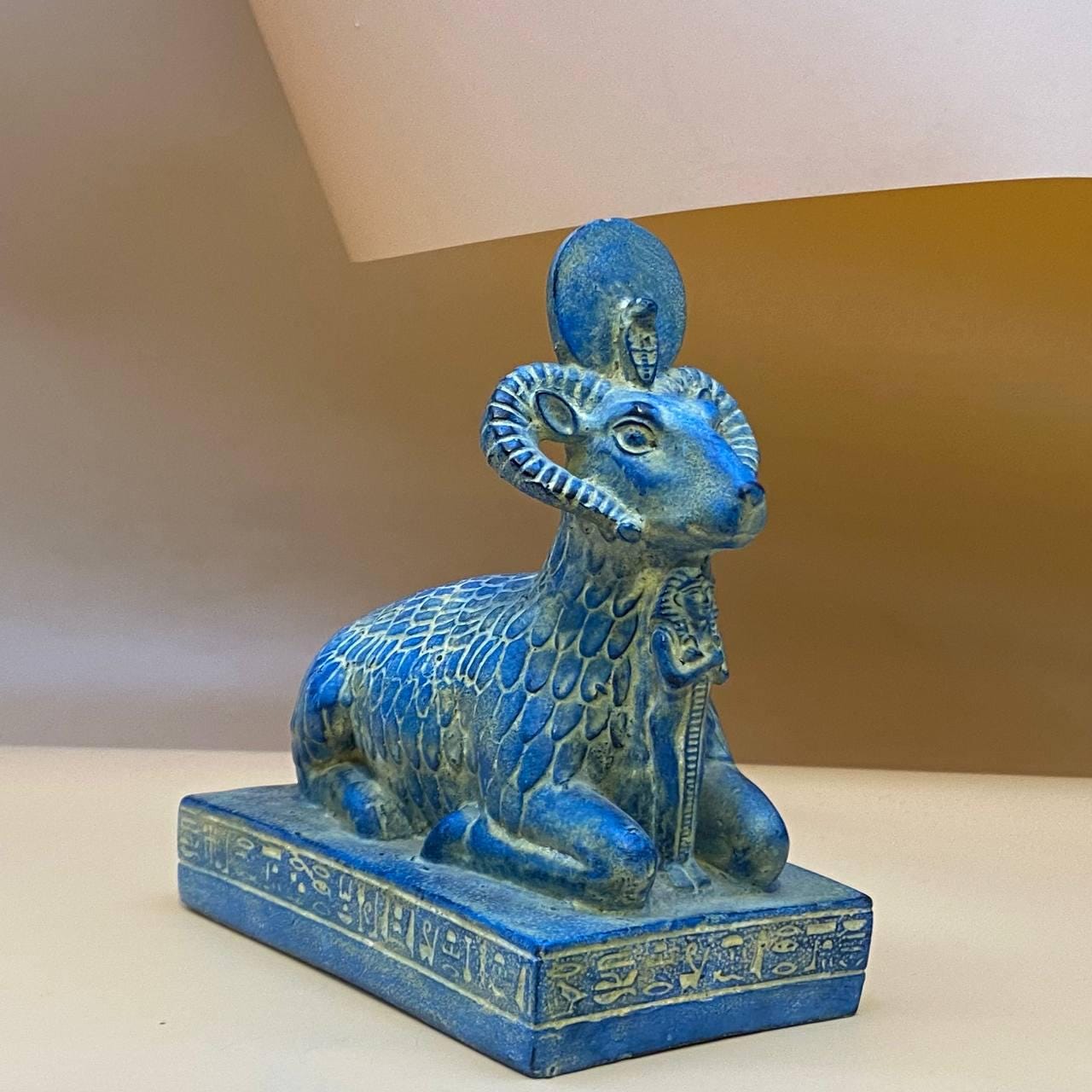
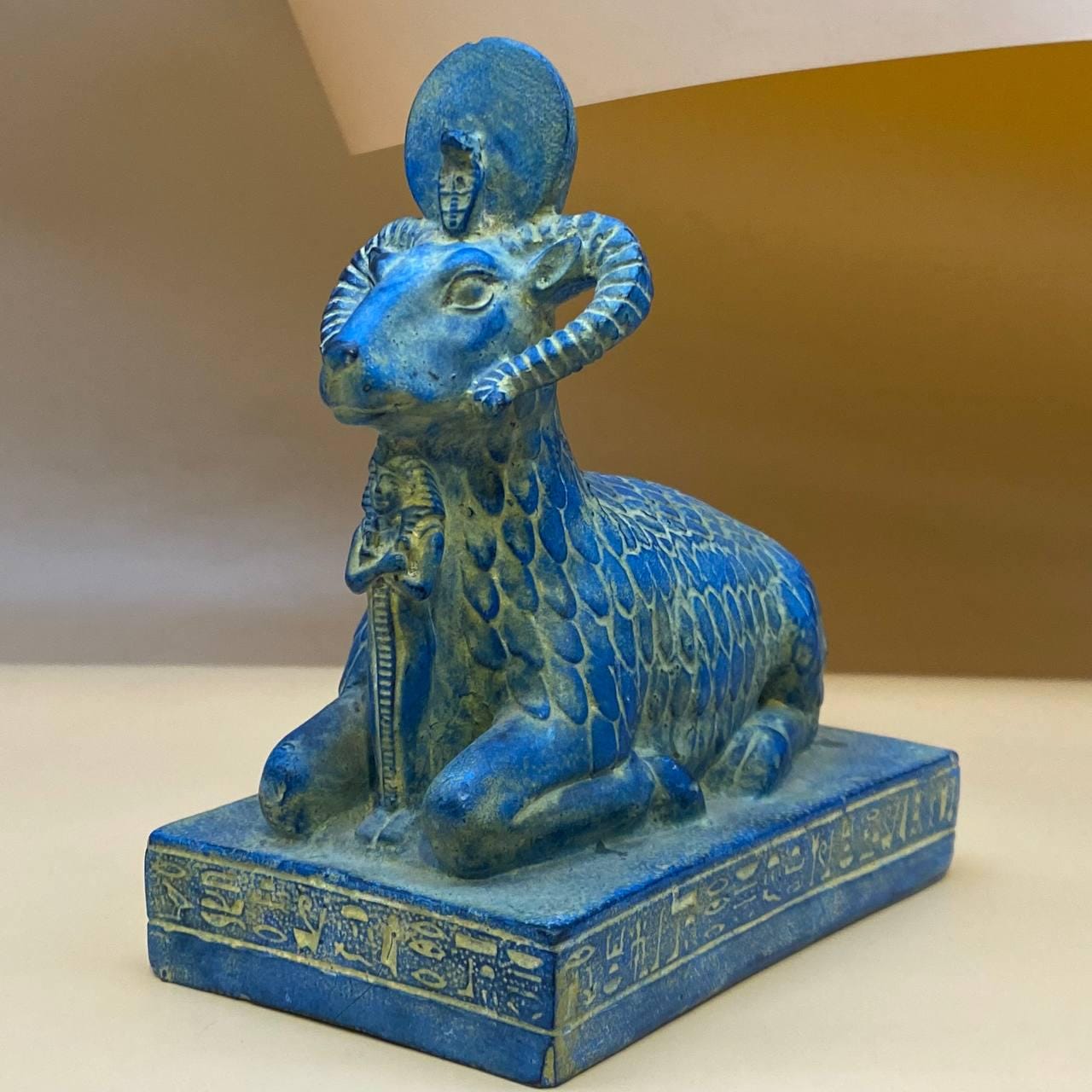
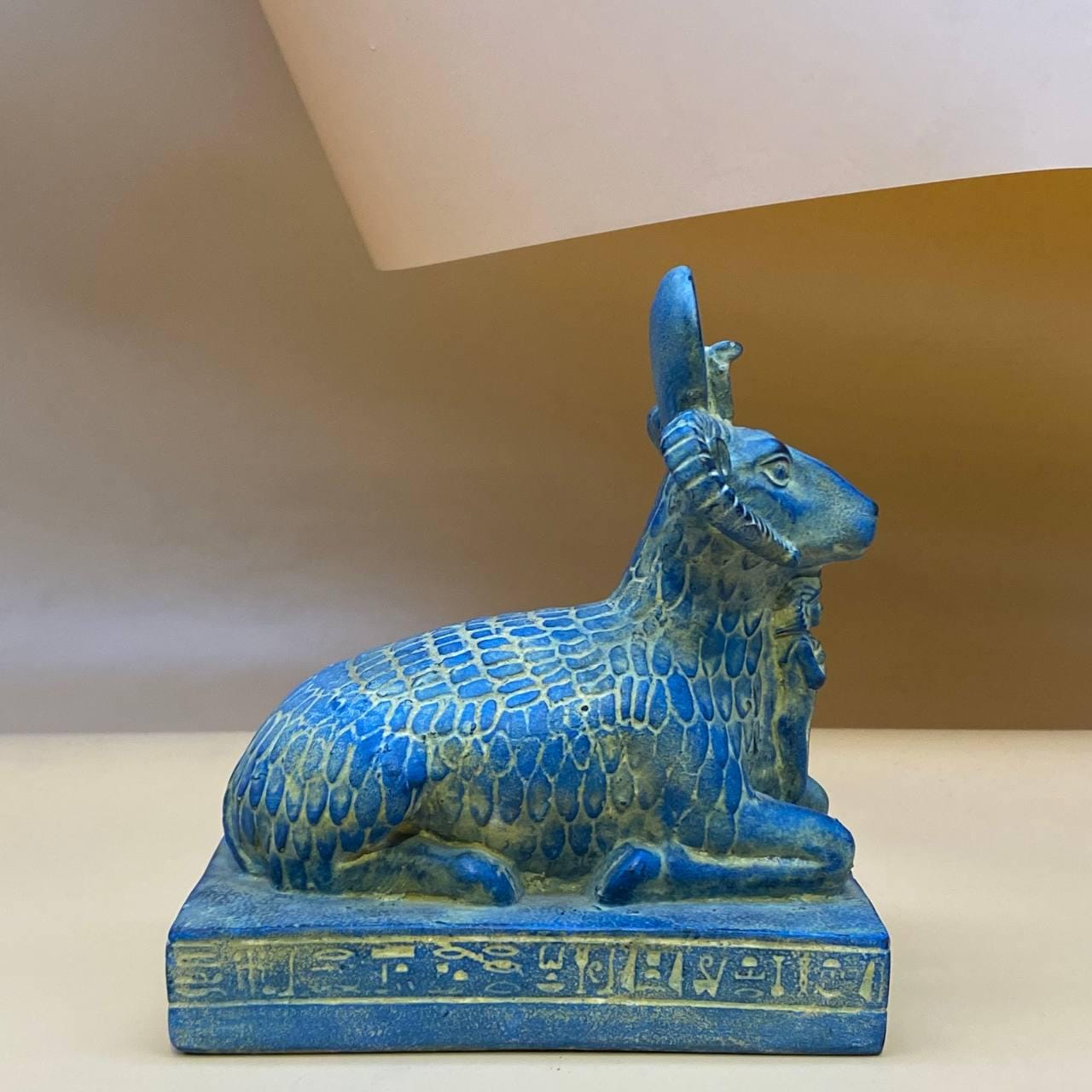
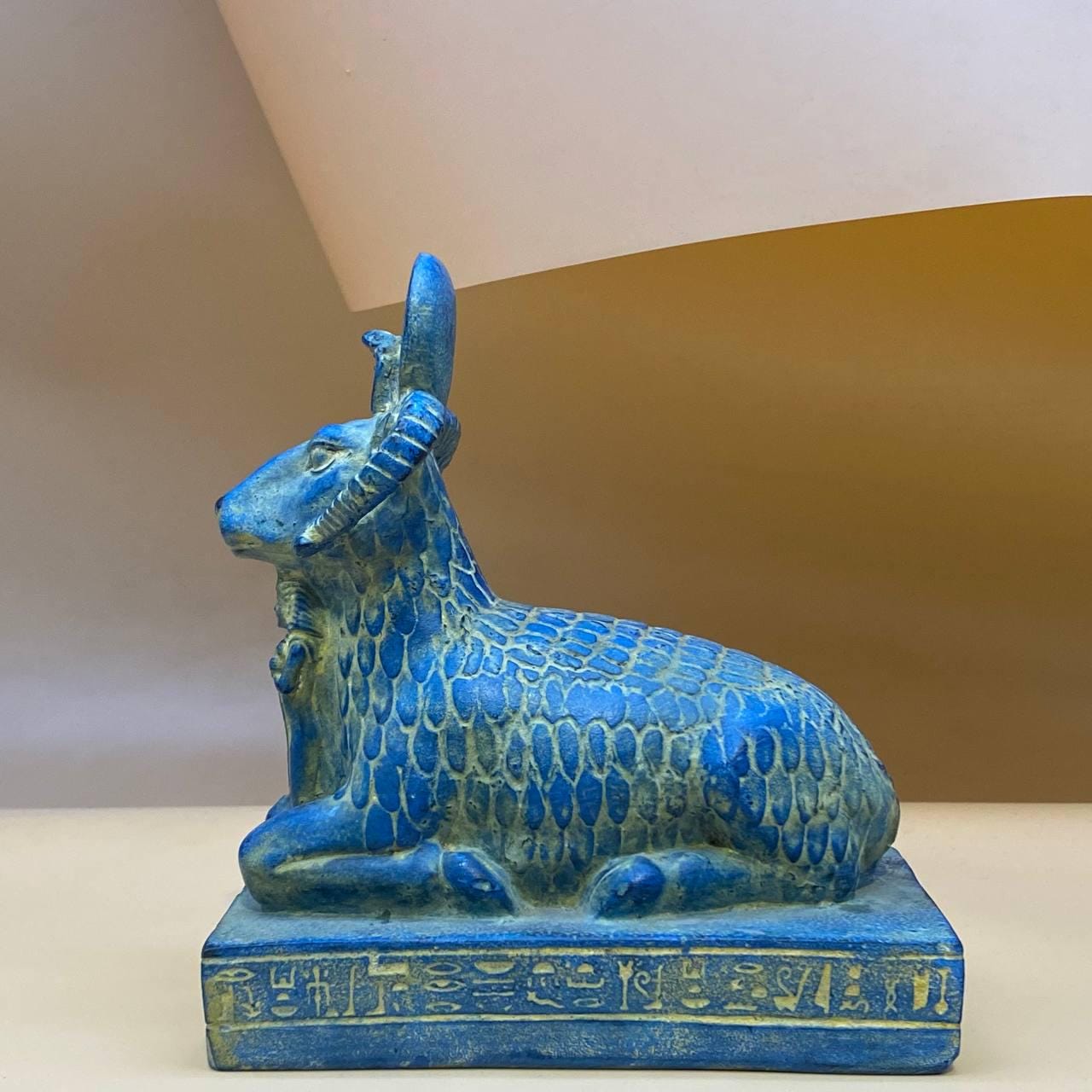
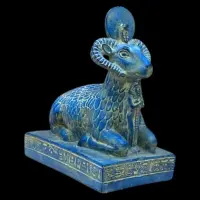
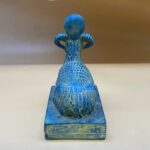
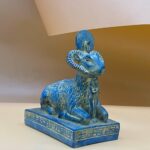
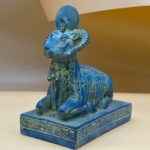
Khnum Statue: Ancient Egyptian Ram God Sculpture
$325.00
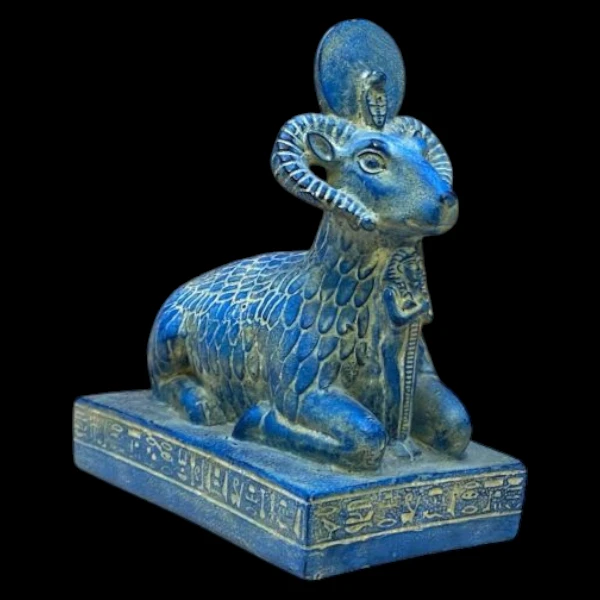
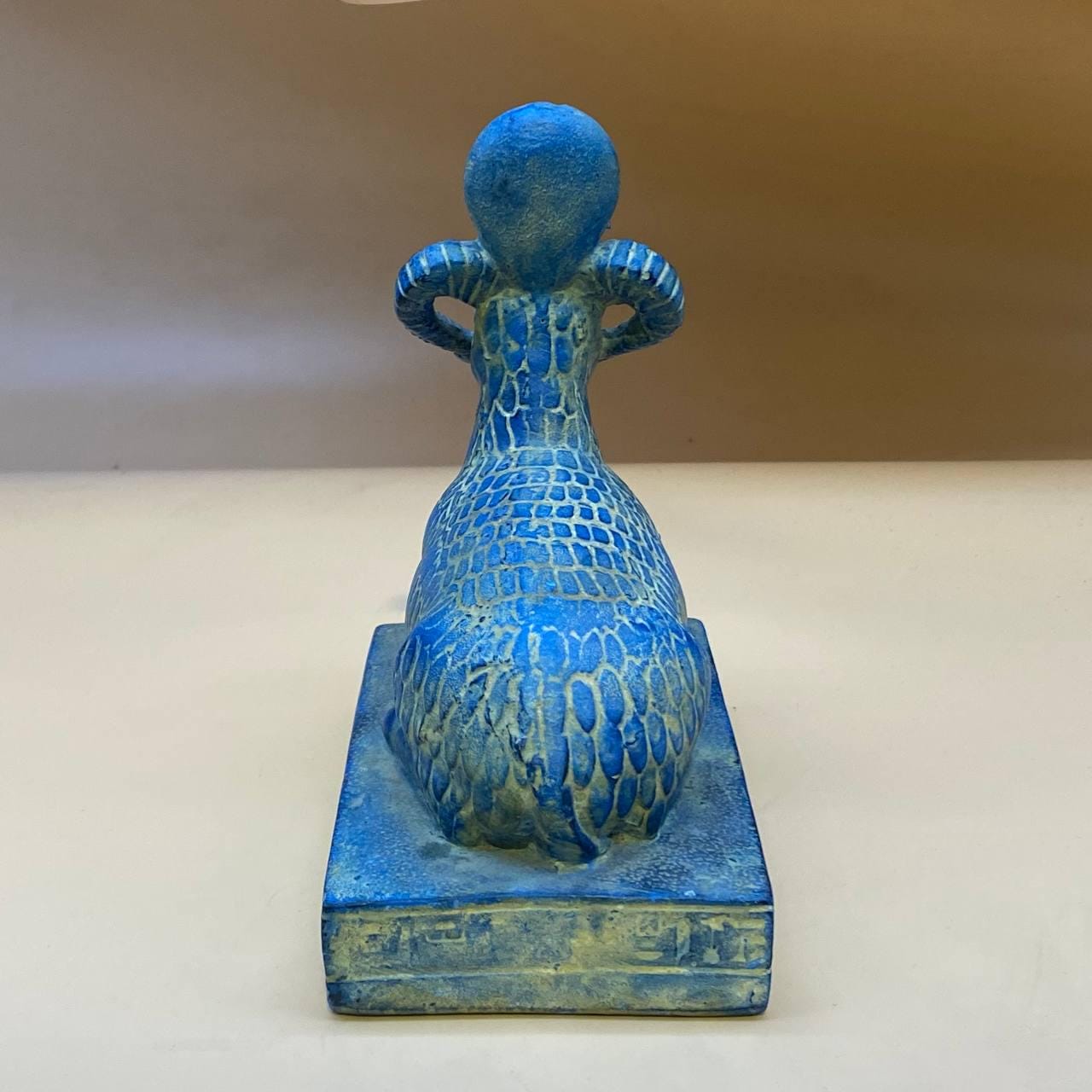
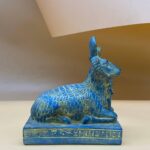
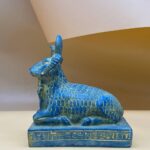
Add a powerful symbol of ancient Egyptian heritage to your collection with this Amun Stone God Sculpture, crafted from stone and inspired by Amun, the major Theban deity associated with creation, kingship, divine power, and fertility. A distinctive choice for collectors, mythology lovers, Egyptian décor, and unique cultural gifts.
Amun Stone God Sculpture – Ancient Egyptian Theban Deity Statue
Description of Art
Amun Stone God Sculpture made of stone and inspired by one of the most influential deities in ancient Egyptian religion.
Amun rose from a major Theban god to become one of Egypt’s most important national deities, particularly during the New Kingdom. He was strongly associated with creation, kingship, divine power, fertility, and the hidden or unseen nature of divinity.
Through his union with the solar god Ra, he became known as Amun-Ra, combining Amun’s creative and royal characteristics with powerful solar symbolism.
This stone sculpture makes a distinctive addition to Egyptian-themed interiors, historical collections, offices, libraries, and museum-inspired displays.
Who Was the Egyptian God Amun?
Amun, also spelled Amon or Amen, was originally an important deity associated especially with Thebes in Upper Egypt.
His importance increased dramatically as Theban rulers gained political power, particularly during the Middle and New Kingdoms.
Over time, Amun became one of the most prestigious gods in the Egyptian pantheon and could receive titles emphasizing his supreme divine authority.
His major associations included:
- Creation
- Divine power
- Kingship
- Fertility
- The hidden or unseen
- Protection
- Thebes
- Solar power through Amun-Ra
These qualities give the Amun Stone God Sculpture strong historical and symbolic appeal.
Meaning of the Name Amun
Amun’s name is generally connected with the idea of “the Hidden One.”
This meaning reflected an important aspect of his divine identity: his essential nature could be unseen or mysterious while his power was manifested throughout creation.
This concept helped Amun develop into a highly universal deity capable of representing hidden creative power and divine authority.
Amun and the Sun
The original description calls Amun directly a god of the sun, but this should be expressed more precisely.
Ra was the principal ancient Egyptian solar deity.
Amun gained especially strong solar characteristics through his syncretism with Ra, forming Amun-Ra.
Amun-Ra became one of the most important divine forms in Egyptian religion, bringing together:
Amun – Hidden creative and royal power
Ra – Solar power, light, and the sun
So it is more historically accurate to describe the statue as representing Amun, who later became closely associated with solar power through Amun-Ra, rather than simply defining Amun from the beginning as the sun god.
Amun and Creation
Amun developed important associations with creation.
Egyptian theology could present him as a primeval creative force whose power existed before or behind the visible world.
His hidden nature made him especially suitable as a deity representing the mysterious source of life and creation.
For modern collectors, Amun-inspired imagery can therefore evoke:
- Creation
- Divine authority
- Hidden power
- Renewal
- Fertility
- Ancient Egyptian spirituality
Amun and Fertility
Amun could also possess fertility and generative associations.
In some traditions he became closely linked with Min, another Egyptian deity strongly associated with fertility and reproduction.
The combined form Amun-Min emphasized creative and regenerative power.
This makes fertility an appropriate secondary theme when describing an Amun Stone God Sculpture.
How Was Amun Depicted?
Amun could appear in several forms in ancient Egyptian art.
One of his most recognizable representations shows him as a man wearing a distinctive crown with two tall feathers.
He could also be associated with the ram, an important sacred animal connected with Amun.
Common visual characteristics include:
- Human form
- Tall double-plumed crown
- Divine regalia
- Ram symbolism
- Royal and sacred imagery
These features make Amun one of the more easily recognizable deities in Egyptian temple art.
Amun and the Ram
The ram became strongly associated with Amun, particularly in Theban religious traditions.
Ram-headed sphinxes and ram imagery appeared prominently in temples dedicated to Amun.
The animal could symbolize fertility, strength, and divine power, complementing Amun’s creative identity.
Ram-headed or ram-associated Amun imagery therefore became an important part of Egyptian religious art.
Amun and Thebes
Amun’s principal religious center was Thebes, known in ancient Egyptian as Waset.
As Thebes rose politically, Amun’s importance increased alongside it.
His cult became especially influential during the New Kingdom, when Egyptian kings invested heavily in temples dedicated to him.
This association made Amun deeply connected with royal power and state religion.
Amun and Karnak Temple
One of the greatest centers of Amun’s worship was the vast Karnak Temple complex at Thebes.
Generations of pharaohs expanded and decorated this sacred area, creating one of the most impressive religious complexes in ancient Egypt.
Amun’s prominence at Karnak reflects the extraordinary importance he achieved within Egyptian religion.
For collectors, an Amun Stone God Sculpture therefore carries strong associations with the monumental religious culture of ancient Thebes.
Amun and the Pharaohs
New Kingdom rulers frequently emphasized their relationship with Amun.
Royal victories, legitimacy, divine favor, and political authority could all be connected with the god.
Pharaohs made offerings to Amun, built temples in his honor, and credited him with divine assistance.
This connection strengthened Amun’s role as a deity associated with:
Kingship • Protection • Divine Favor • Authority
The Theban Triad
Amun formed part of the famous Theban Triad.
The divine family consisted of:
Amun – Father
Mut – Mother
Khonsu – Son
Mut was a major mother goddess and divine consort of Amun, while Khonsu was an important lunar deity.
Together, these three gods formed one of the best-known divine families in ancient Egypt.
Amun and Akhenaten
The original history needs an important chronological correction.
Akhenaten’s promotion of the Aten did not occur after the end of the New Kingdom. Akhenaten himself was an 18th Dynasty New Kingdom pharaoh.
During his reign, traditional cults—including that of Amun—were severely affected as official royal religion became intensely centered on the Aten.
After Akhenaten’s death, traditional religious institutions were restored, and Amun regained major prominence.
Therefore, it is more accurate to say that Amun’s cult experienced a major disruption during Akhenaten’s reign but recovered afterward, rather than saying his overall decline occurred because Aten rose after the New Kingdom.
Amun-Ra
The union of Amun and Ra created the enormously influential deity Amun-Ra.
This syncretic form combined:
- Hidden divine power
- Creation
- Solar energy
- Kingship
- Universal authority
Amun-Ra became one of the most prestigious divine figures of the New Kingdom.
His cult extended well beyond Thebes and helped make Amun one of the most influential gods in Egyptian history.
Made of Stone
This Amun Stone God Sculpture is made of stone, giving it a substantial and traditional decorative appearance.
It is suitable for:
- Living rooms
- Offices
- Libraries
- Display cabinets
- Egyptian-themed interiors
- Historical collections
- Museum-inspired displays
- Collector rooms
Because this is a modern product, it is best presented as an Egyptian-inspired sculpture or replica, rather than an authentic ancient Egyptian antiquity.
Perfect for Collectors
The Amun Stone God Sculpture is an excellent choice for:
- Ancient Egyptian art collectors
- Amun and Amun-Ra enthusiasts
- Egyptian mythology lovers
- History enthusiasts
- Archaeology lovers
- Egyptian décor collectors
- Stone sculpture collections
- Museum-inspired displays
- Unique cultural gifts
It can also complement statues inspired by Mut, Khonsu, Ra, Ptah, Horus, Anubis, Sekhmet, Thoth, and other ancient Egyptian deities.
Product Details
Product: Amun Stone God Sculpture
Deity: Amun / Amon
Material: Stone
Major Cult Center: Thebes
Associated Form: Amun-Ra
Divine Family: Amun, Mut & Khonsu
Main Associations: Creation, Kingship, Divine Power & Fertility
Solar Association: Primarily through Amun-Ra
Sacred Animal: Ram
Style: Ancient Egyptian / Pharaonic Inspired
Type: Decorative Egyptian-Inspired Sculpture
Use: Collection, Home Décor, Office Décor & Cultural Gift
Shipping
Please provide a valid and reachable phone number to complete the international shipping process.
Keep a close eye on your inbox for shipping updates and tracking information.
The Amun Stone God Sculpture should be carefully packaged to help protect the stone piece during transportation.
Related products
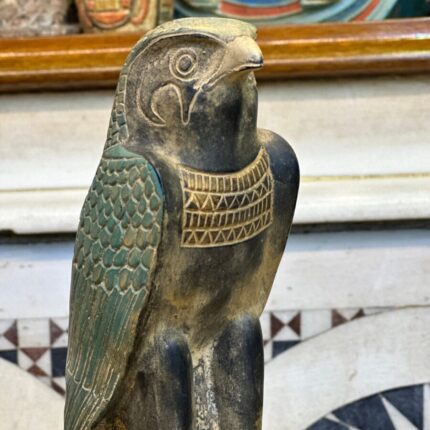
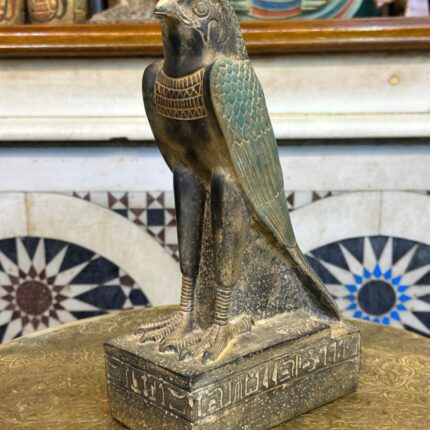
Vintage Horus-Egyptian god of Protection-peace-ancient Egyptian gods-deity-mythology-sculpture antiques-Raplica-ancient Egyptian mythology
Add a powerful symbol of ancient Egyptian kingship to your collection with this 27 cm Colored Horus Statue, crafted from stone and featuring beautifully colored details with Egyptian-style inscriptions on the base. Inspired by Horus, the falcon god of the sky, royal authority, and protection, it is ideal for collectors, Egyptian décor, mythology lovers, and unique cultural gifts.
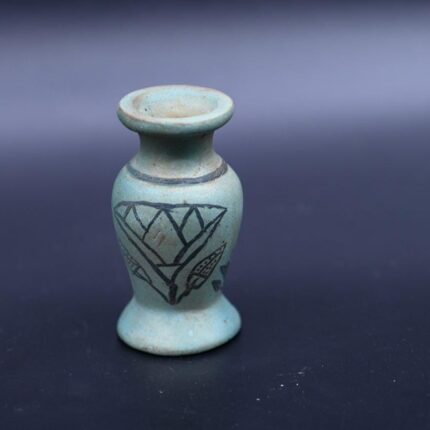
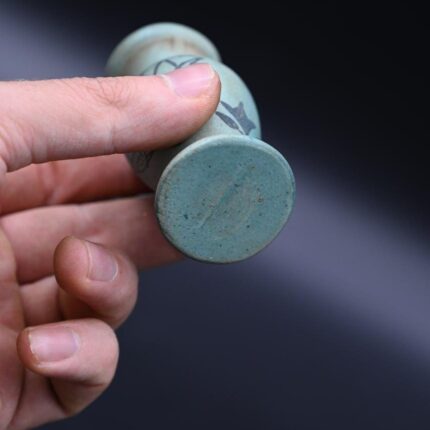
Hand Carved Stone Vase: Egyptian Decor Sculpture
Add a distinctive touch of ancient Egyptian artistry to your space with this Hand Carved Egyptian Stone Vase, crafted from real stone and decorated with engraved pharaonic-inspired gods and symbols. Its detailed handcrafted design makes it a striking choice for Egyptology collectors, Egyptian décor, history lovers, offices, libraries, and unique cultural gifts.
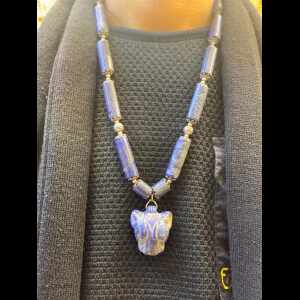
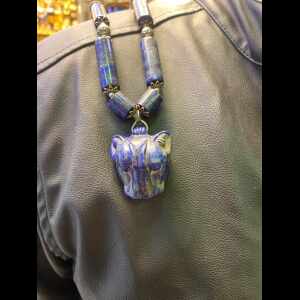
Handmade Lapis Lazuli Sekhmet Necklace: Egyptian Goddess Jewelry
Add a powerful touch of ancient Egyptian symbolism to your jewelry collection with this 150 g Lapis Sekhmet Necklace, handcrafted from natural lapis lazuli stone with elegant silver-tone metal accents. Inspired by Sekhmet, the lioness goddess of strength, protection, healing, and solar power, it is a striking choice for mythology lovers, statement-jewelry collectors, and unique cultural gifts.
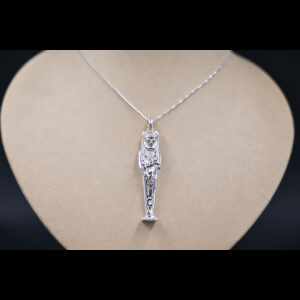
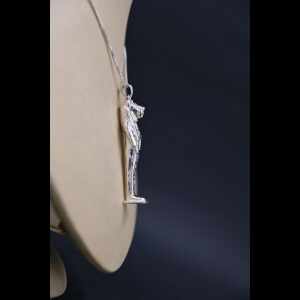
Handmade Sterling Silver Sekhmet Goddess Amulet
Add a powerful symbol of ancient Egyptian strength to your jewelry collection with this Pure Silver Sekhmet Amulet, crafted from pure silver and inspired by Sekhmet, the lioness goddess of war, protection, healing, medicine, and solar power. A distinctive choice for mythology lovers, silver jewelry collectors, Egyptology enthusiasts, and unique cultural gifts.
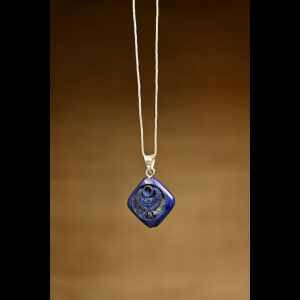
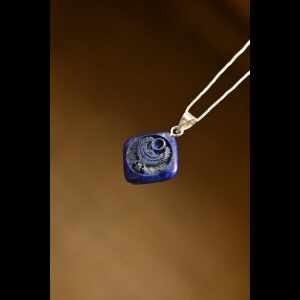
Ancient Egyptian Horus Falcon Amulet Pendant, Lapis Lazuli Carving
Add a powerful symbol of ancient Egyptian kingship and protection to your jewelry collection with this Horus Falcon Protection Amulet, inspired by Horus, the falcon god of the sky, royal authority, and guardianship. A distinctive choice for mythology lovers, Egyptology enthusiasts, protective-symbol collectors, Egyptian-inspired jewelry, and unique cultural gifts.
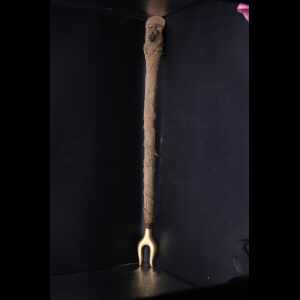
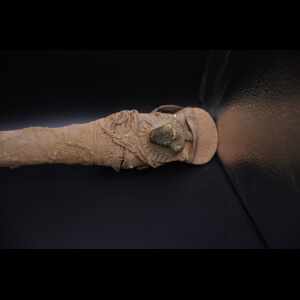
Sekhmet Scepter Was Stick, Egyptian Symbol of Strength, 50cm, Made in Egypt
Add a powerful symbol of ancient Egyptian authority to your collection with this 50 cm Sekhmet Was Scepter, handcrafted in Egypt from wood, linen, and copper. Featuring a Sekhmet-inspired design and the iconic Was symbol of dominion and power, it is a distinctive choice for Egyptology collectors, mythology lovers, Egyptian décor, and museum-inspired displays.
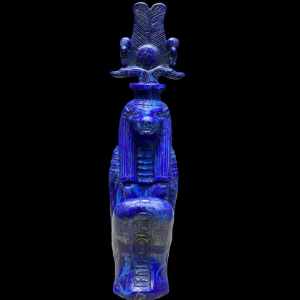
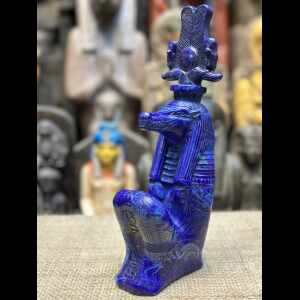
Handcrafted Lapis Lazuli Sobek Statue – Egyptian Crocodile God Art (33 cm)
Add a powerful symbol of ancient Egyptian strength to your collection with this 33 cm Lapis Lazuli Sobek Statue, handcrafted in Egypt and inspired by Sobek, the crocodile god associated with the Nile, fertility, protection, strength, and royal power. Measuring 33 × 7 × 10 cm, it is a striking choice for collectors, Egyptian décor, mythology lovers, and unique cultural gifts.
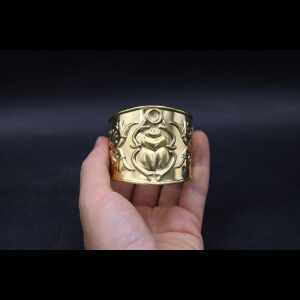
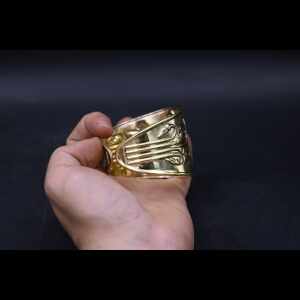
Egyptian Scarab Bracelet: Brass Beetle Amulet, Ancient Mythology Jewelry
Add a meaningful symbol of ancient Egyptian renewal to your jewelry collection with this Brass Scarab Beetle Bracelet, handcrafted in Egypt from brass and featuring a detailed scarab centerpiece. Inspired by the ancient symbolism of rebirth, transformation, solar renewal, and protection, it is a distinctive choice for mythology lovers, Egyptology enthusiasts, jewelry collectors, and unique cultural gifts.


Reviews
There are no reviews yet.