
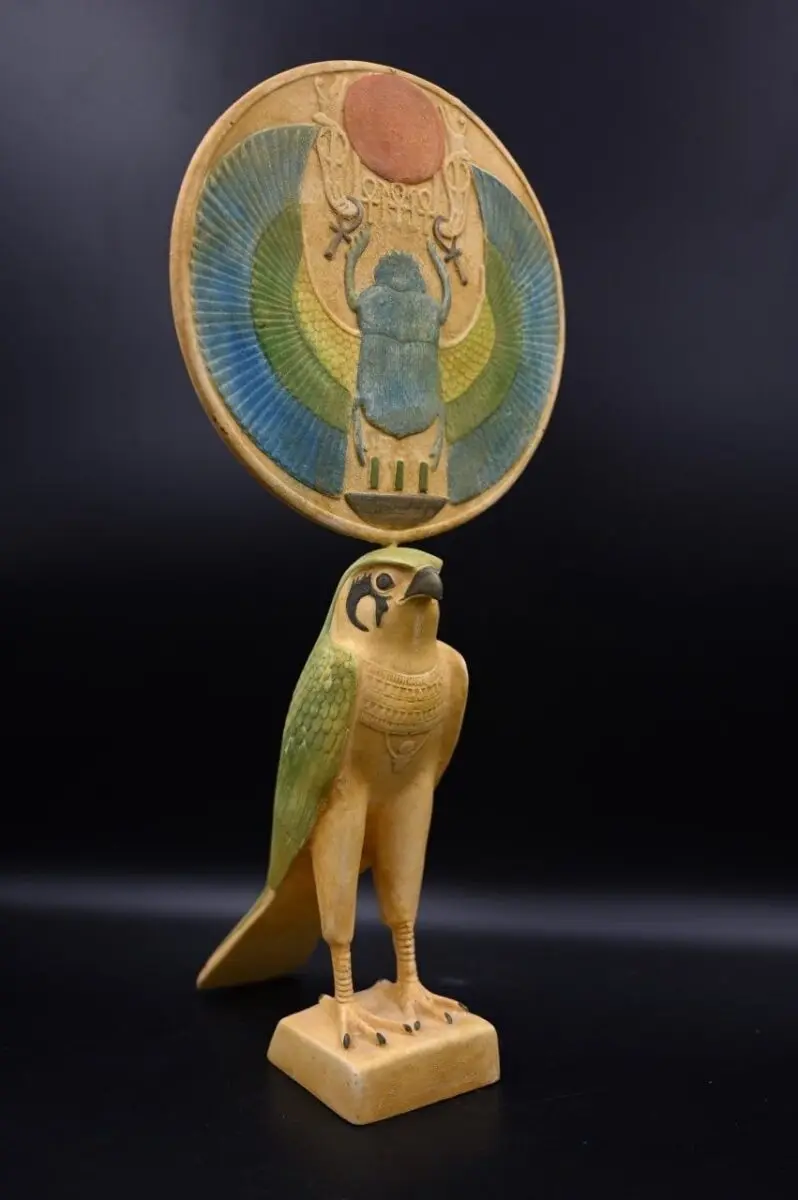
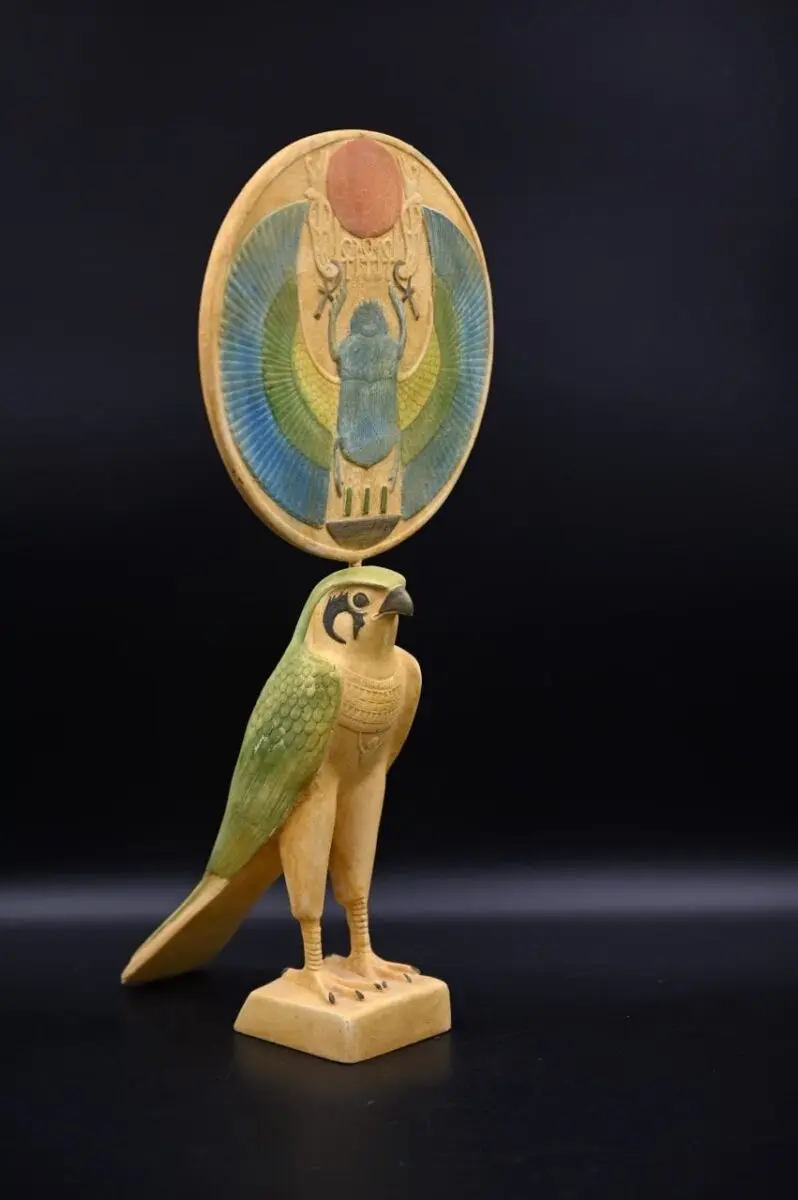
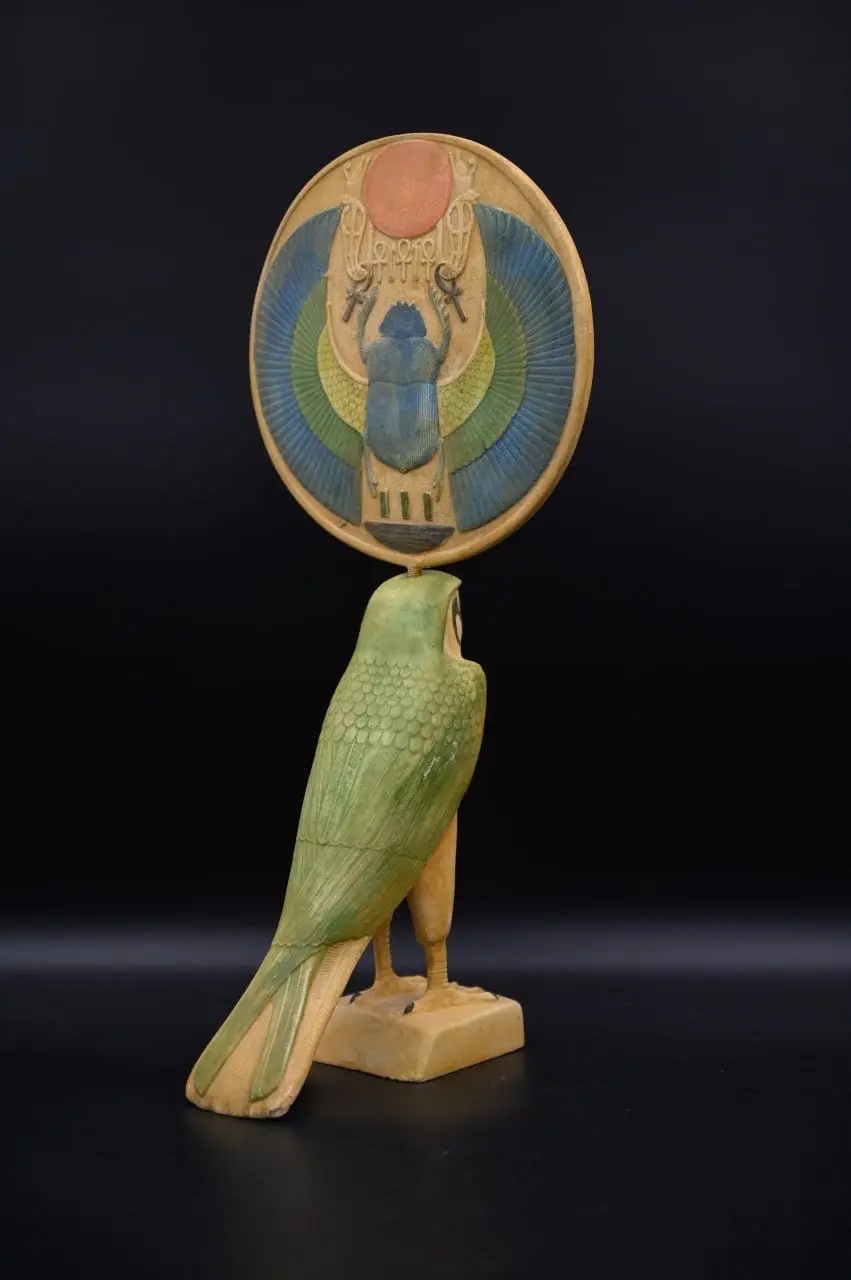
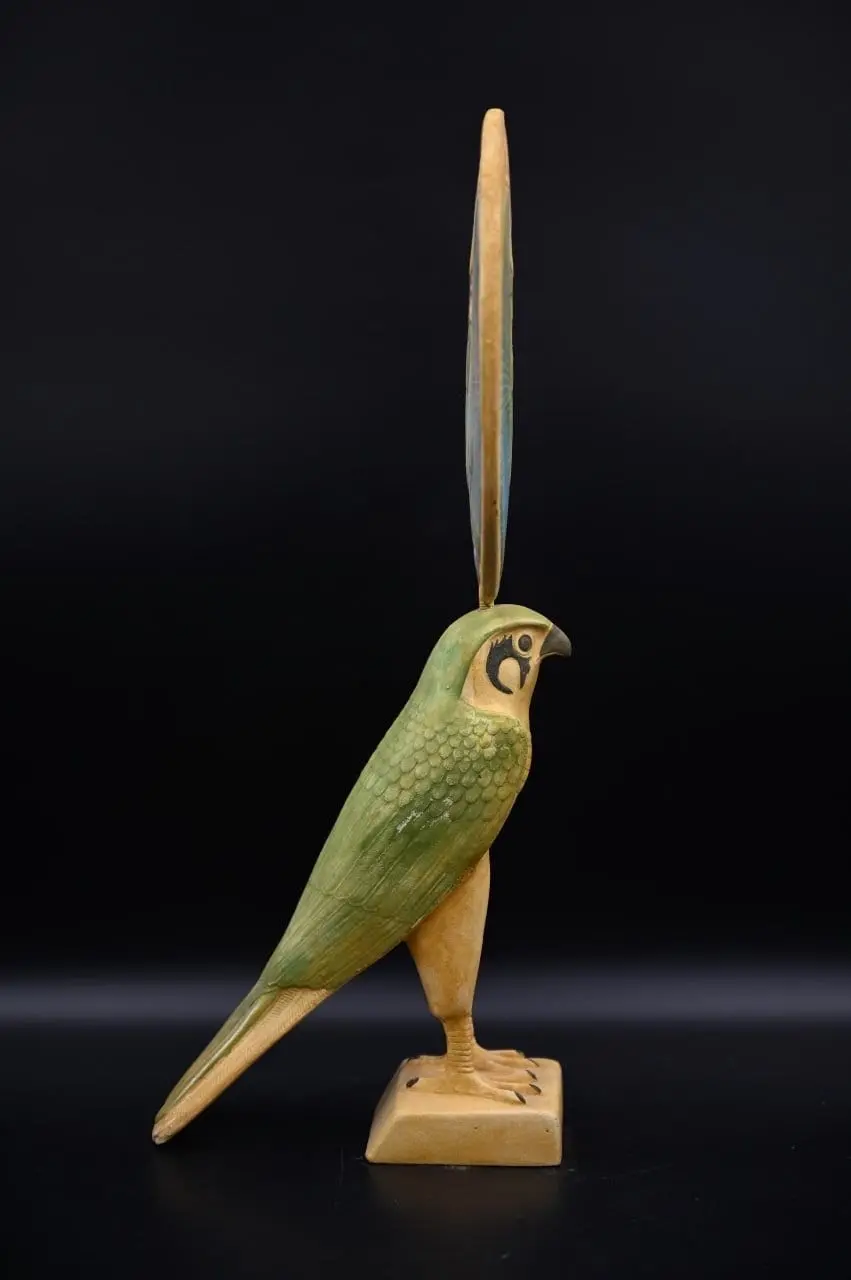
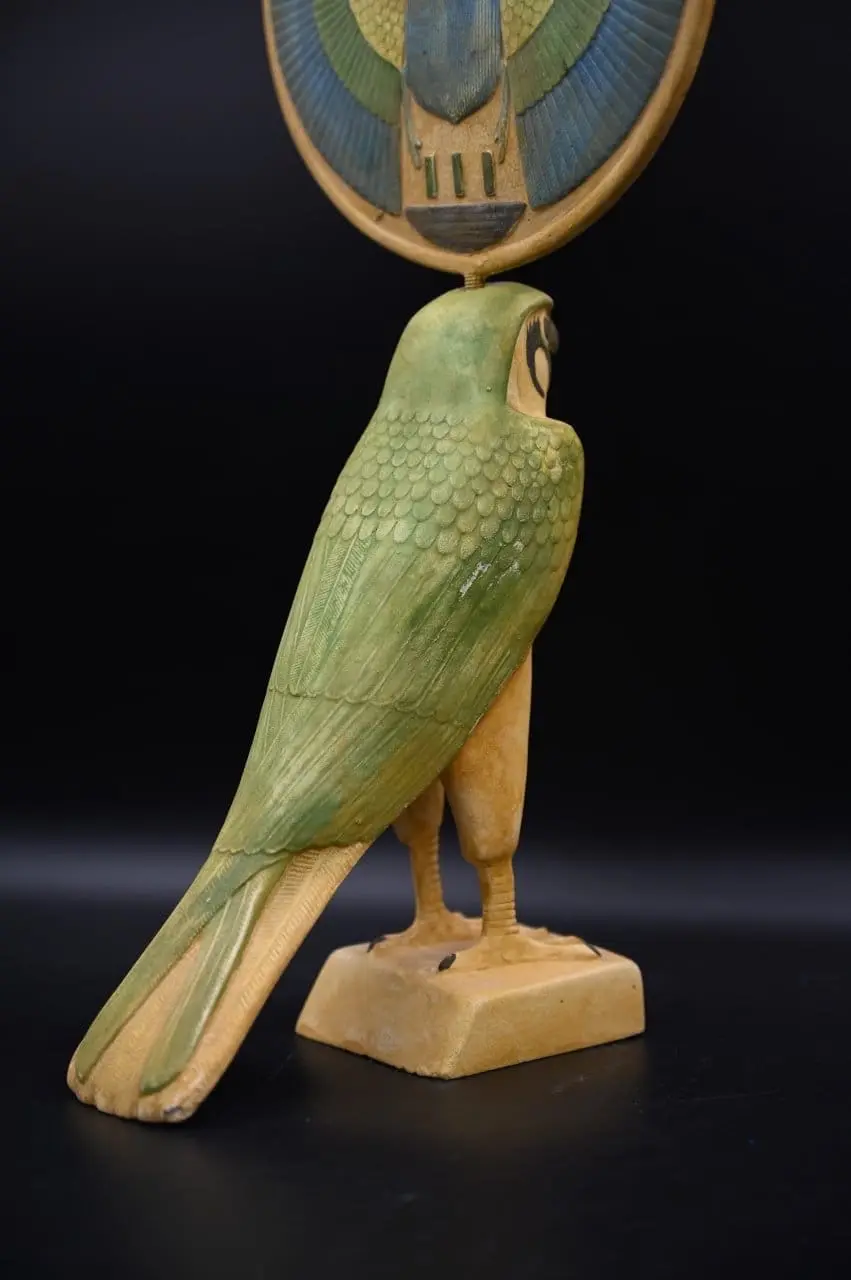
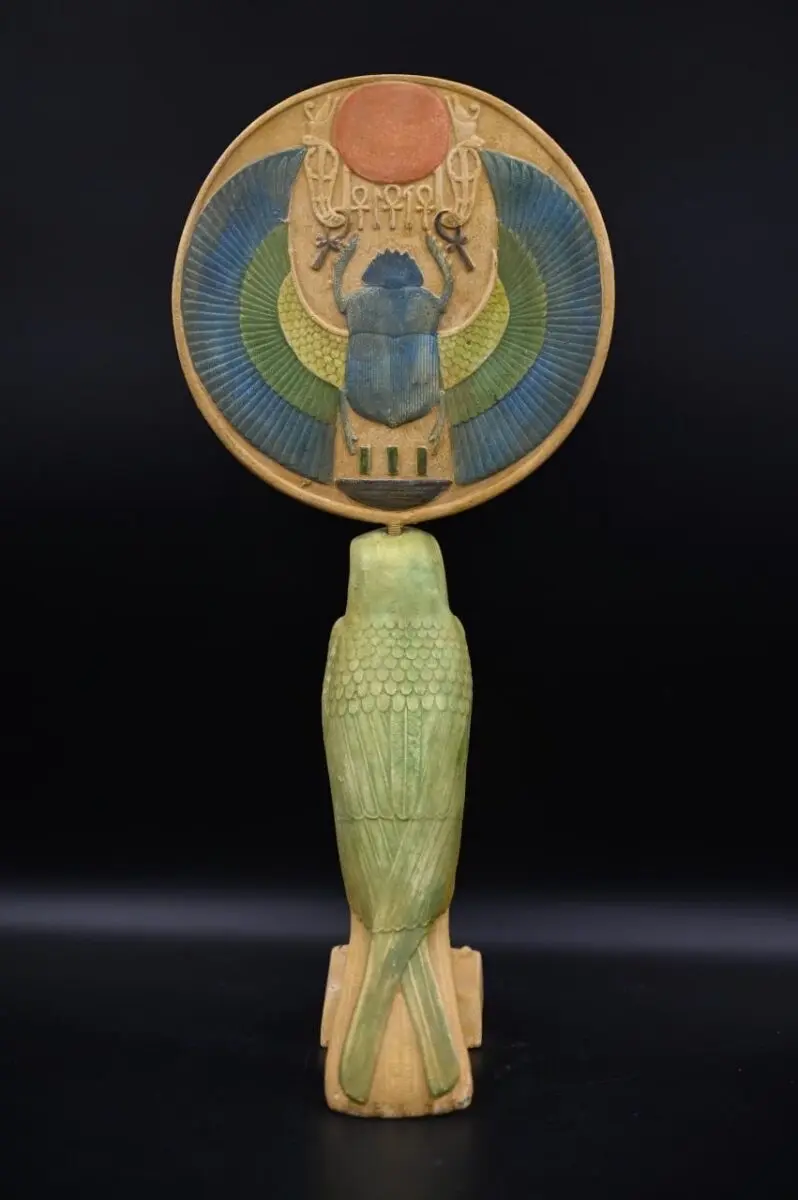
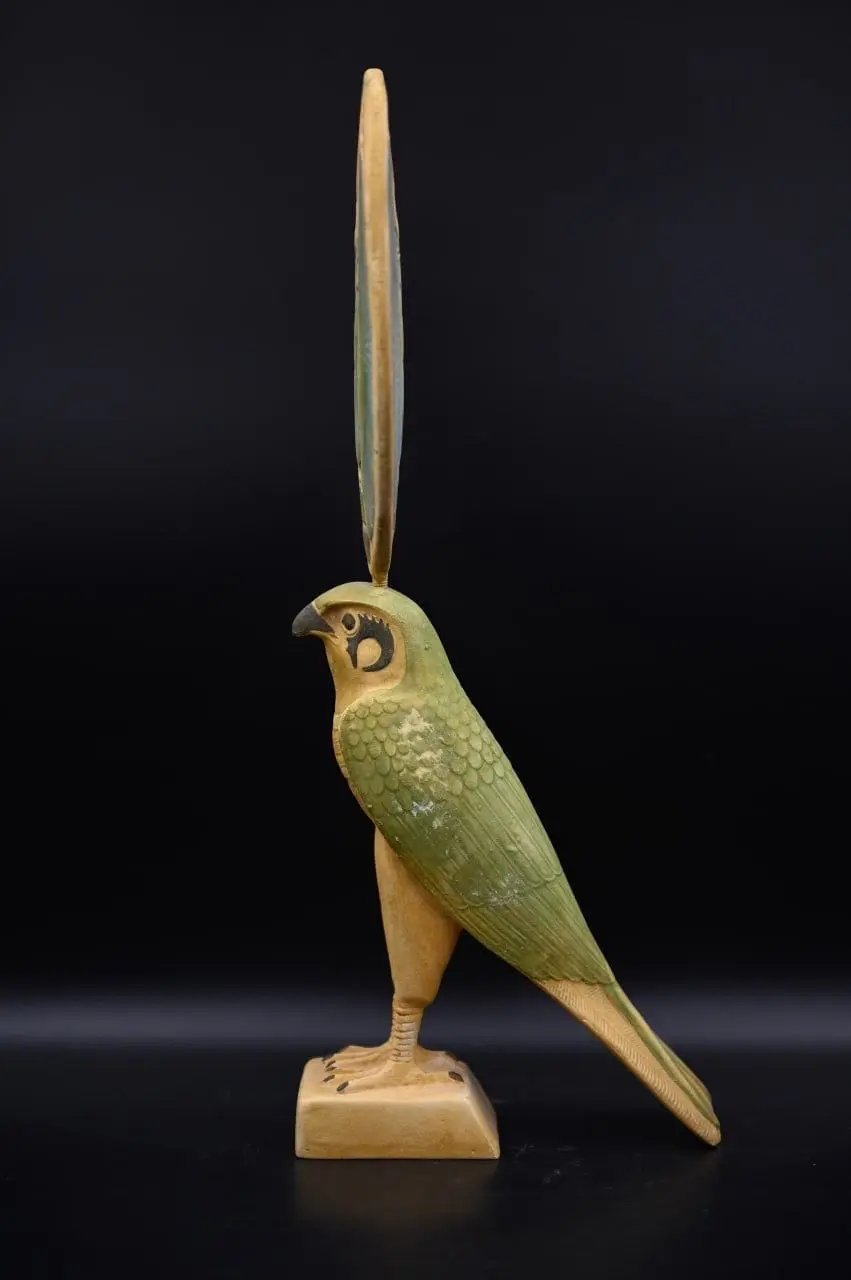
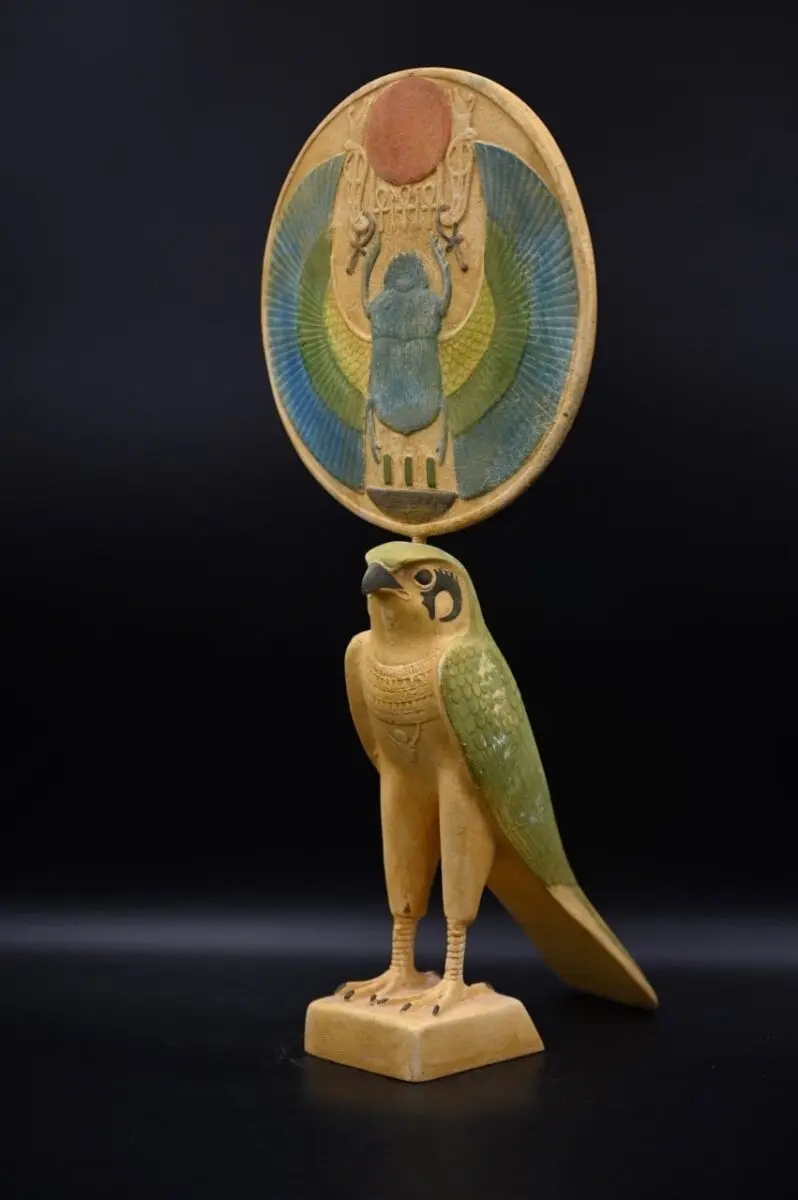
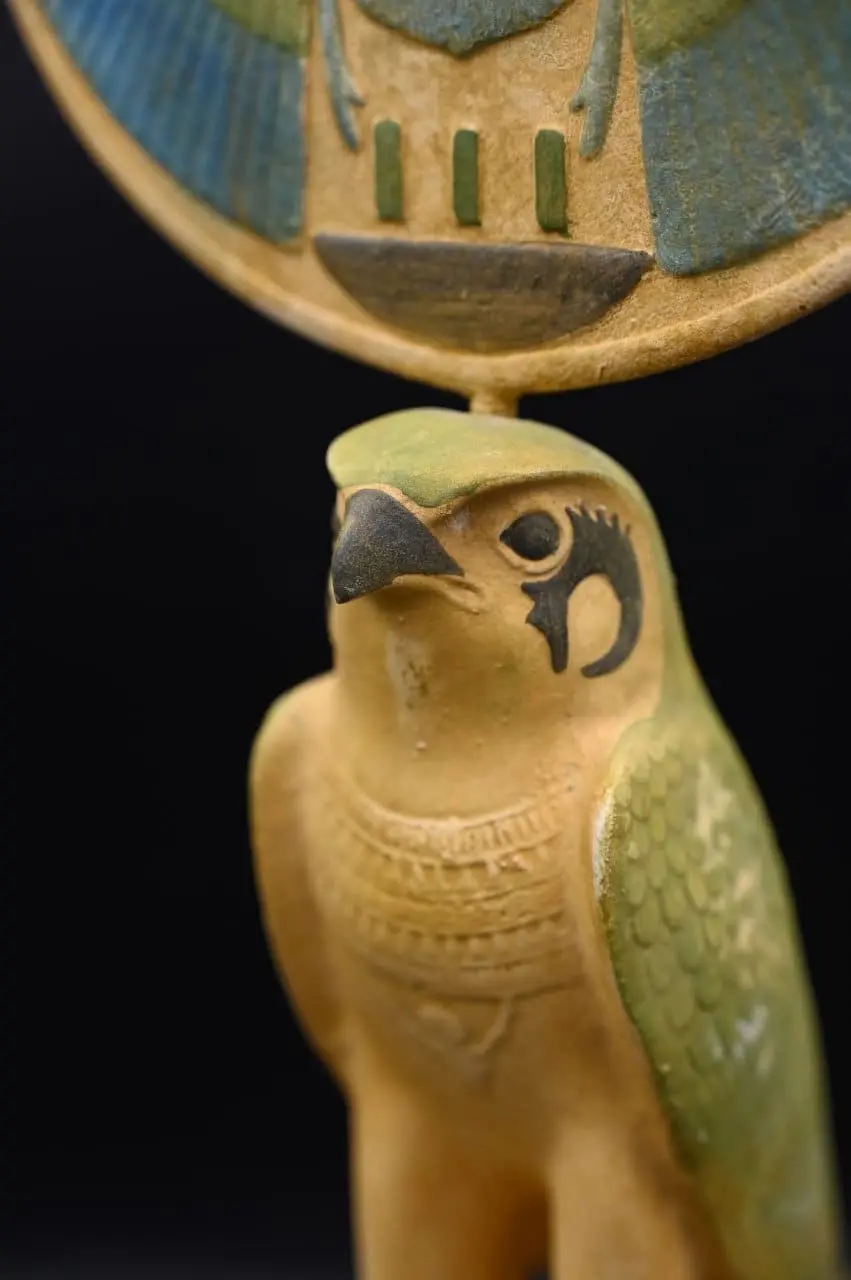
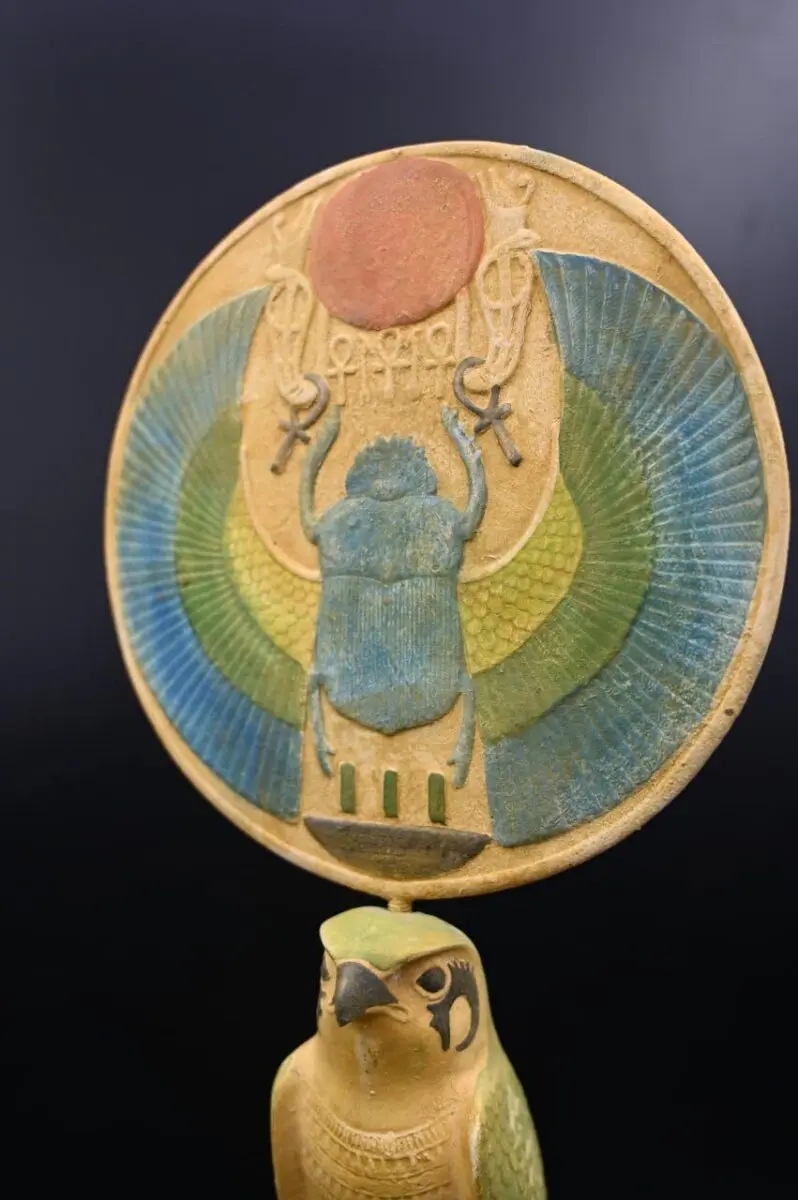
Limestone Horus Statue, Egyptian God of Protection (35cm)
$388.70
Add a powerful symbol of ancient Egyptian kingship to your collection with this Horus Winged Scarab Limestone Statue, hand-carved in Egypt from limestone and measuring 35 × 15 cm. Featuring Horus with solar imagery and a winged scarab symbolizing rebirth and renewal, it is a distinctive choice for collectors, Egyptian décor, and unique cultural gifts.
Horus Winged Scarab Limestone Statue – Handmade Egyptian Falcon God Sculpture
Description of Art
Horus Winged Scarab Limestone Statue handcrafted in Egypt from limestone by skilled Egyptian artisans and inspired by one of the most important falcon deities of ancient Egyptian religion.
Standing 35 cm high and 15 cm long, this distinctive sculpture depicts Horus with solar-inspired imagery and a decorative winged scarab motif, creating a composition rich in ancient Egyptian symbolism.
Horus was principally associated with the sky, kingship, royal authority, and protection. Ancient Egyptian rulers were closely linked with Horus, and surviving sculptures portray the falcon god physically protecting the king.
Product Features
Material: Limestone
Height: 35 cm
Length: 15 cm
Deity: Horus
Decorative Motif: Winged Scarab
Craftsmanship: Hand-Carved / Handmade
Origin: Made in Egypt
Style: Ancient Egyptian Inspired
Who Was the Egyptian God Horus?
Horus was one of the most important and enduring gods of ancient Egypt.
He could take several forms, but was most famously represented as either a falcon or a man with the head of a falcon. His major associations included the sky, kingship, and divine royal authority.
The British Museum also identifies Horus as a protector and defender of the pharaoh and associates him with maintaining order.
For this reason, a Horus Winged Scarab Limestone Statue can symbolically evoke:
Protection • Kingship • Authority • Strength • Egyptian Heritage
Horus – God of Kingship
One of Horus’s strongest historical associations was Egyptian kingship.
The Metropolitan Museum explains that Horus was both a sky god and god of kingship, while another surviving Horus figure emphasizes how closely the falcon deity and Egyptian royal authority were connected from very early periods.
Ancient Egyptian royal ideology frequently associated the living king with Horus. This relationship was symbolic and theological rather than meaning that every individual pharaoh was simply understood as an ordinary physical incarnation of the god.
This makes Horus particularly appropriate for artwork representing:
- Leadership
- Royal authority
- Protection
- Divine legitimacy
- Strength
Horus as Protector of the King
Protection was another major aspect of Horus.
A famous Metropolitan Museum statue shows the falcon god standing behind King Nectanebo II in a composition that expresses Horus’s protective relationship with Egyptian kingship.
The British Museum likewise describes Horus as a god associated with pharaohs who could act as their protector and defender.
Therefore, it is much more historically accurate to describe Horus as a god of kingship and protection than simply as a “god of peace.”
Was Horus the God of Peace?
The original description repeatedly calls Horus the “God of Peace and Protection.”
I recommend changing this.
Peace is not one of the strongest defining titles used for Horus in major museum references.
His historically stronger associations are:
Sky • Kingship • Protection • Royal Authority
The British Museum additionally notes associations with war and hunting in some contexts.
For SEO and historical accuracy, use:
“Horus, the ancient Egyptian falcon god of kingship, sky, and protection.”
Horus, Isis, and Osiris
In one of Egypt’s most famous mythological traditions, Horus was the son of Isis and Osiris.
After Osiris’s death, Horus became central to the struggle with Seth over legitimate rule.
The British Museum summarizes the tradition by identifying Horus as the son of Isis and Osiris who defeated Seth and claimed the throne.
This myth helped reinforce Horus’s connection with legitimate kingship and royal succession.
Horus and Seth
The conflict between Horus and Seth became one of the most important mythological expressions of royal legitimacy in ancient Egypt.
It is better, however, not to reduce the story simply to a battle between absolute “good and evil.”
Egyptian mythology was more complex. Seth could represent disorder and conflict in the Horus cycle, while also holding protective or powerful roles in other Egyptian traditions.
For this product, the strongest theme is that Horus emerged as the legitimate royal heir, reinforcing his association with kingship.
Horus and the Falcon
The falcon was Horus’s defining sacred form.
The Metropolitan Museum specifically describes the falcon as an incarnation of Horus and connects the bird with his identity as sky god and god of kingship.
This relationship is easy to understand visually: the falcon’s ability to fly high above the landscape provided a natural connection with the sky, while its strength and commanding presence complemented royal symbolism.
The falcon imagery makes Horus one of the most immediately recognizable deities in Egyptian art.
Horus and the Sun Disk
The supplied design describes Horus with a sun disk.
Solar imagery can indeed appear with forms of Horus. The British Museum preserves, for example, an Egyptian object depicting a falcon-form Horus wearing a sun disk.
However, Egyptian theology contained multiple forms and manifestations of Horus, so it is best not to claim that the solar disk was the universal headdress of every Horus representation.
For this listing, use:
“A Horus-inspired figure featuring solar disk imagery.”
The Winged Scarab
A particularly distinctive element of this statue is the winged scarab motif.
The scarab was strongly associated with Khepri, the manifestation of the rising sun, and therefore with solar renewal and rebirth. A Metropolitan Museum winged scarab from funerary contexts is described as representing Khepri and providing magical protection and rebirth through its association with the solar cycle.
Another Metropolitan Museum pendant shows a large winged scarab with a sun disk, demonstrating that this combination is genuinely rooted in ancient Egyptian visual culture.
Symbolism of the Winged Scarab
For this sculpture, the winged scarab can evoke:
Rebirth • Renewal • Solar Regeneration • Protection
The British Museum also notes the strong Egyptian association between scarabs and rebirth.
It is important, though, not to identify the winged scarab as one of Horus’s primary personal symbols.
Historically, the scarab is much more directly connected with Khepri and solar regeneration.
Therefore, this product is best described as:
“A Horus statue decorated with a winged scarab motif symbolizing rebirth and solar renewal.”
Combining Horus and the Winged Scarab
The artistic combination gives this Horus Winged Scarab Limestone Statue several complementary symbolic themes.
Horus: Kingship, Sky & Protection
Winged Scarab: Rebirth, Renewal & Solar Regeneration
Together, the modern design can evoke:
Protection • Royal Strength • Renewal • Rebirth • Egyptian Heritage
This makes the sculpture especially distinctive compared with more conventional Horus statues.
Hand-Carved Limestone
This sculpture is described as being hand-carved from limestone.
Product Measurements
Height: 35 cm
Length: 15 cm
Material: Limestone
The natural stone construction gives the sculpture a substantial traditional appearance suitable for Egyptian-inspired decorative displays.
Because it is handcrafted, subtle differences in stone texture or carved details may contribute to the individual character of each finished piece.
Handmade in Egypt
The Horus Winged Scarab Limestone Statue is handmade by skilled Egyptian artisans and made in Egypt.
It can be displayed as:
- Egyptian home décor
- Shelf sculpture
- Office decoration
- Library décor
- Collector-room artwork
- Display cabinet centerpiece
- Museum-inspired décor
- Mythology collection
Its 35 cm height gives it enough presence to function as a statement sculpture while remaining practical for shelves and display furniture.
Replica or Museum-Inspired Sculpture
The original description calls this piece a “museum copy” and says it is a replica of an original artifact.
Unless you know the exact museum object or archaeological source reproduced by the statue, I recommend using:
Museum-Inspired Horus Replica
Ancient Egyptian-Inspired Sculpture
Handmade Egyptian Horus Statue
rather than claiming it is an exact museum copy.
This keeps the listing professional and avoids suggesting archaeological provenance that has not been documented.
Symbolism for Modern Collectors
For a modern decorative interpretation, this sculpture may represent:
Protection • Leadership • Authority • Rebirth • Renewal • Strength
The combination of Horus and the winged scarab gives the piece particular appeal to buyers interested in Egyptian symbols with layered meanings.
Perfect for Collectors
The Horus Winged Scarab Limestone Statue is an excellent choice for:
- Horus collectors
- Ancient Egyptian art enthusiasts
- Egyptology lovers
- Egyptian mythology fans
- Falcon art collectors
- Scarab collectors
- Limestone sculpture enthusiasts
- Egyptian home décor
- Museum-inspired displays
- Unique cultural gifts
It can also complement sculptures and decorative objects inspired by Isis, Osiris, Anubis, Ra, Khepri, Sekhmet, Bastet, Thoth, and other Egyptian deities.
Product Details
Product: Horus Winged Scarab Limestone Statue
Deity: Horus
Material: Limestone
Height: 35 cm
Length: 15 cm
Craftsmanship: Hand-Carved by Egyptian Artisans
Origin: Made in Egypt
Horus Associations: Sky, Kingship & Protection
Additional Motif: Winged Scarab
Scarab Symbolism: Rebirth, Renewal & Solar Regeneration
Additional Detail: Solar Disk Imagery
Style: Ancient Egyptian Inspired
Type: Decorative Limestone Sculpture
Use: Collection, Home Décor, Office Décor & Cultural Gift
| Dimensions | 15 in |
|---|
Related products
Horus Statue: Egyptian God Replica Egyptian Home Decor Antiques
Elevate your interior styling with our Horus Statue Egyptian God Replica. Combining authentic ancient Egyptian iconography with fine artisan craftsmanship and detailed hand-finished textures, this protective falcon deity sculpture offers a compelling blend of rich history, majestic presence, and timeless symbolic energy for any home or office display.
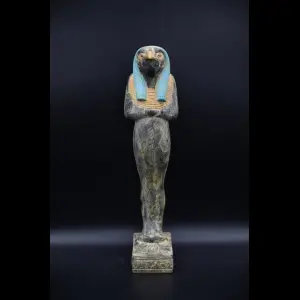
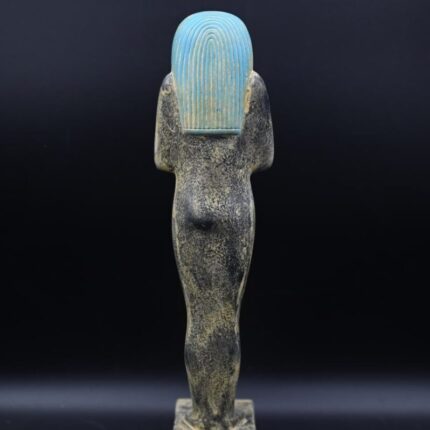
Vintage Egyptian God Horus Statue, Sculpture
Add a powerful symbol of ancient Egyptian heritage to your collection with this Egyptian Horus Stone Sculpture, handcrafted from stone and made in Egypt. Inspired by Horus, the falcon god of the sky, kingship, protection, and royal authority, it is a distinctive choice for collectors, history lovers, Egyptian décor, and unique cultural gifts.
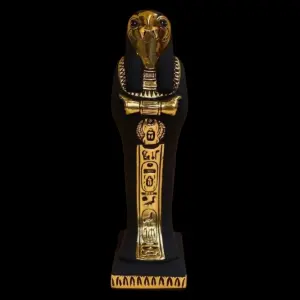
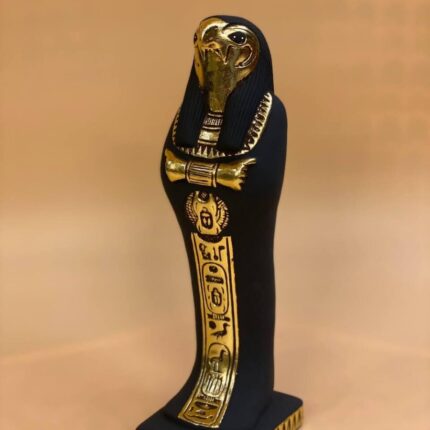
Vintage Horus Statue: Egyptian God Sculpture, in Egypt
Add a distinctive piece of ancient Egyptian heritage to your collection with this Handmade Horus Stone Statue, crafted in Egypt from stone and inspired by the falcon god of the sky, kingship, protection, and royal authority. A meaningful choice for collectors, history lovers, Egyptian décor, and unique cultural gifts.
Egyptian Eye of Horus Ring, Ancient Symbol, in Egypt
Add a powerful touch of ancient Egyptian symbolism to your style with this Unisex Horus Pharaonic Ring, handcrafted in Egypt with an adjustable free-size design for women and men. Inspired by Horus, the falcon god of kingship, sky, royal authority, and protection, it is a distinctive choice for jewelry lovers, collectors, mythology enthusiasts, and unique cultural gifts.
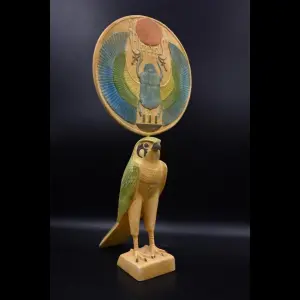
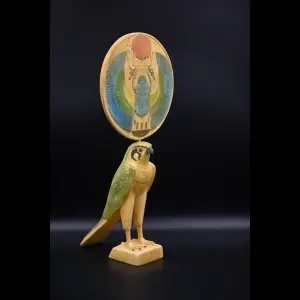
Handcrafted Limestone Horus Statue, Egyptian God of Protection (35cm)
Add a powerful symbol of ancient Egyptian kingship to your collection with this 35 cm Limestone Horus Statue, handcrafted in Egypt and featuring solar and winged scarab motifs. Inspired by Horus, the falcon god of the sky, royal authority, and protection, it is a striking choice for Egyptology collectors, Egyptian décor, mythology lovers, and museum-inspired displays.
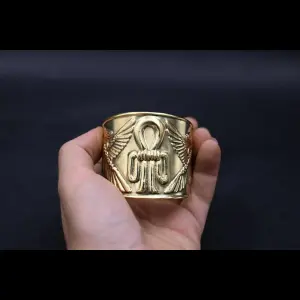
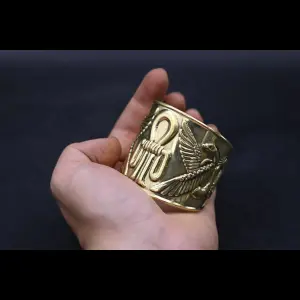
Brass Hathor Knot Bracelet: Egyptian Winged Cobra Talisman
Add a powerful touch of ancient Egyptian symbolism to your jewelry collection with this Brass Winged Cobra Egyptian Bracelet, crafted from brass and featuring an Egyptian-inspired knot centerpiece flanked by protective winged cobras. Inspired by ancient themes of guardianship and royal power, it is a distinctive choice for mythology lovers, Egyptology enthusiasts, statement-jewelry collectors, and unique cultural gifts.
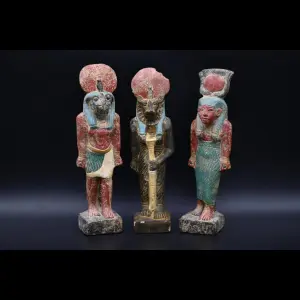
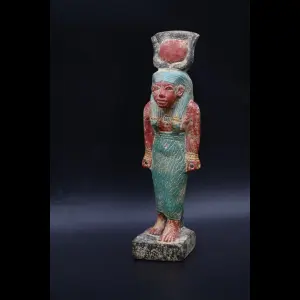
Handcrafted Hathor, Sekhmet, & Horus Statues: Egyptian Deities (20 cm)
Add a distinctive collection of ancient Egyptian symbolism to your space with this Hathor Sekhmet Horus Statue Set, featuring three 20 cm handcrafted statues made from colored natural stone. Representing love and motherhood, strength and healing, and kingship and protection, this set is ideal for collectors, Egyptian décor, mythology lovers, and unique cultural gifts.
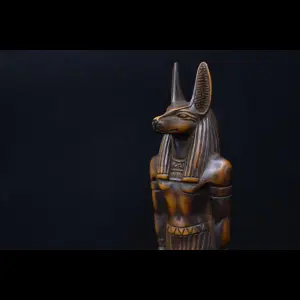
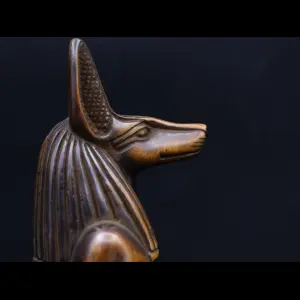
Handcrafted Anubis Statue: Egyptian God of Protection, Brown Stone (23cm)
Add a powerful symbol of ancient Egyptian protection to your collection with this 23 cm Brown Stone Anubis Statue, handcrafted in Egypt from natural stone. Inspired by Anubis, the canine-headed deity of mummification, funerary protection, and care of the deceased, it is a distinctive choice for collectors, Egyptian décor, museum-inspired displays, and unique cultural gifts.


Reviews
There are no reviews yet.