
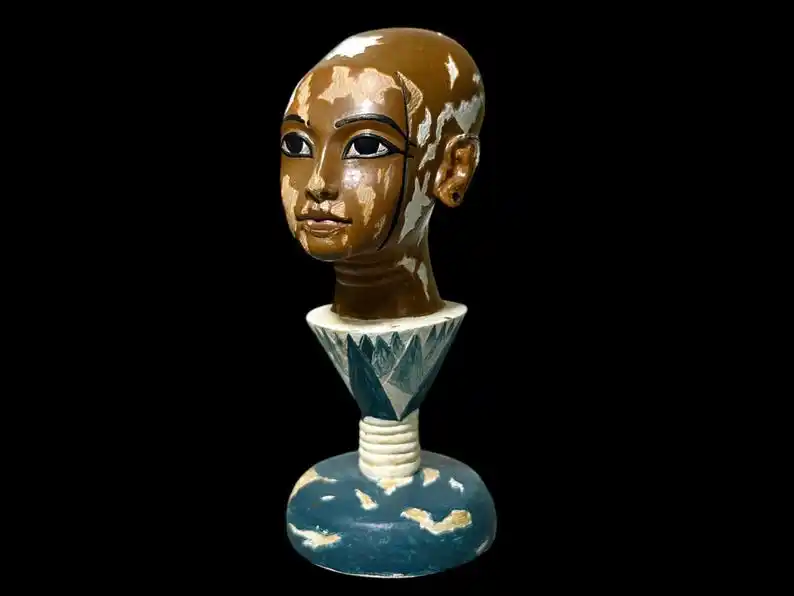
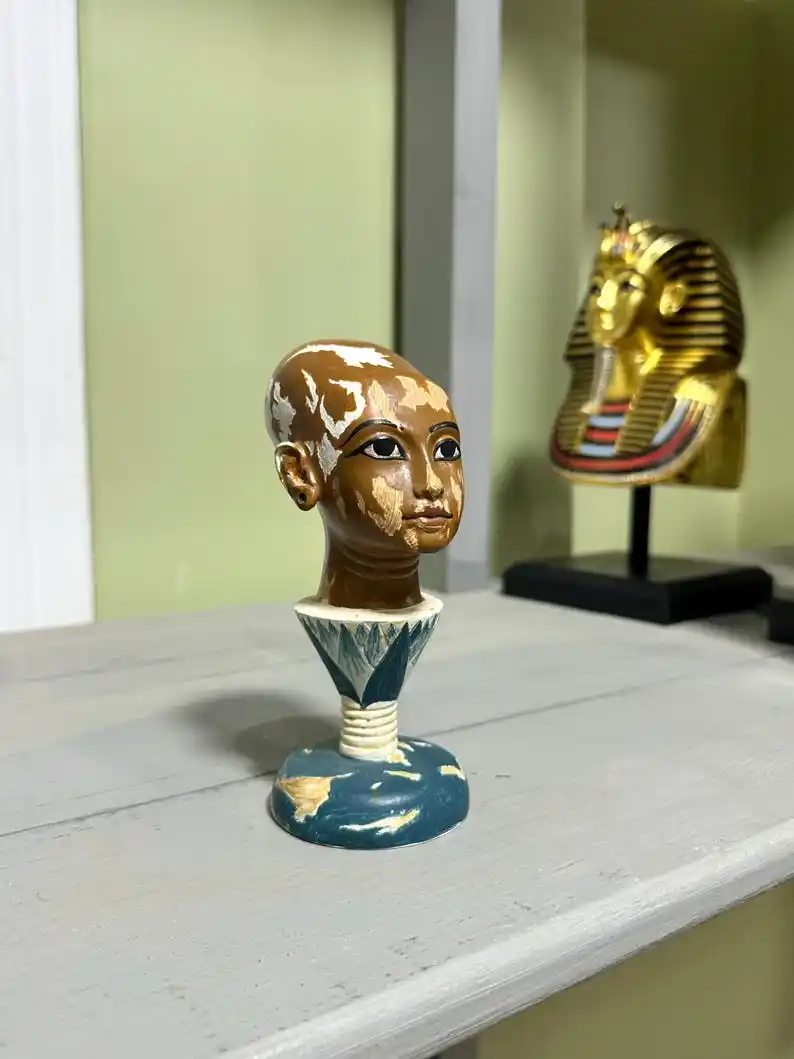
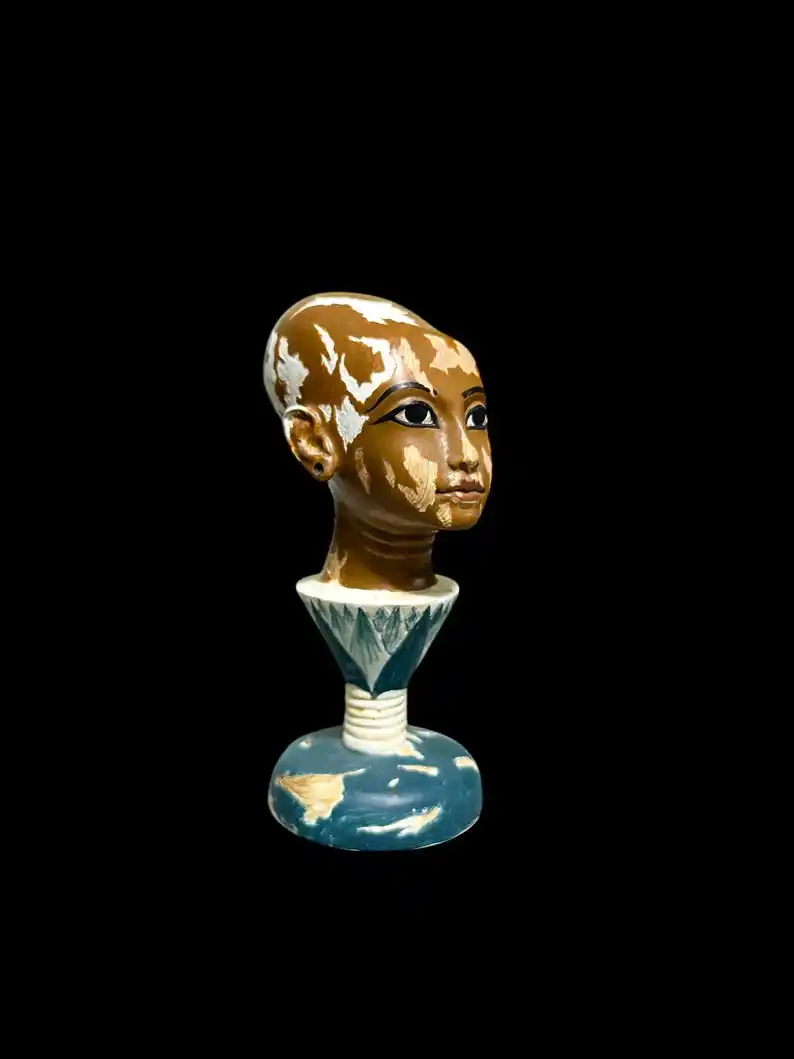
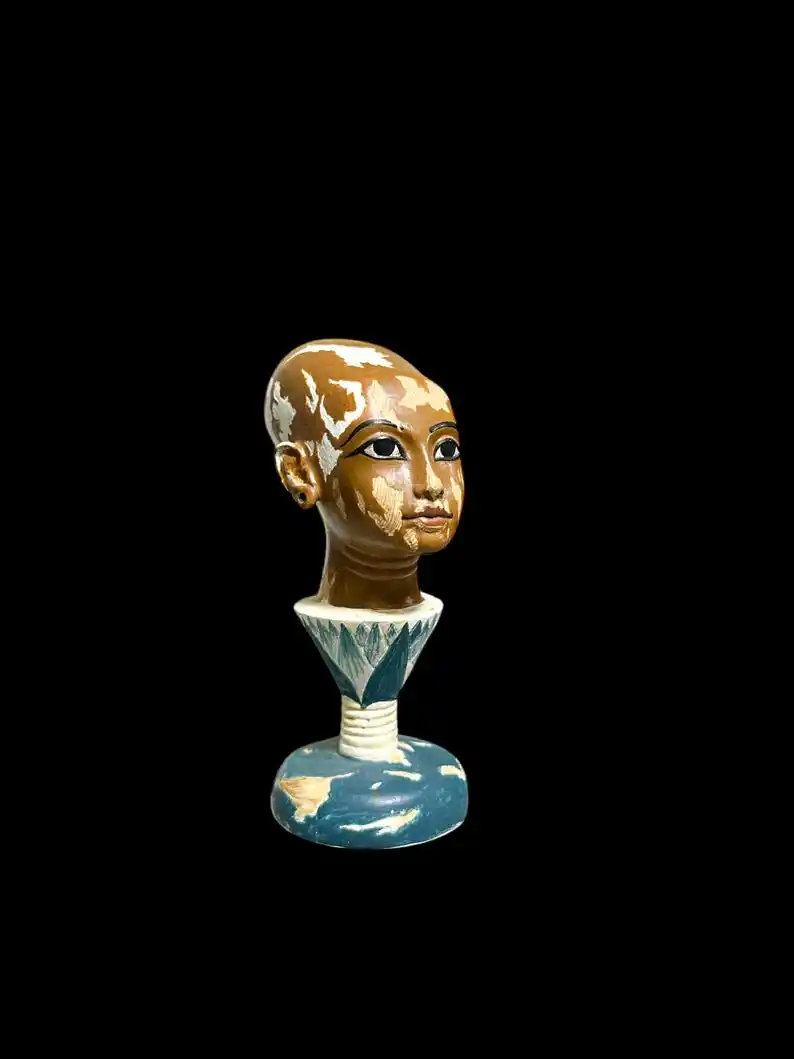
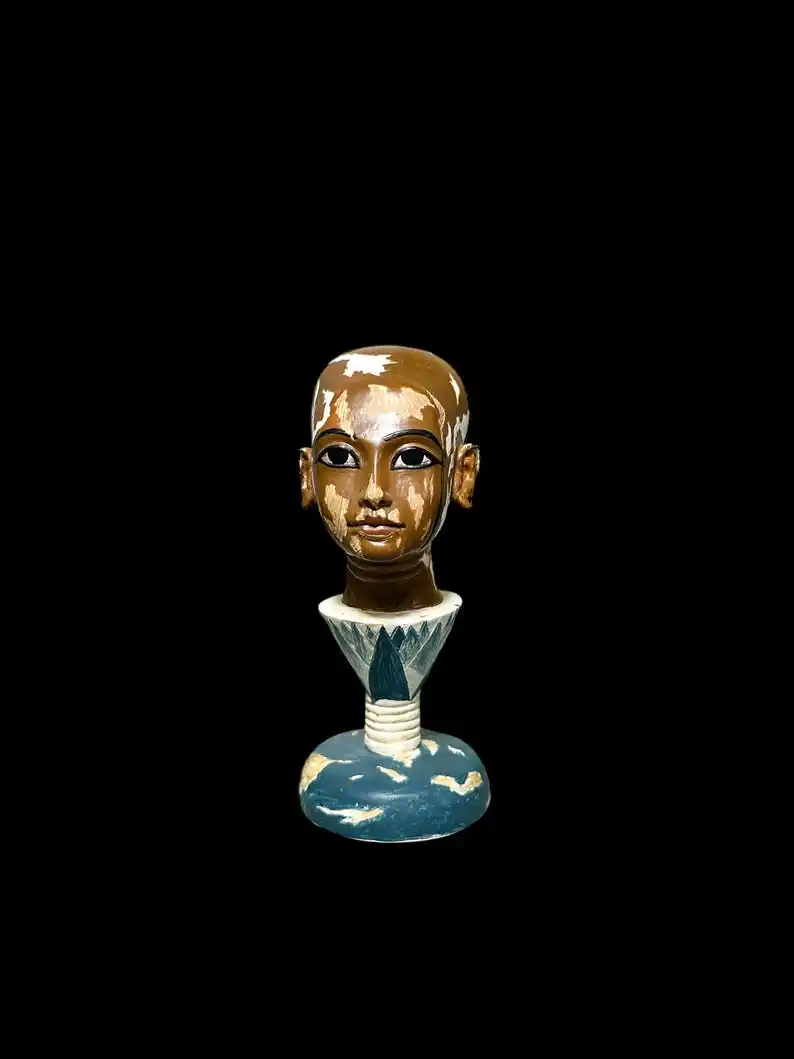
Tutankhamun Head Statue: Nefertum Lotus Bloom Replica
$150.00
The Head of Nefertem
Imagine holding a piece of ancient Egypt in your hands. This beautiful statue brings that feeling to life. It’s been lovingly crafted by none other than Professor Mostafa Elazaby, a true master of Pharaonic sculpture. He’s basically the guy when it comes to recreating King Tutankhamun’s treasures, and his work has won him awards from all over the world.
About the Artist:
Professor Elazaby is a legend in the world of Pharaonic art. He’s dedicated his life to recreating the incredible artistry of ancient Egypt, especially the pieces from Tutankhamun’s tomb. His replicas are so good, they’re practically museum pieces themselves. This particular Statue is a commercial piece, beautifully made and perfect for anyone who appreciates Egyptian art. If you’re interested in something truly exceptional – like museum-quality replicas or pieces for exhibitions – Professor Elazaby also creates private collections. Just send us a message, and we can tell you more.
Now for Sale!
The Head of Nefertem (also known as the Head from the Lotus Bloom or Tutankhamun as the Sun God). An unusual and appealing small head that is a masterpiece; it was found by Howard Carter at the entrance to the Tomb of Tutankhamun. The head is that of the king tut with very beautiful features, modeled in the Amarna style and emerging from an open lotus flower.
Tutankhamun Nefertum Lotus Statue – Lotus Bloom Replica
Description of Art
Tutankhamun Nefertum Lotus Statue inspired by one of the most distinctive images associated with the young Egyptian pharaoh: Tutankhamun represented emerging from a lotus flower in the guise of Nefertum, the youthful Egyptian deity strongly associated with the lotus, the newborn sun, and regeneration. The Metropolitan Museum describes Nefertum as a deity identified with the lotus flower and connected with youthful power, the newborn sun, and regeneration.
This museum-inspired reproduction celebrates the ancient Egyptian themes of rebirth, renewal, regeneration, creation, and the daily return of the sun.
Its unusual composition makes it especially attractive for Egyptology collectors, Tutankhamun enthusiasts, ancient Egyptian mythology lovers, libraries, offices, display cabinets, and museum-inspired interiors.
Product Details
Historical Figure: King Tutankhamun
Divine Representation: Nefertum / Nefertem
Main Motif: Head Emerging from a Lotus Bloom
Primary Symbolism: Rebirth, Renewal & Solar Regeneration
Style: Ancient Egyptian Inspired
Type: Decorative Museum-Inspired Replica
Material: Not Provided
Dimensions: Not Provided
Tutankhamun as Nefertum
The historical sculpture represents the young Tutankhamun in association with Nefertum, rather than simply being an ordinary portrait bust of the king.
The composition shows the king emerging from an open lotus flower, a visual concept associated with renewed life and the reappearance of the sun. The original object is commonly known as the Head of Nefertem, the Head from the Lotus Bloom, or Tutankhamun emerging from a lotus.
This makes the Tutankhamun Nefertum Lotus Statue especially meaningful within the religious context of Egyptian beliefs about regeneration and continued existence.
Who Was Nefertum?
Nefertum, also spelled Nefertem, was an ancient Egyptian god closely associated with the lotus flower.
The Metropolitan Museum identifies him with:
- Youthful power
- The lotus
- The newborn sun
- Regeneration
He was also regarded as a child of Ptah and Sekhmet in important traditions and was frequently shown wearing a lotus headdress topped by tall feathers.
The lotus connection makes Nefertum particularly appropriate for imagery expressing the idea of emerging into renewed life.
The Lotus and the Rising Sun
The lotus was one of the most powerful floral motifs in ancient Egyptian religious art.
Its daily opening with the morning light made it particularly suitable as an image of:
Rebirth • Renewal • Regeneration • Solar Dawn
Nefertum’s connection with the lotus reinforced these themes. The Met specifically describes the lotus associated with Nefertum as a symbol of the newborn sun and regeneration.
For this reason, portraying Tutankhamun emerging from a lotus could express the hope that the king would experience renewed existence.
Tutankhamun and Eternal Renewal
Tutankhamun’s funerary collection contains extensive imagery centered on rebirth and the afterlife. The Grand Egyptian Museum presents the Tutankhamun collection within themes that include the king’s journey into eternity and his funerary preparations for renewed existence.
Within this wider context, the lotus-bloom image of Tutankhamun fits naturally with ancient Egyptian concepts of:
Rebirth • Regeneration • Renewal • Eternal Life
The sculpture therefore represents much more than a decorative portrait of the young king.
Was Tutankhamun Nefertum?
It is better not to say that Tutankhamun literally was the god Nefertum.
Instead, the sculpture presents the king in the guise of or symbolically associated with Nefertum.
A historically safer phrase is:
“Tutankhamun represented in the guise of Nefertum, emerging from a lotus flower as an image of renewal and rebirth.”
This preserves the religious symbolism without confusing the king and the deity as identical figures in every context.
The Original Historical Sculpture
The original ancient object is identified as a head of Tutankhamun emerging from a lotus flower and is associated with the king’s tomb, KV62, in the Valley of the Kings. The Global Egyptian Museum identifies the piece as the Head of Tutankhamun, while other museum-focused records commonly refer to it as the Head of Nefertem.
Because your product is a modern reproduction, it is better to describe it as:
Museum-Inspired Replica
rather than:
Original Ancient Egyptian Statue
or
Authentic Tutankhamun Artifact
A Distinctive Tutankhamun Collectible
The Tutankhamun Nefertum Lotus Statue is especially suitable for:
- Tutankhamun collectors
- Egyptology enthusiasts
- Nefertum mythology collections
- Ancient Egyptian history lovers
- Lotus symbolism collectors
- Libraries and offices
- Egyptian-themed interiors
- Museum-inspired displays
- Unique cultural gifts
Its unusual lotus composition also helps distinguish it from more common Tutankhamun masks, busts, and standing statues.
Material Information
The product name you supplied does not specify the material of this replica.
Therefore, do not automatically describe it as:
Wood
Stone
Resin
Polyester
Gold Leaf
unless the actual product material is confirmed.
The historical original and the modern replica must always be treated separately when describing materials.
Modern Replica, Not an Antiquity
For the product listing, use:
Tutankhamun Nefertum Lotus Statue
Tutankhamun Lotus Bloom Replica
Museum-Inspired Tutankhamun Head Statue
Avoid:
Authentic Ancient Tutankhamun Statue
Original Egyptian Antiquity
Original Tutankhamun Lotus Head
unless archaeological provenance exists.
Shipping, Returns & Exchanges
Every order should be carefully prepared for shipping from Egypt to help protect the piece during transportation.
- Returns & exchanges accepted within 14 days
- Free shipping
- Ships from: Egypt
Customers should provide accurate shipping and contact information to help ensure a smooth delivery process.
Product Specifications
Product: Tutankhamun Nefertum Lotus Statue
Historical Figure: King Tutankhamun
Divine Association: Nefertum / Nefertem
Main Design: Tutankhamun Emerging from a Lotus Flower
Symbolism: Rebirth, Renewal & Solar Regeneration
Period Inspiration: 18th Dynasty, New Kingdom
Material: Not Provided
Dimensions: Not Provided
Style: Ancient Egyptian / Museum Inspired
Type: Decorative Statue Replica
You may also like…
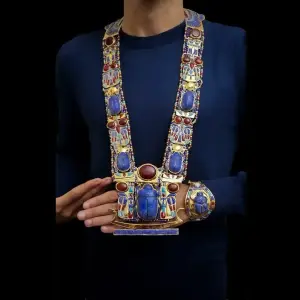
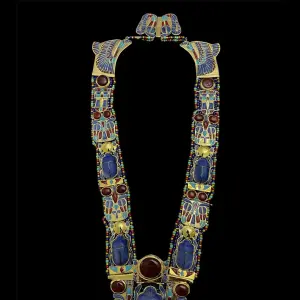
King Tutankhamun Scarab Pectoral Necklace: 24k Gold plating Lapis Lazuli
The One-of-a-kind Necklace for King Tutankhamun is now for sale in our store. The Royal Scarab Necklace for King Tutankhamun which was found in his coffin with the rest of his collection.
The Royal Pectoral is made from Natural Lapis Lazuli stone with finest Brass plated with 24k Gold
The full collection is available upon request
Related products
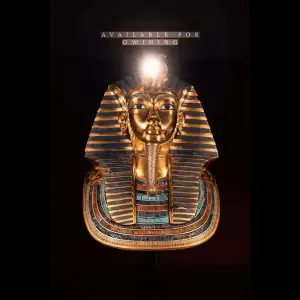
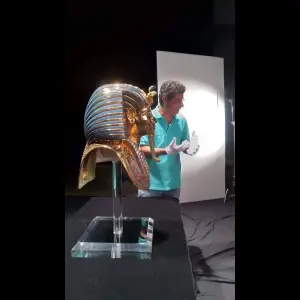
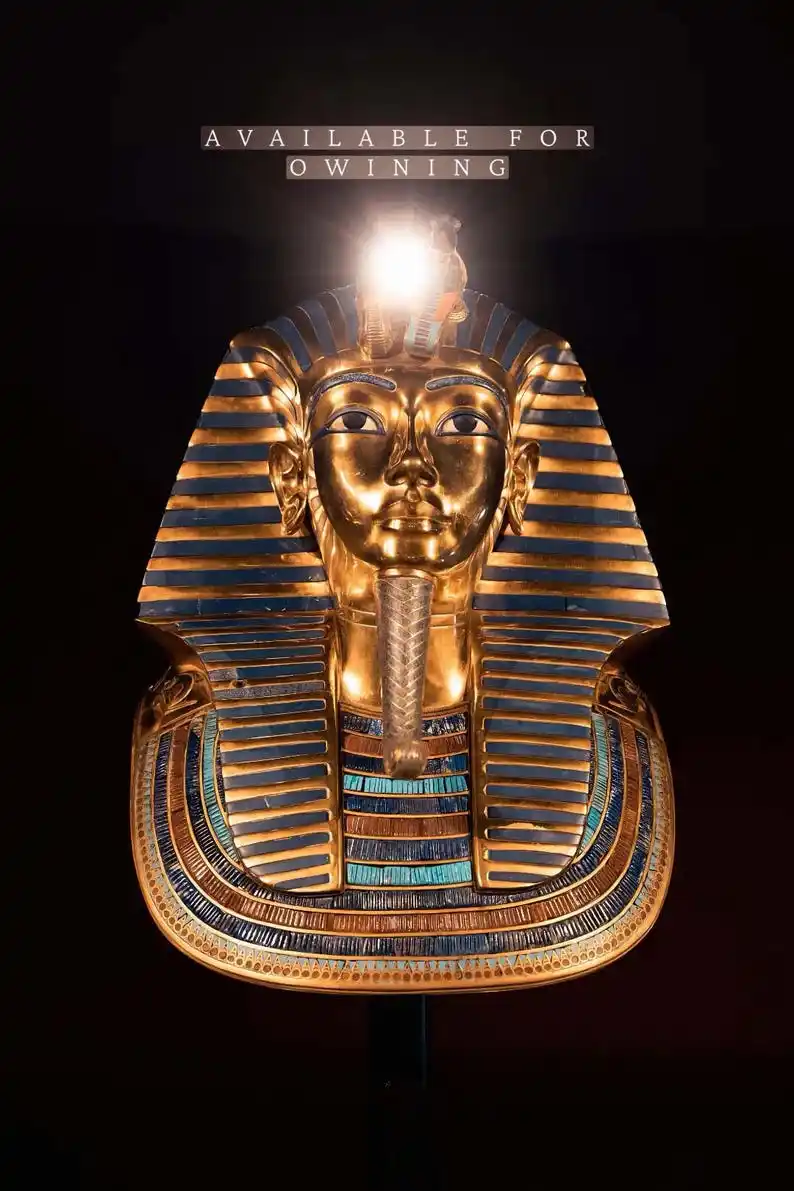
King Tutankhamun Mask, Original Size, Museum Replica by Professor Elazaby
Bring one of ancient Egypt's most iconic royal images to your collection with this Original Size Tutankhamun Mask Replica by Professor Elazaby, inspired by the celebrated golden burial mask of the 18th Dynasty pharaoh. A remarkable centerpiece for serious Egyptology collectors, Egyptian-themed interiors, cultural displays, exhibitions, libraries, and museum-inspired collections.


