
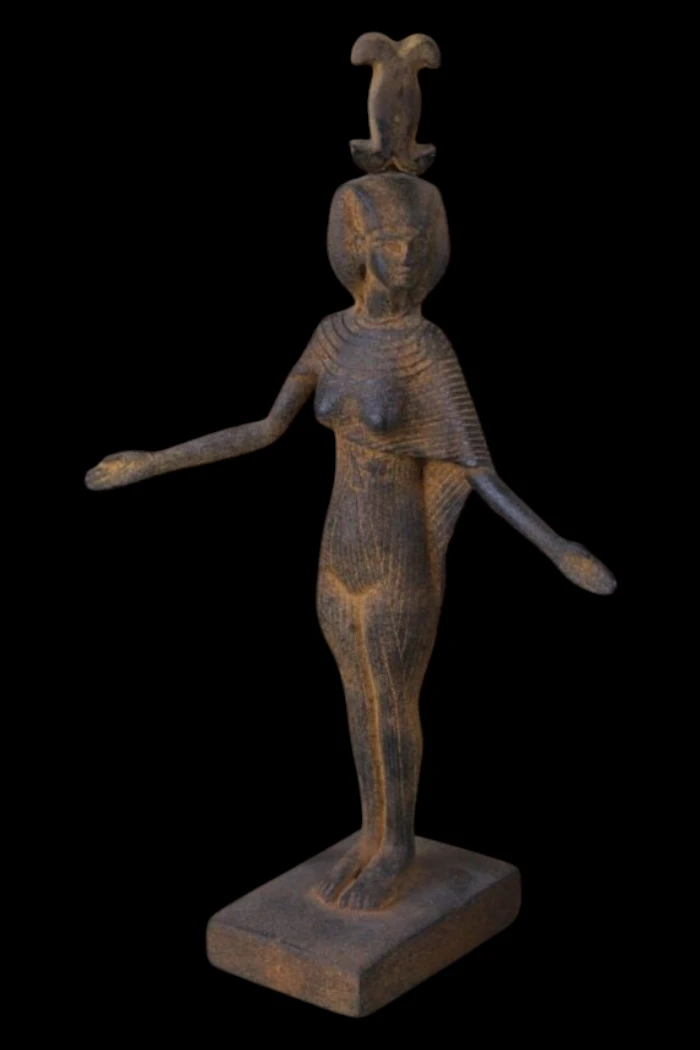
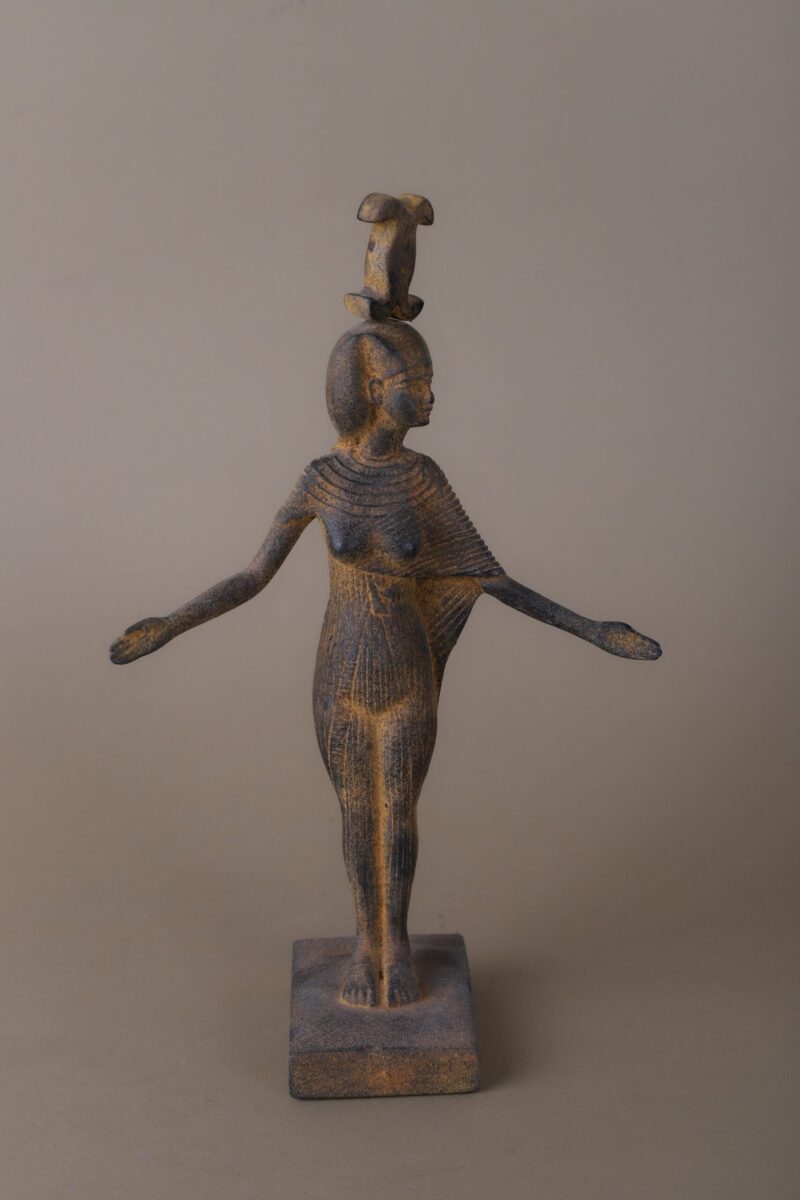
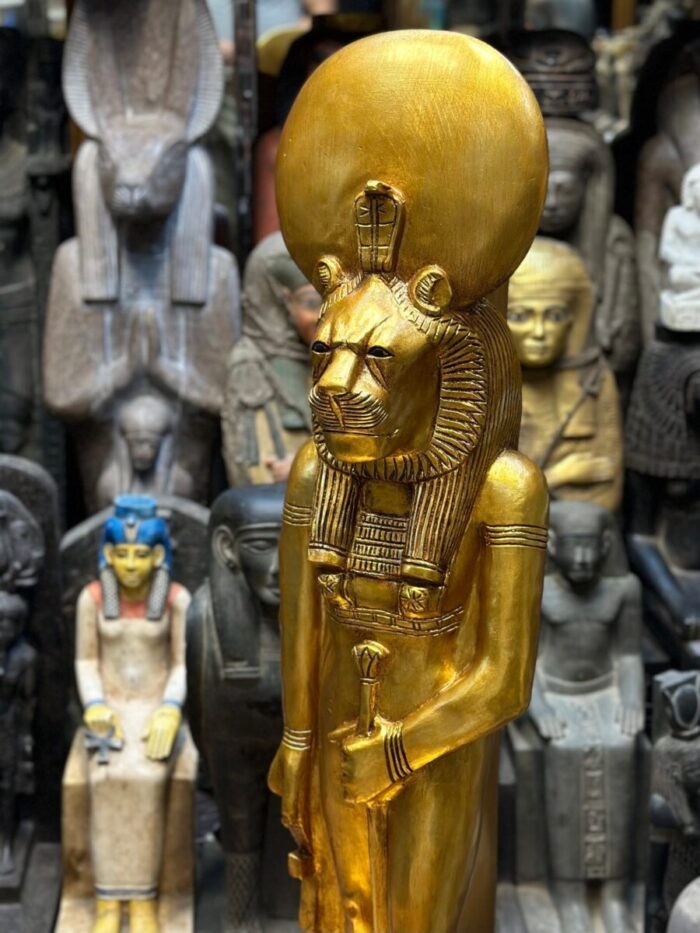
Neith-Egyptian goddess of war-weaving-a creator -protection-Egyptian antique handcraftc statue-mythololgy-archeology-Egyptian sculpture-
$193.70
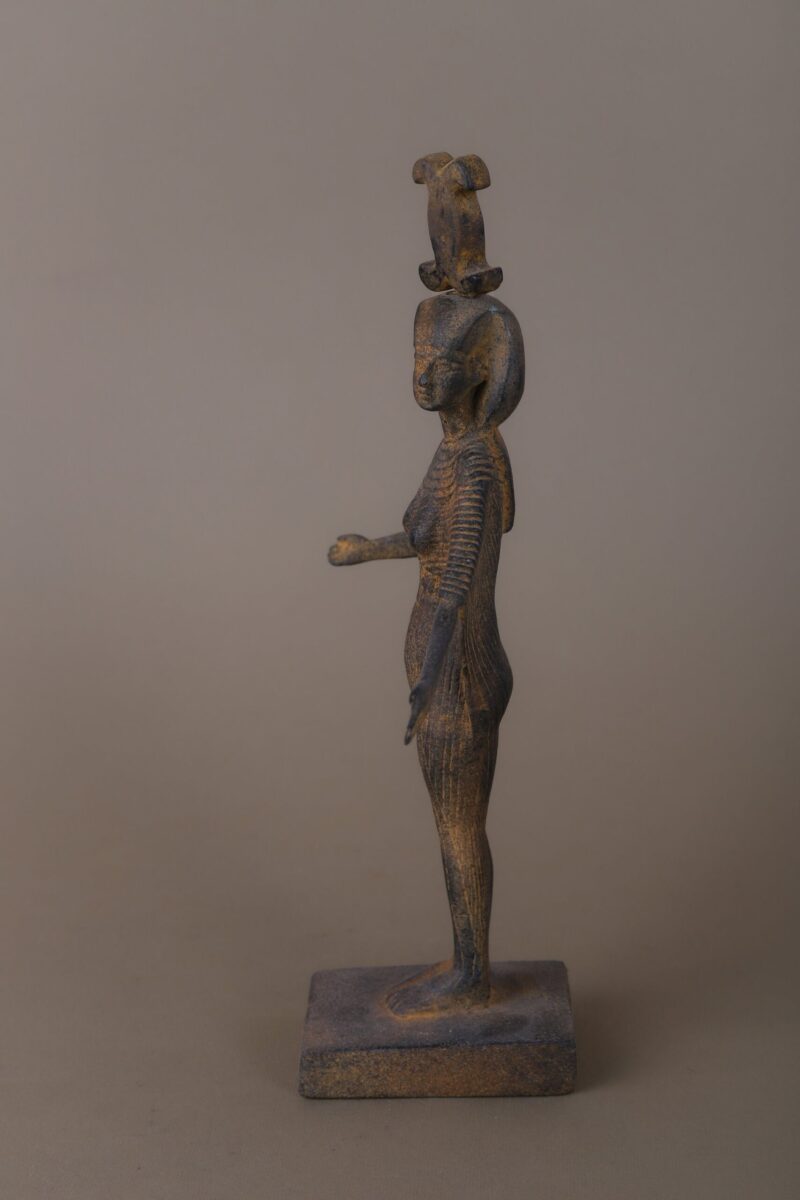
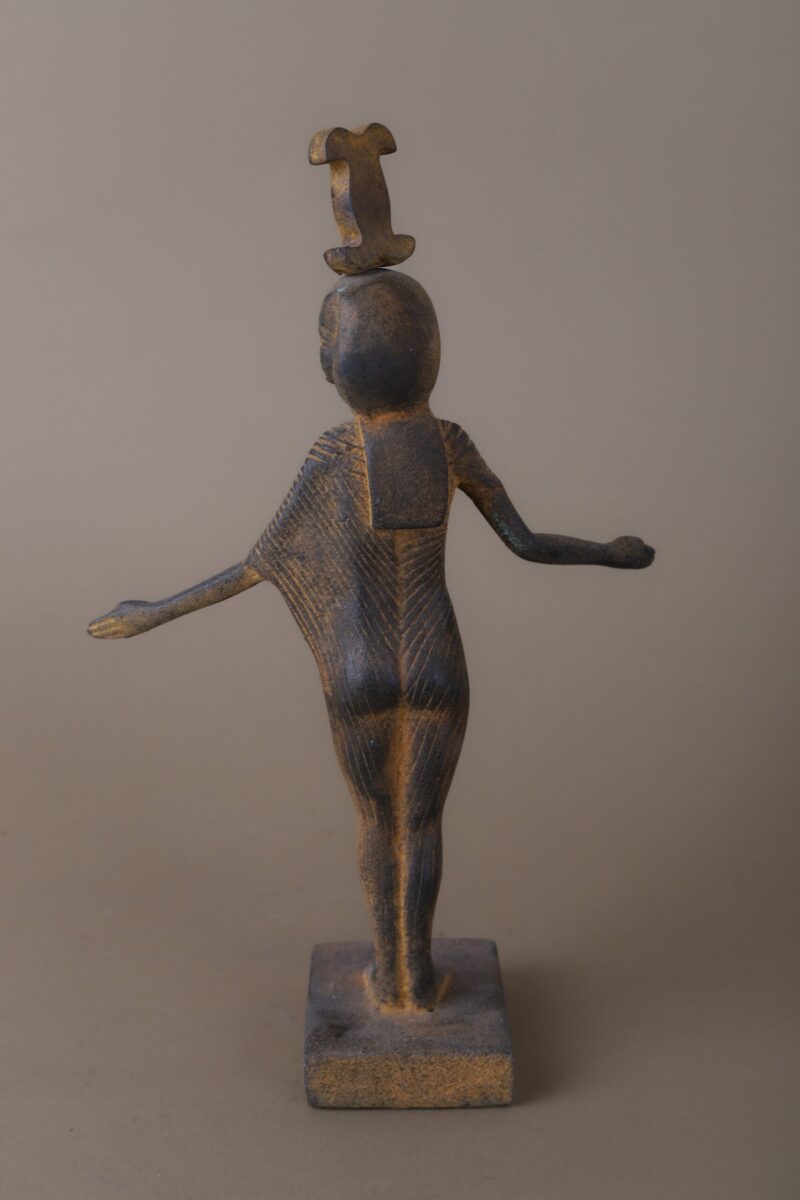
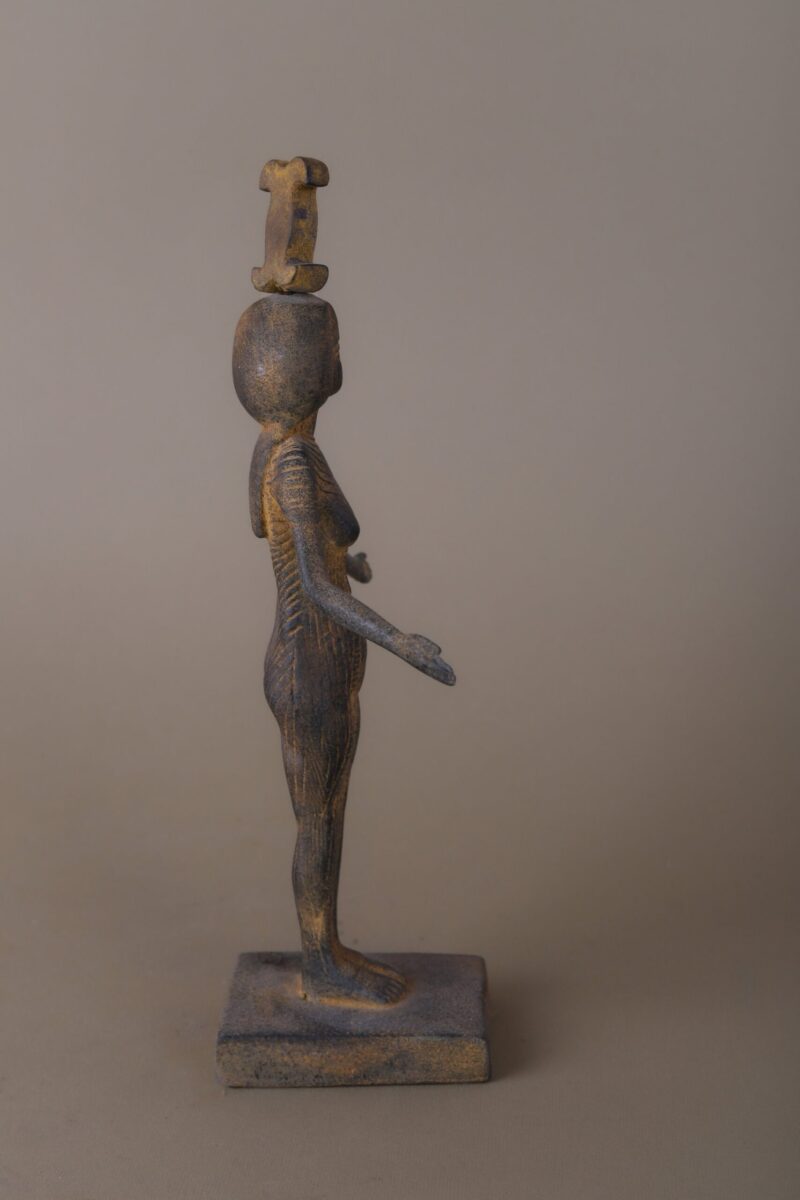
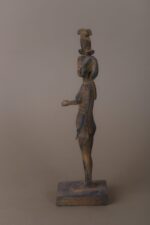
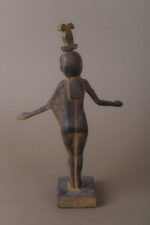
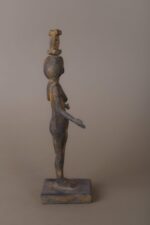
Add a powerful symbol of ancient Egyptian heritage to your collection with this Neith War Goddess Stone Statue, hand-painted and measuring 23 × 13.5 × 7 cm. Inspired by Neith, the ancient goddess of war, hunting, weaving, creation, and protection, it is a distinctive choice for collectors, mythology lovers, Egyptian décor, and unique cultural gifts.
Neith War Goddess Stone Statue – Egyptian Creator Goddess Sculpture
Description of Art
Neith War Goddess Stone Statue handcrafted from stone and carefully hand-painted, inspired by one of the oldest and most complex goddesses of ancient Egypt.
Neith was associated with war, hunting, weaving, creation, and protection. She was particularly connected with the ancient city of Sais in the western Nile Delta and remained an important goddess throughout many periods of Egyptian history.
This museum-inspired sculpture depicts Neith with her distinctive divine symbolism and measures 23 cm high, 13.5 cm wide, and 7 cm deep.
Product Details
Material: Stone
Finish: Hand-Painted
Height: 23 cm
Width: 13.5 cm
Depth: 7 cm
Deity: Goddess Neith
Style: Ancient Egyptian Inspired
Type: Decorative Museum-Inspired Replica
Who Was Goddess Neith?
Neith was one of ancient Egypt’s oldest known goddesses.
Her religious identity developed across thousands of years, and she acquired several important roles, including:
- War
- Hunting
- Protection
- Weaving
- Creation
- Royal guardianship
Her long history makes the Neith War Goddess Stone Statue an especially interesting piece for collectors who want to explore deities beyond the more familiar Isis, Bastet, Sekhmet, and Hathor.
Neith as a Goddess of War
One of Neith’s oldest and most recognizable aspects was her connection with warfare.
Her emblem is traditionally associated with crossed weapons, often interpreted as bows or arrows. This martial symbolism contributed to her identity as a goddess of war and hunting.
She could also appear carrying weapons such as:
- Bow and arrows
- Spear
- Was scepter
These attributes emphasized strength, authority, and divine protection.
For modern symbolic interpretation, Neith can evoke:
Courage • Strength • Protection • Strategy • Authority
Neith and Hunting
Neith was also associated with hunting.
Her weapon-related symbolism made hunting a natural extension of her martial identity.
This gives Neith a different character from purely protective or maternal goddesses: she combines creative power with a strong warrior identity.
Neith as a Creator Goddess
Neith was not simply a goddess of war.
Later Egyptian religious traditions developed her into an important creator goddess, particularly at Sais.
She could be described as a primordial deity associated with the beginning of creation and with the forces from which life emerged.
This extraordinary combination of:
War + Creation + Protection
makes Neith one of the most complex goddesses of ancient Egyptian religion.
Neith and Weaving
Neith was also associated with weaving.
This role fits naturally with ideas of creation because weaving can serve as a symbolic metaphor for bringing separate elements together into an ordered whole.
In later periods, her connection with weaving became increasingly prominent.
For modern collectors, this aspect can make a Neith statue especially meaningful for:
- Textile artists
- Designers
- Craftspeople
- Creative professionals
- Makers
Neith’s Symbol
The supplied product description highlights that:
“The goddess Neith holds her symbol above her head.”
This is an important visual feature and should definitely remain in the listing.
Neith’s emblem is traditionally associated with crossed weapons and became one of the principal identifying symbols of the goddess.
When represented above her head, the emblem helps distinguish Neith from other female Egyptian deities.
The Red Crown of Lower Egypt
Neith could also be depicted wearing the Red Crown, or Deshret, associated with Lower Egypt.
This reflected her close connection with Sais, her major cult center in the Nile Delta.
If the statue includes the Red Crown, that should be highlighted in the product photographs because it is one of her most recognizable iconographic features.
Neith and Sais
Neith’s principal cult center was Sais, an important ancient Egyptian city in the western Nile Delta.
The city became especially prominent during Egypt’s Twenty-Sixth Dynasty, often known as the Saite Dynasty.
During this period, Neith again achieved exceptional religious and political importance.
Her long association with Sais makes her deeply connected with the religious traditions of Lower Egypt.
An Ancient Egyptian Goddess
The supplied history correctly emphasizes that Neith appeared very early in Egyptian history.
Evidence connected with her name and symbols reaches back to Egypt’s earliest periods.
Because very early interpretations can sometimes be debated, the safest wording is:
“Neith was one of the earliest documented goddesses in ancient Egyptian religion.”
This avoids making overly precise claims about her exact origin that cannot always be established with certainty.
Neith and Royal Protection
Neith had important connections with kingship and protection.
Her name appears in royal and elite contexts from early Egyptian history, and she continued to hold protective significance through later periods.
This makes Neith-inspired art appropriate for symbolism connected with:
Protection • Authority • Leadership • Strength
Neith and the Ankh
Neith may be depicted holding the Ankh, the famous Egyptian symbol of life.
The Ankh represents life and continued existence and appears frequently in the hands of Egyptian deities.
When combined with Neith’s warrior symbolism, it creates a striking visual contrast between:
Life and Protection
Creation and Warfare
Neith and the Was Scepter
Neith may also carry a Was scepter, a traditional Egyptian symbol associated with:
Dominion • Authority • Power
If your statue clearly includes a Was scepter, this feature can be mentioned directly in the product description.
Was Neith the “Virgin Mother Goddess”?
The original description gives Neith the title:
“The Virgin Mother Goddess.”
I recommend avoiding this as the main product title.
Some later traditions emphasize Neith’s ability to create independently, without a male partner, but “Virgin Mother Goddess” is a modern interpretive phrase rather than the clearest historically grounded title for an e-commerce listing.
Better wording would be:
Primordial Creator Goddess
or
Ancient Egyptian Creator Goddess
This is more precise and avoids imposing later religious terminology.
Neith and the Primeval Waters
Some later Egyptian traditions connected Neith with primordial creation and the waters from which existence emerged.
However, ancient Egyptian theology had multiple creation traditions, so Neith should not be presented as the single universal creator of Egyptian religion.
A historically careful description would be:
“At Sais and in later traditions, Neith developed an important role as a primordial creator goddess.”
Neith and Athena
Greek writers later associated Neith with the goddess Athena because both deities shared themes involving warfare, wisdom, and craftsmanship.
However, they were not originally the same goddess.
For SEO purposes, this comparison is secondary and not necessary unless specifically targeting mythology comparison searches.
Hand-Painted Stone Craftsmanship
The Neith War Goddess Stone Statue is made from stone and finished by hand.
Its hand-painted details help emphasize the symbols, clothing, and divine attributes associated with Neith.
Dimensions
Height: 23 cm
Width: 13.5 cm
Depth: 7 cm
Its size makes it suitable for:
- Bookshelves
- Display cabinets
- Desks
- Offices
- Libraries
- Egyptian-themed interiors
- Mythology collections
- Museum-inspired displays
Museum-Inspired Replica
The supplied description calls the statue a museum replica.
Unless it reproduces a specific catalogued museum artifact exactly, the safer description is:
Museum-Inspired Egyptian Replica
rather than implying that it is an exact authorized copy of a particular archaeological object.
Also avoid describing the newly made statue as an “Egyptian antique.”
Better terms include:
Egyptian-Inspired Sculpture
Pharaonic Replica Statue
Museum-Inspired Neith Statue
Symbolism for Modern Collectors
For modern decorative interpretation, Neith can symbolize:
Strength • Protection • Creation • Courage • Craftsmanship • Independence
These themes make her especially appealing to collectors interested in powerful female deities and less commonly represented figures from Egyptian mythology.
Perfect for Collectors
The Neith War Goddess Stone Statue is a distinctive choice for:
- Neith collectors
- Egyptian mythology lovers
- Ancient history enthusiasts
- Egyptology collectors
- Warrior goddess collections
- Female deity collections
- Artists and craftspeople
- Egyptian home décor
- Museum-inspired displays
- Unique cultural gifts
Product Specifications
Product: Neith War Goddess Stone Statue
Deity: Goddess Neith
Material: Stone
Finish: Hand-Painted
Height: 23 cm
Width: 13.5 cm
Depth: 7 cm
Principal Associations: War, Hunting, Weaving, Creation & Protection
Major Cult Center: Sais
Common Attributes: Red Crown, Weapons, Ankh & Was Scepter
Style: Ancient Egyptian Inspired
Type: Museum-Inspired Decorative Sculpture
Use: Collection, Home Décor, Office Décor & Cultural Gift
Related products
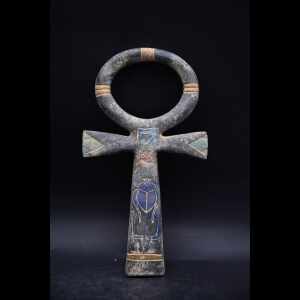
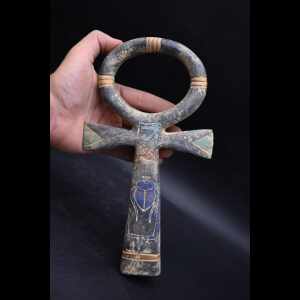
Ankh Statue: Key of Life, Scarab & Eye of Horus – Egyptian Symbol
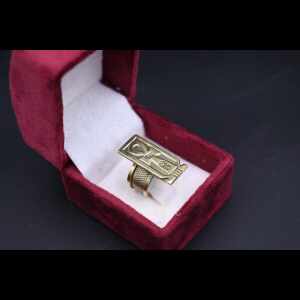
Add a meaningful combination of ancient Egyptian symbolism to your space with this Ankh Scarab Eye of Horus Statue, featuring the iconic Key of Life, protective Eye of Horus, and blue scarab. Symbolizing life, protection, restoration, rebirth, and renewal, it is a distinctive choice for Egyptology collectors, Egyptian décor, mythology lovers, and unique cultural gifts.
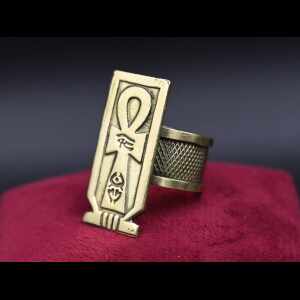
Oxidized Copper Ankh Ring: Ancient Egyptian Key of Life Symbol
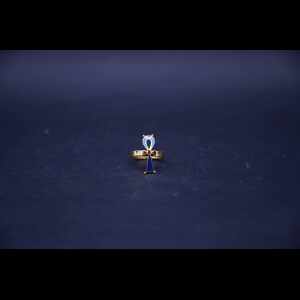
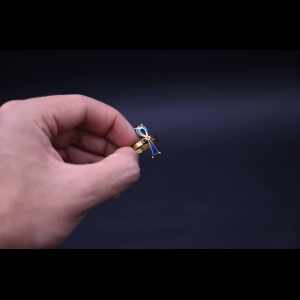
Add a timeless symbol of ancient Egyptian life to your jewelry collection with this Oxidized Copper Ankh Ring, handcrafted in Egypt from oxidized copper with a unisex free-size design. Inspired by the iconic Key of Life representing life, vitality, renewal, and continuity, it is a distinctive choice for mythology lovers, copper jewelry collectors, and unique cultural gifts.
Egyptian Ankh Ring: Key of Life, Good Luck Symbol
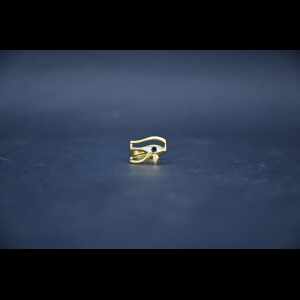
Add a timeless symbol of ancient Egyptian life to your jewelry collection with this Unisex Ankh Key of Life Ring, handcrafted in Egypt with a flexible free-size design for women and men. Inspired by the iconic Ankh symbolizing life, vitality, renewal, and continuity, it is a distinctive choice for mythology lovers, Egyptology enthusiasts, pharaonic jewelry collectors, and unique cultural gifts.
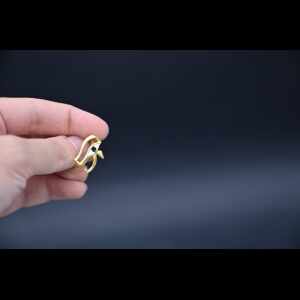
Egyptian Eye of Horus Ring, Ancient Symbol, Handmade in Egypt
Add a powerful symbol of ancient Egyptian kingship to your jewelry collection with this Egyptian Falcon God Horus Ring, handcrafted in Egypt with a unisex free-size design. Inspired by Horus, the falcon god of the sky, royal authority, and protection, it is a distinctive choice for women and men, mythology lovers, Egyptology enthusiasts, and unique cultural gifts.
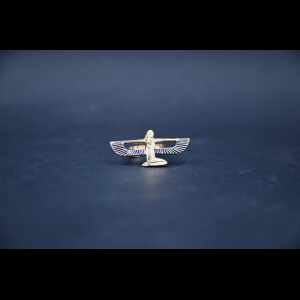
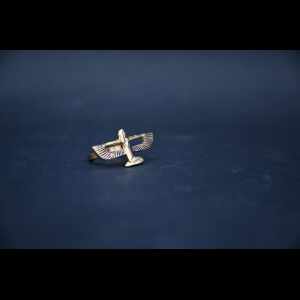
Isis ring-amazing Ring the symbol of good luck-good life-ancient Egyptian ornament-mythology
Add a meaningful symbol of ancient Egyptian protection to your jewelry collection with this Unisex Isis Egyptian Ring, handcrafted in Egypt with a flexible free-size design for women and men. Inspired by Isis, the goddess of motherhood, magic, protection, healing, and fertility, it is a distinctive choice for mythology lovers, Egyptology enthusiasts, symbolic jewelry collectors, and unique cultural gifts.
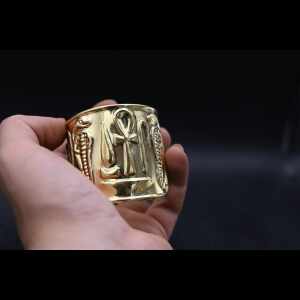
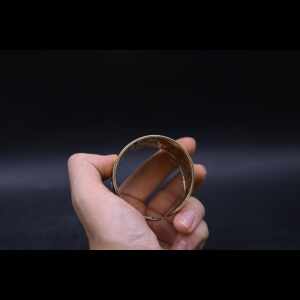
Brass Nile Key Bracelet: Winged Cobra Talisman, Egyptian Protection
Add a powerful combination of ancient Egyptian symbolism to your jewelry collection with this Brass Ankh Cobra Protection Bracelet, handcrafted in Egypt from brass and designed for women and men. Featuring the iconic Key of Life flanked by winged cobras, it symbolizes life, protection, guardianship, and royal authority, making it a distinctive choice for mythology lovers, collectors, and unique cultural gifts.
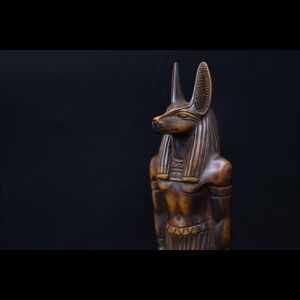
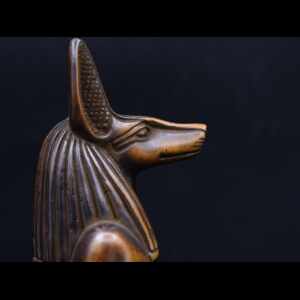
Handcrafted Anubis Statue: Egyptian God of Protection, Brown Stone (23cm)
Add a powerful symbol of ancient Egyptian protection to your collection with this 23 cm Brown Stone Anubis Statue, handcrafted in Egypt from natural stone. Inspired by Anubis, the canine-headed deity of mummification, funerary protection, and care of the deceased, it is a distinctive choice for collectors, Egyptian décor, museum-inspired displays, and unique cultural gifts.
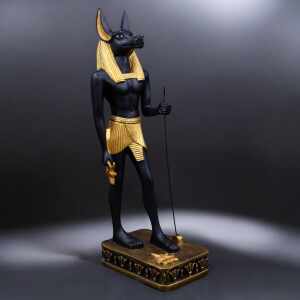
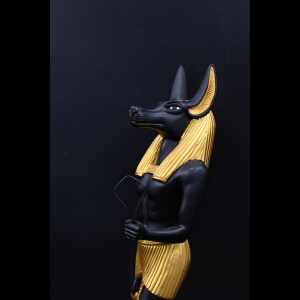
Handcrafted Anubis Statue: Egyptian God of Mummification, 40cm Natural Stone
Add a powerful symbol of ancient Egyptian protection to your collection with this 40 cm Natural Stone Anubis Statue, handcrafted in Egypt from natural stone. Inspired by Anubis, the canine-headed deity of mummification, funerary protection, and care of the deceased, it is a striking choice for collectors, Egyptian décor, museum-inspired displays, and unique cultural gifts.


Reviews
There are no reviews yet.