
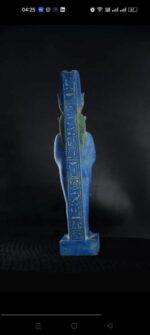
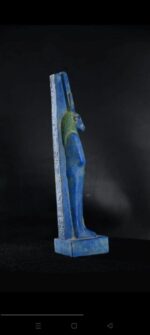
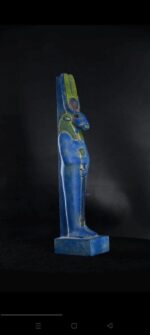
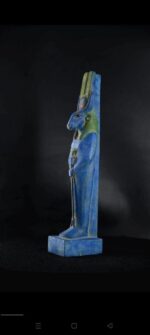
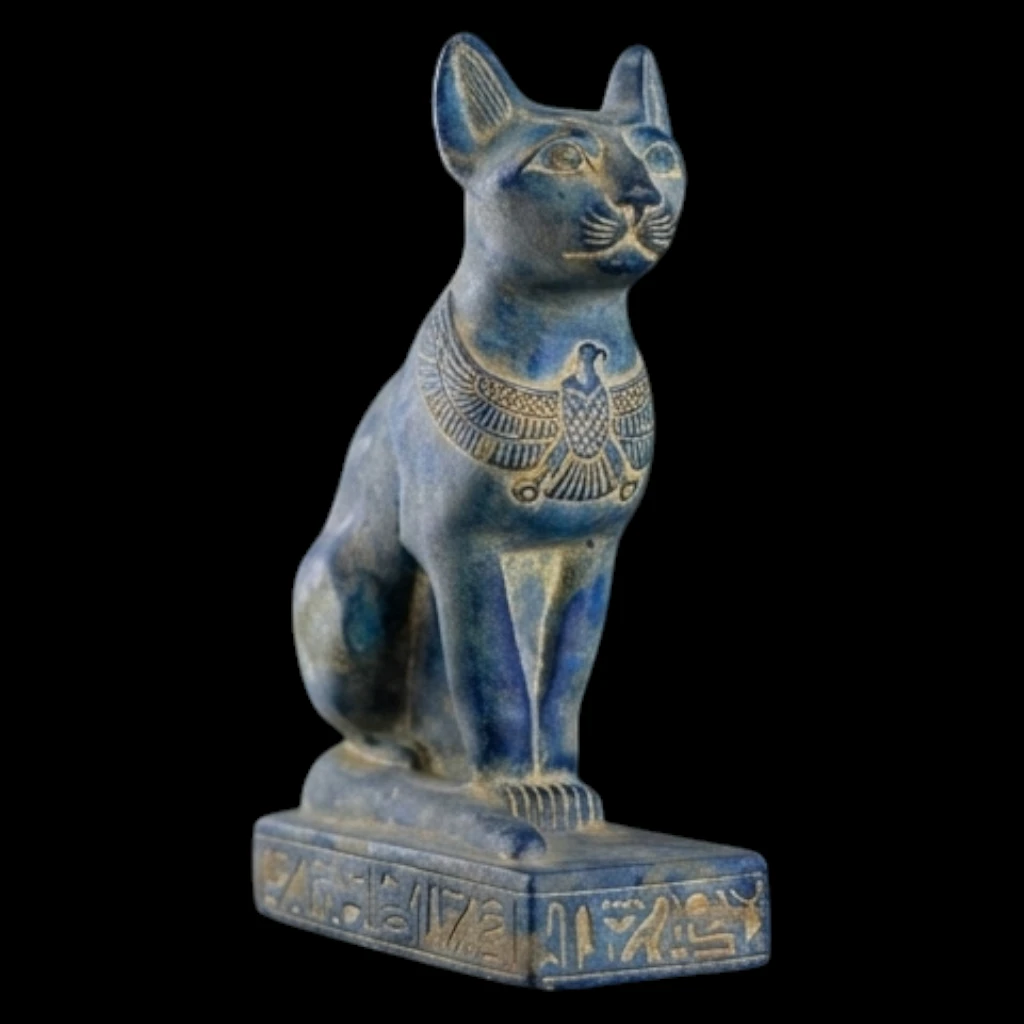
Vintage Hathor Statue, Egyptian Goddess Replica
$260.00
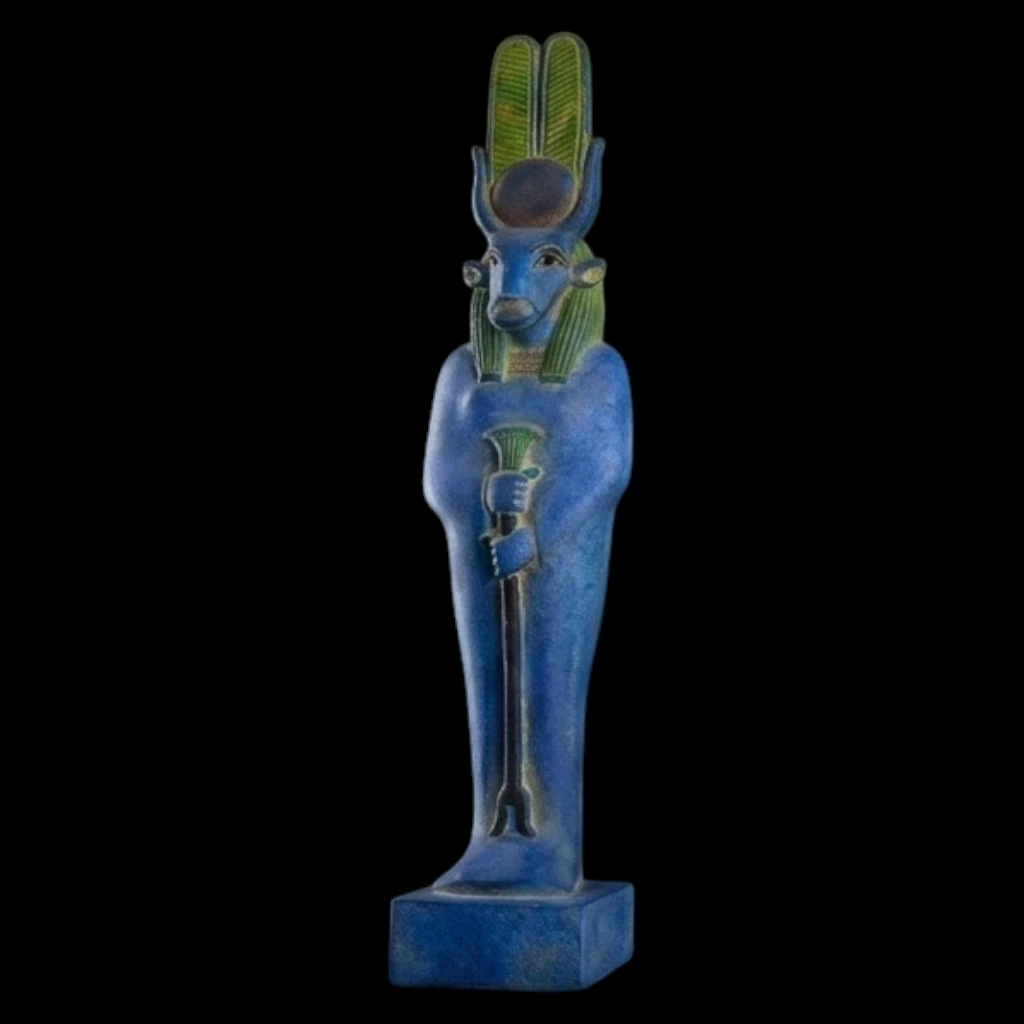
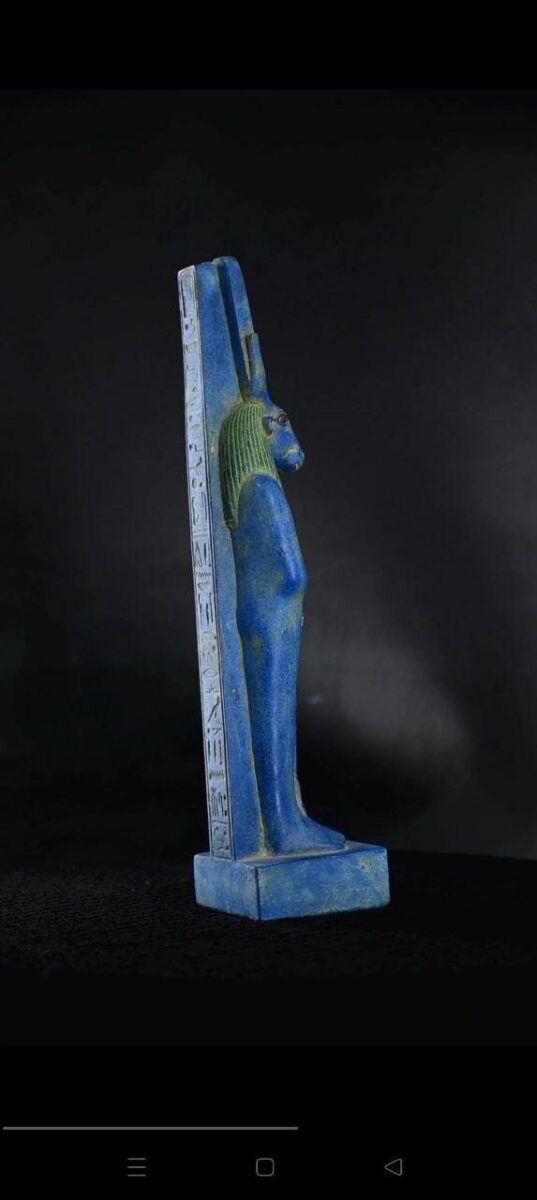
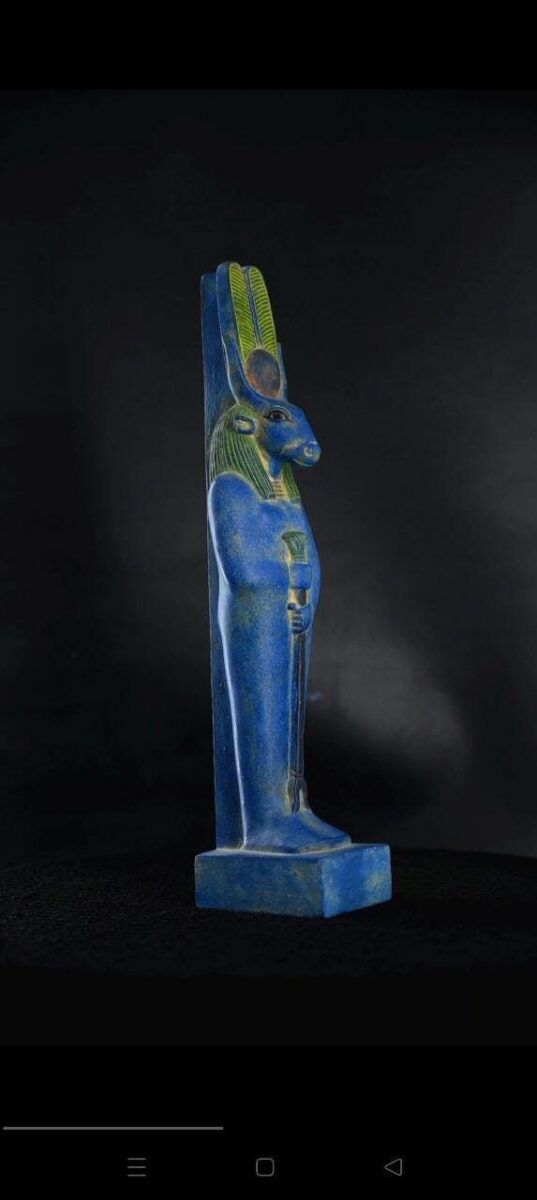
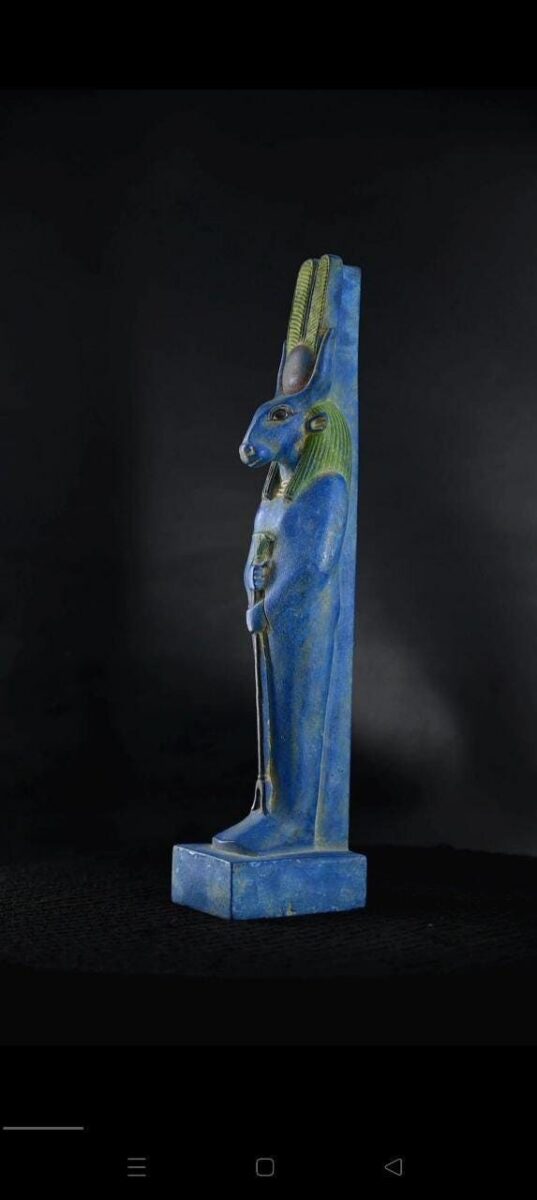
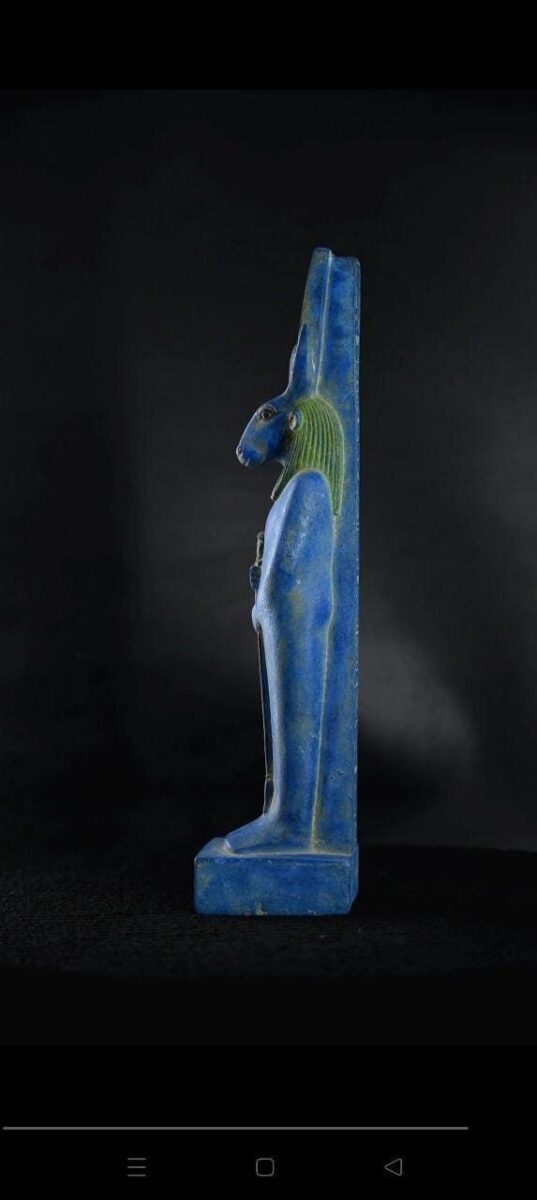
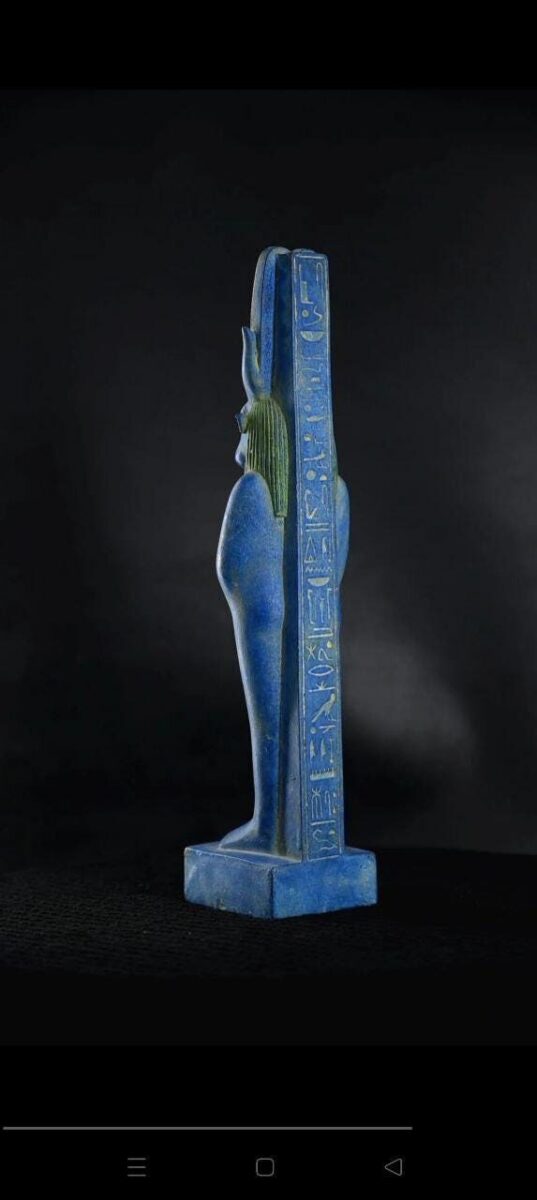
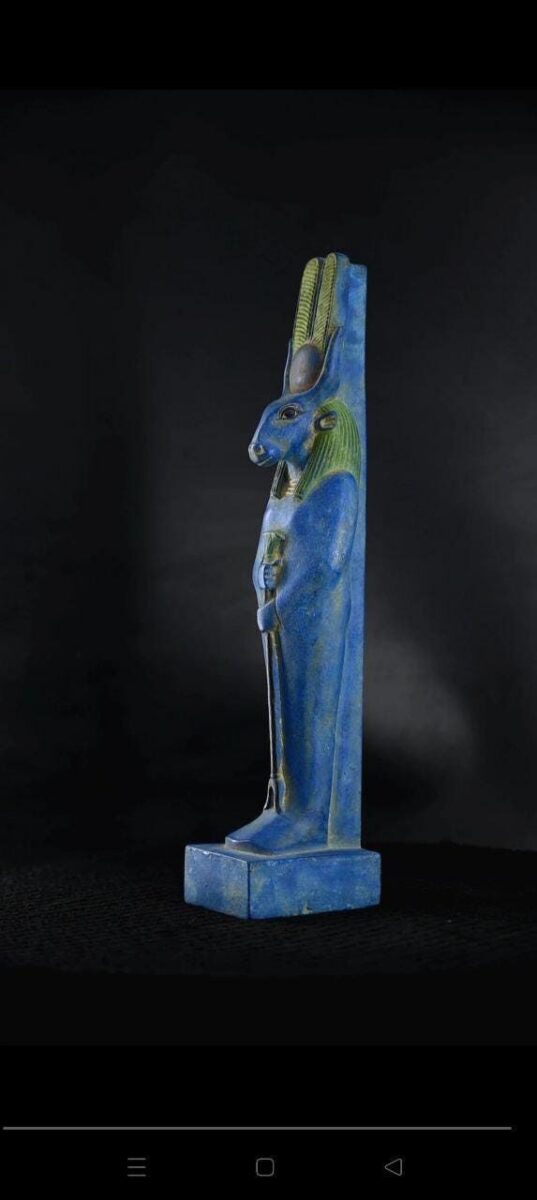
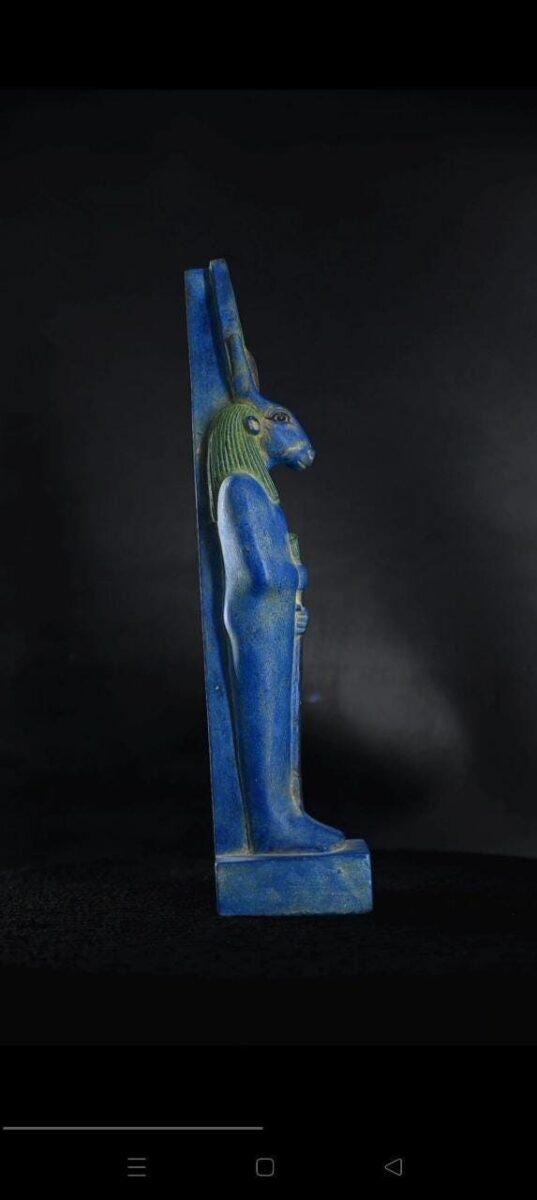
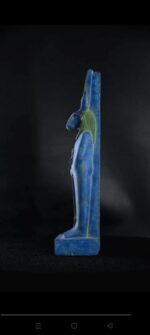
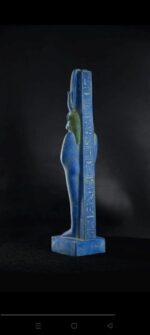
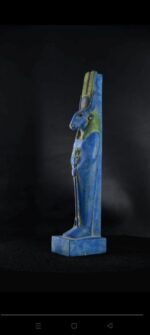
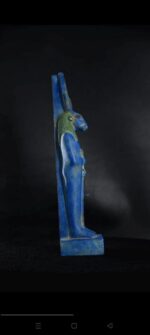
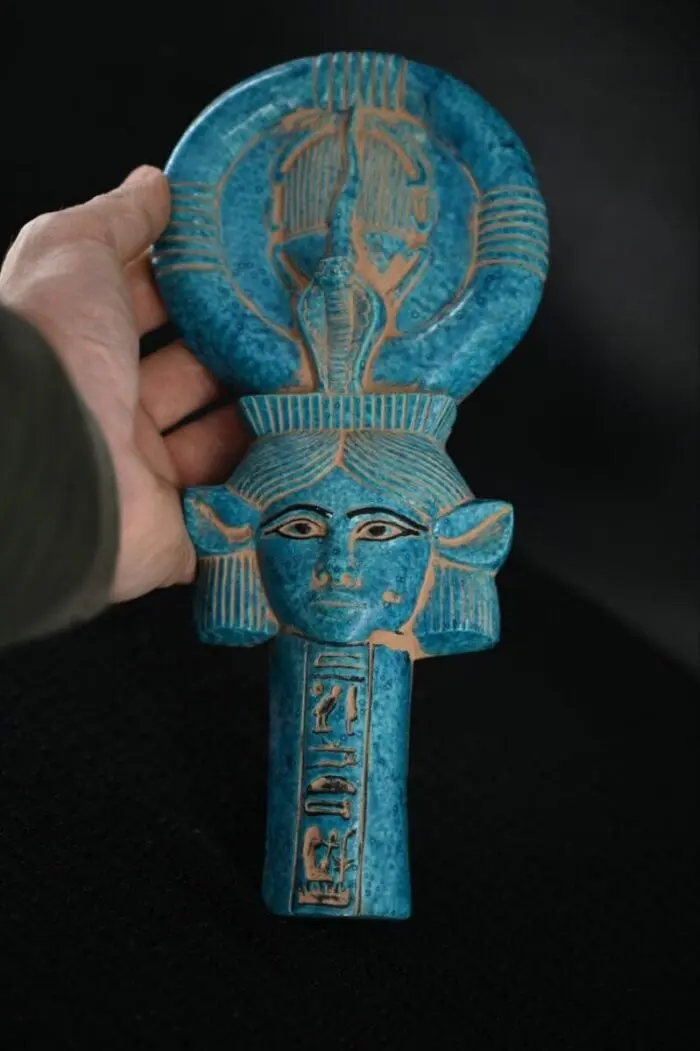
Add a vibrant touch of ancient Egyptian heritage to your space with this Blue Hathor Goddess Mask, inspired by the goddess of love, beauty, music, fertility, and motherhood. Featuring striking blue tones, colorful accents, cow horns, and a solar disk, it is perfect for collectors, Egyptian décor, history lovers, and unique cultural gifts.
Blue Hathor Goddess Mask – Ancient Egyptian Decorative Replica
Description of Art
Blue Hathor Goddess Mask inspired by one of the most beloved and recognizable goddesses of ancient Egypt. This striking decorative piece represents Hathor with elegant facial features and colorful detailing inspired by ancient Egyptian artistic traditions.
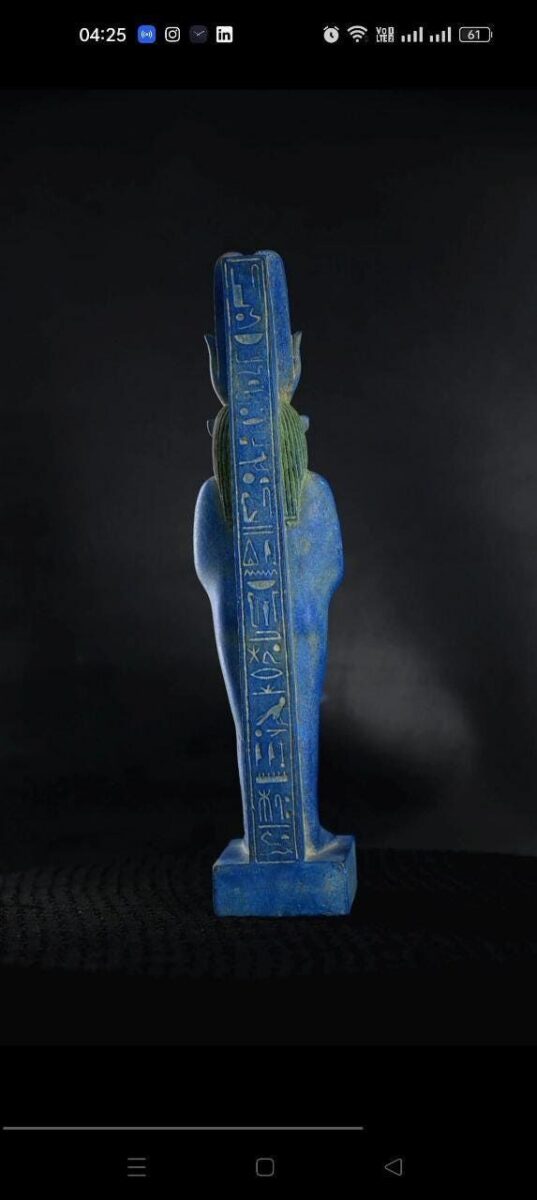
The vibrant blue finish gives the mask a distinctive visual character, while green and other decorative accents enhance its detailed appearance. The design incorporates recognizable Hathoric imagery, including the famous cow horns and solar disk traditionally associated with the goddess. Ancient Egyptian representations frequently show Hathor either as a cow or as a woman wearing cow horns with a sun disk.
The Blue Hathor Goddess Mask is an attractive choice for collectors of Egyptian art, mythology enthusiasts, history lovers, and anyone looking for a colorful Egyptian-inspired centerpiece.
It can be displayed on a shelf, desk, cabinet, console table, office display, or within a larger museum-inspired collection.
History of Goddess Hathor
Hathor was one of the major goddesses of ancient Egyptian religion and was associated with love, joy, music, beauty, motherhood, and fertility.
Her importance extended across many different aspects of Egyptian life and religion, making her a complex and widely recognized deity.
Ancient artworks portray Hathor in several forms. She could appear as a complete cow, as a woman with cow-like characteristics, or as a woman wearing her distinctive cow-horn and solar-disk headdress. Surviving museum objects clearly preserve these recognizable attributes.
The Blue Hathor Goddess Mask draws inspiration from this rich and instantly recognizable artistic tradition.
Hathor as Goddess of Love and Beauty
Hathor had particularly strong associations with femininity and love. The Metropolitan Museum identifies her as a goddess connected with femininity and love, while the British Museum describes her associations with love, joy, music, and beauty.
These qualities contributed to her popularity throughout ancient Egyptian history.
Her imagery could therefore communicate beauty, affection, celebration, and feminine divine power.
For modern collectors, a representation of Hathor offers a fascinating connection with these ancient Egyptian ideas and artistic traditions.
Hathor and Music
Music was another important part of Hathor’s identity.
The sistrum, an ancient Egyptian ritual rattle, was especially closely associated with her worship. The British Museum notes that prayers to Hathor, goddess of love and music, could be accompanied by the sistrum.
The Metropolitan Museum also preserves ritual menat necklaces closely connected with Hathor. These objects could be shaken to produce sound and were important symbols of the goddess.
This connection between Hathor, music, celebration, and ritual helped establish her as one of the most joyful figures in Egyptian religious tradition.
Hathor, Fertility, and Motherhood
Hathor was strongly connected with fertility and motherhood.
The British Museum lists motherhood and fertility among her important associations, while a Metropolitan Museum menat connected with Hathor was believed to promote fertility, support newborn life, and symbolize rebirth.
Her cow form also naturally reinforced themes of nourishment and maternal care.
Because of these connections, Hathor could represent:
- Motherhood
- Fertility
- Nurturing
- Love
- Beauty
- Joy
- Music
- Celebration
- Feminine power
- Renewal
These qualities give the Blue Hathor Goddess Mask rich historical and symbolic inspiration.
Hathor and the Solar Disk
The solar disk between cow horns is one of Hathor’s most recognizable attributes.
Surviving ancient Egyptian representations show the goddess with a cow’s face or cow form while wearing the sun disk between her horns.
The same characteristic imagery appears in representations of Hathor in human form. A Metropolitan Museum sistrum dating to the Old Kingdom depicts the goddess as a young woman with two cow horns supporting the solar disk.
This famous imagery provides the inspiration for the horned solar design incorporated into this Blue Hathor Goddess Mask.
Hathor and the Afterlife
Hathor also had an important place in Egyptian beliefs surrounding death, renewal, and the western horizon.
Ancient artworks from Thebes show Hathor in cow form emerging from the western mountain, connecting her with the landscape of the necropolis and concepts of regeneration.
A British Museum object likewise describes Hathor as the “patroness of the west” in an image where she appears as a cow emerging from the western mountain at Thebes.
This funerary dimension shows how Hathor’s importance extended beyond love and celebration into ancient Egyptian ideas about regeneration and continued existence.
Worship of Hathor at Dendera
Hathor was worshiped throughout Egypt, and Dendera became especially famous as a major center of her cult.
The temple complex associated with Hathor at Dendera remains one of the best-known monuments connected with the goddess.
Its religious imagery and architecture demonstrate the continuing significance of Hathor within Egyptian religious traditions.
For collectors fascinated by ancient Egyptian temples and mythology, the Blue Hathor Goddess Mask offers a decorative connection to this enduring heritage.
Hathor in Ancient Egyptian Art
Hathor’s visual identity appeared in numerous artistic forms, including:
- Temple reliefs
- Statues
- Ritual objects
- Sistra
- Menat necklaces
- Amulets
- Funerary imagery
- Cow representations
- Female figures with cow horns and a solar disk
Museum collections preserve examples showing Hathor’s characteristic cow form as well as her human representations with recognizable divine attributes.
This variety helped make Hathor one of the most visually distinctive goddesses of ancient Egypt.
Blue Hathor Goddess Mask for Collectors
The Blue Hathor Goddess Mask is ideal for:
- Ancient Egyptian art collectors
- Hathor enthusiasts
- Egyptian mythology lovers
- History and archaeology enthusiasts
- Egyptian-themed home décor
- Office and library decoration
- Colorful statement décor
- Museum-inspired collections
- Historical replica displays
- Unique Egyptian cultural gifts
Its blue finish and detailed facial design give it a particularly distinctive appearance compared with traditional neutral-colored Egyptian replicas.
Whether displayed individually or alongside sculptures of Isis, Bastet, Sekhmet, Maat, Anubis, Horus, or other ancient Egyptian figures, this Hathor mask can become an eye-catching centerpiece.
Product Details
Product: Blue Hathor Goddess Mask
Goddess: Hathor
Design: Decorative Mask
Primary Color: Blue
Accents: Multicolored / Green Details
Iconography: Cow Horns & Solar Disk
Style: Ancient Egyptian / Pharaonic Inspired
Theme: Love, Beauty, Music, Fertility & Motherhood
Use: Collectible, Home Décor, Office Décor, Historical Display, Cultural Gift
Our Shop Policy
- Keep a close eye on your inbox for shipping updates and tracking information.
- Providing a valid phone number is mandatory for international shipping purposes.
- If you encounter any issues or concerns regarding your order, please do not hesitate to contact us. We will handle your case promptly and professionally and work toward a satisfactory resolution.
International Shipping
Please provide your phone number to complete the international shipping process.
Your Blue Hathor Goddess Mask will be carefully prepared and securely packed to help protect it during transportation.
Important Note: Your original description contains two conflicting customs statements. One says customs duties, taxes, and import fees are included in the shipping price, while the other says these charges are the buyer’s responsibility. Keep only the statement that matches your actual shop policy before publishing.
Related products
Ankh Statue: Key of Life, Scarab & Eye of Horus – Egyptian Symbol
Add a meaningful combination of ancient Egyptian symbolism to your space with this Ankh Scarab Eye of Horus Statue, featuring the iconic Key of Life, protective Eye of Horus, and blue scarab. Symbolizing life, protection, restoration, rebirth, and renewal, it is a distinctive choice for Egyptology collectors, Egyptian décor, mythology lovers, and unique cultural gifts.
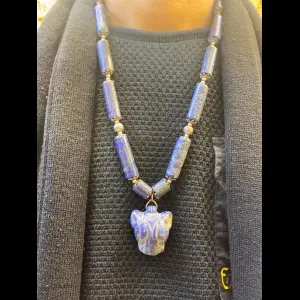
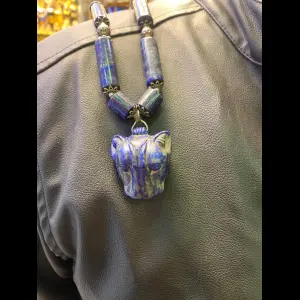
Handmade Lapis Lazuli Sekhmet Necklace: Egyptian Goddess Jewelry
Add a powerful touch of ancient Egyptian symbolism to your jewelry collection with this 150 g Lapis Sekhmet Necklace, handcrafted from natural lapis lazuli stone with elegant silver-tone metal accents. Inspired by Sekhmet, the lioness goddess of strength, protection, healing, and solar power, it is a striking choice for mythology lovers, statement-jewelry collectors, and unique cultural gifts.
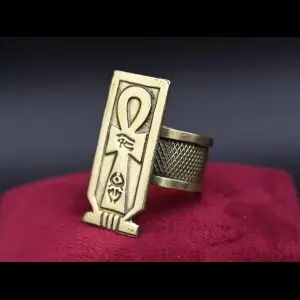
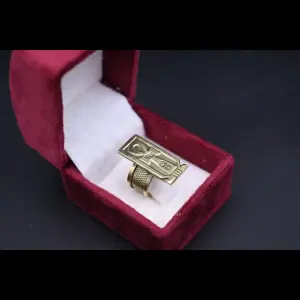
Oxidized Copper Ankh Ring: Ancient Egyptian Key of Life Symbol
Add a timeless symbol of ancient Egyptian life to your jewelry collection with this Oxidized Copper Ankh Ring, handcrafted in Egypt from oxidized copper with a unisex free-size design. Inspired by the iconic Key of Life representing life, vitality, renewal, and continuity, it is a distinctive choice for mythology lovers, copper jewelry collectors, and unique cultural gifts.

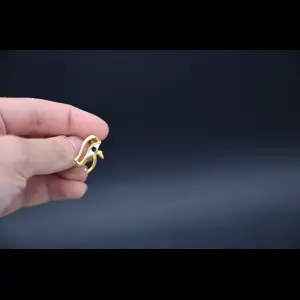
Egyptian Eye of Horus Ring, Ancient Symbol, Handmade in Egypt
Add a powerful symbol of ancient Egyptian kingship to your jewelry collection with this Egyptian Falcon God Horus Ring, handcrafted in Egypt with a unisex free-size design. Inspired by Horus, the falcon god of the sky, royal authority, and protection, it is a distinctive choice for women and men, mythology lovers, Egyptology enthusiasts, and unique cultural gifts.


Isis ring-amazing Ring the symbol of good luck-good life-ancient Egyptian ornament-mythology
Add a meaningful symbol of ancient Egyptian protection to your jewelry collection with this Unisex Isis Egyptian Ring, handcrafted in Egypt with a flexible free-size design for women and men. Inspired by Isis, the goddess of motherhood, magic, protection, healing, and fertility, it is a distinctive choice for mythology lovers, Egyptology enthusiasts, symbolic jewelry collectors, and unique cultural gifts.
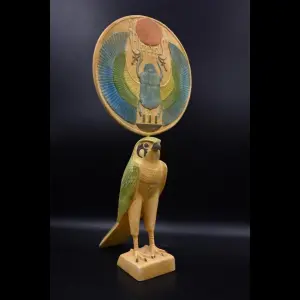
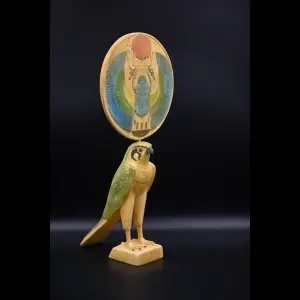
Handcrafted Limestone Horus Statue, Egyptian God of Protection (35cm)
Add a powerful symbol of ancient Egyptian kingship to your collection with this 35 cm Limestone Horus Statue, handcrafted in Egypt and featuring solar and winged scarab motifs. Inspired by Horus, the falcon god of the sky, royal authority, and protection, it is a striking choice for Egyptology collectors, Egyptian décor, mythology lovers, and museum-inspired displays.
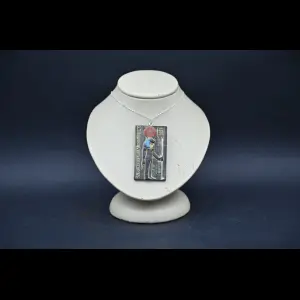
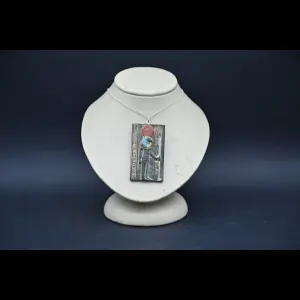
Handmade Stone Sekhmet Amulet, Egyptian Goddess of War
Add a powerful symbol of ancient Egyptian strength to your collection with this Sekhmet Stone Protection Amulet, crafted from stone and inspired by Sekhmet, the lioness goddess of war, protection, healing, medicine, and solar power. A distinctive choice for Egyptology enthusiasts, mythology lovers, symbolic décor collectors, and unique cultural gifts.
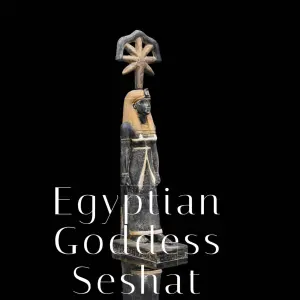
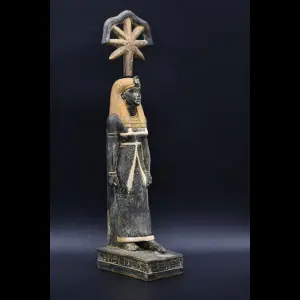
Seshat Statue: Egyptian Goddess of Wisdom Stone Sculpture
Add a distinctive symbol of ancient Egyptian knowledge to your collection with this 35 cm Seshat Stone Statue, handcrafted in Egypt and measuring 35 × 7 × 9 cm. Inspired by Seshat, the goddess of writing, record keeping, measurement, mathematics, and building planning, it is an exceptional choice for Egyptology collectors, writers, libraries, offices, and unique cultural gifts.


Reviews
There are no reviews yet.